
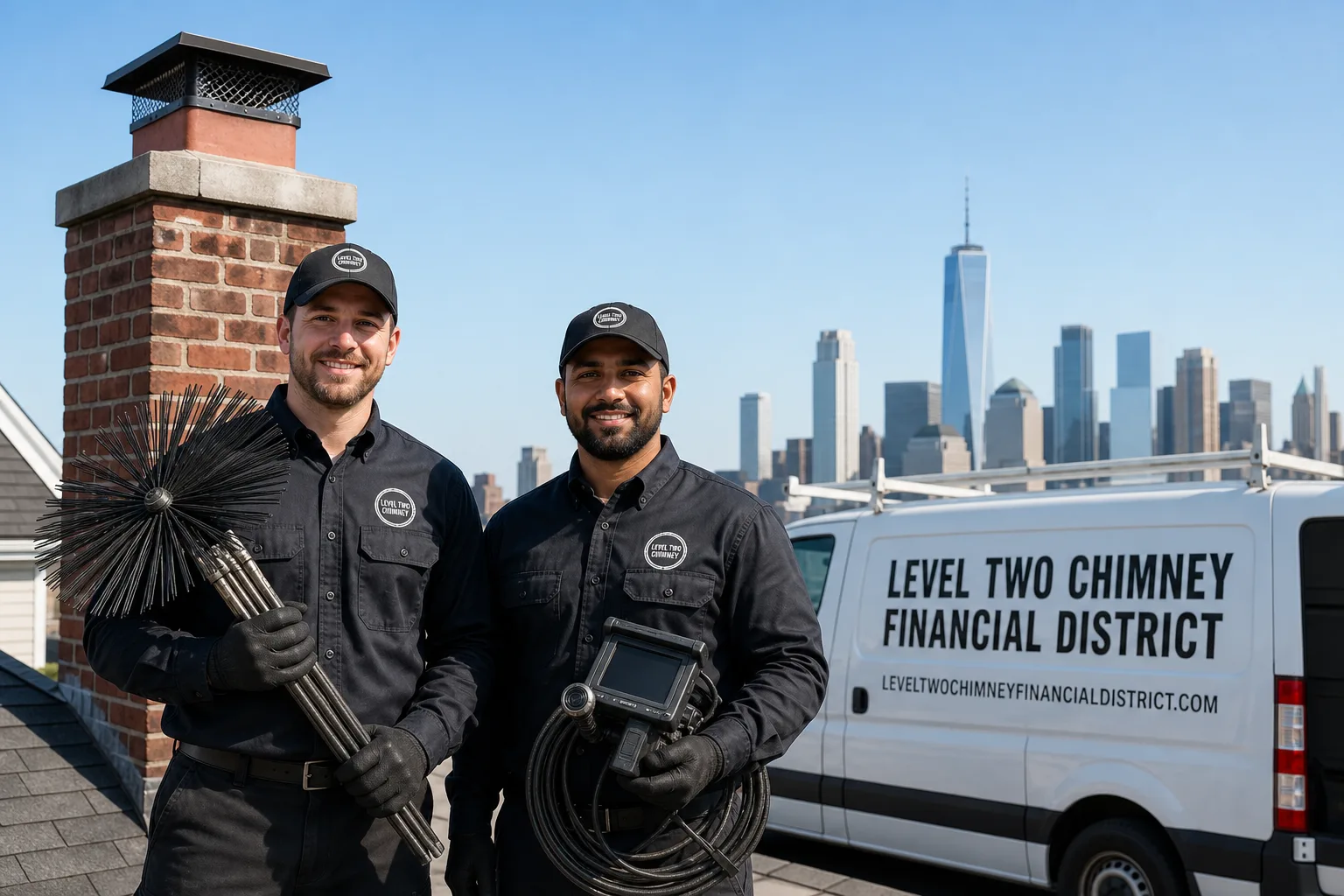
Level 1 sweep and inspection to the NFPA 211 annual standard - flue, crown, cap, and flashing checked and photographed
Chimney sweep logs do not sweep chimneys. They loosen some creosote - which then falls where a brush and vacuum still have to collect it.
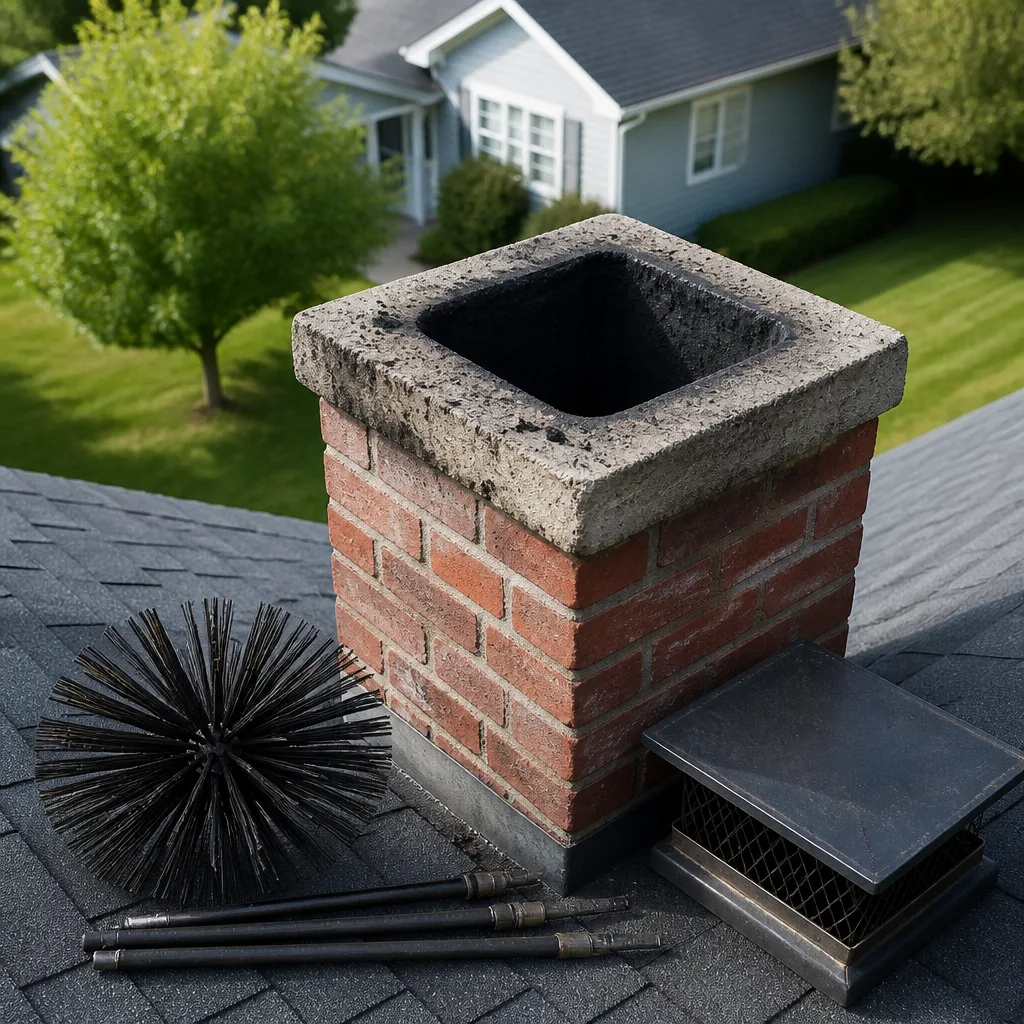
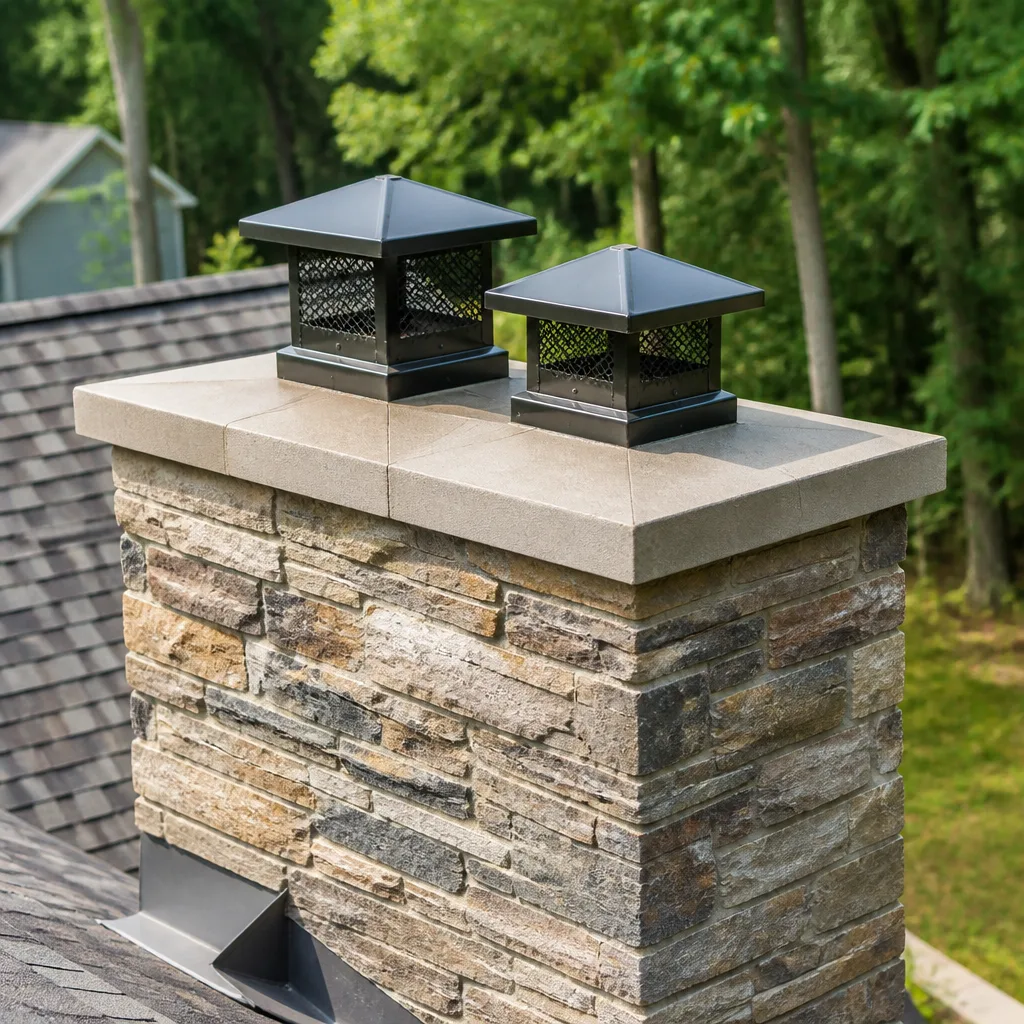
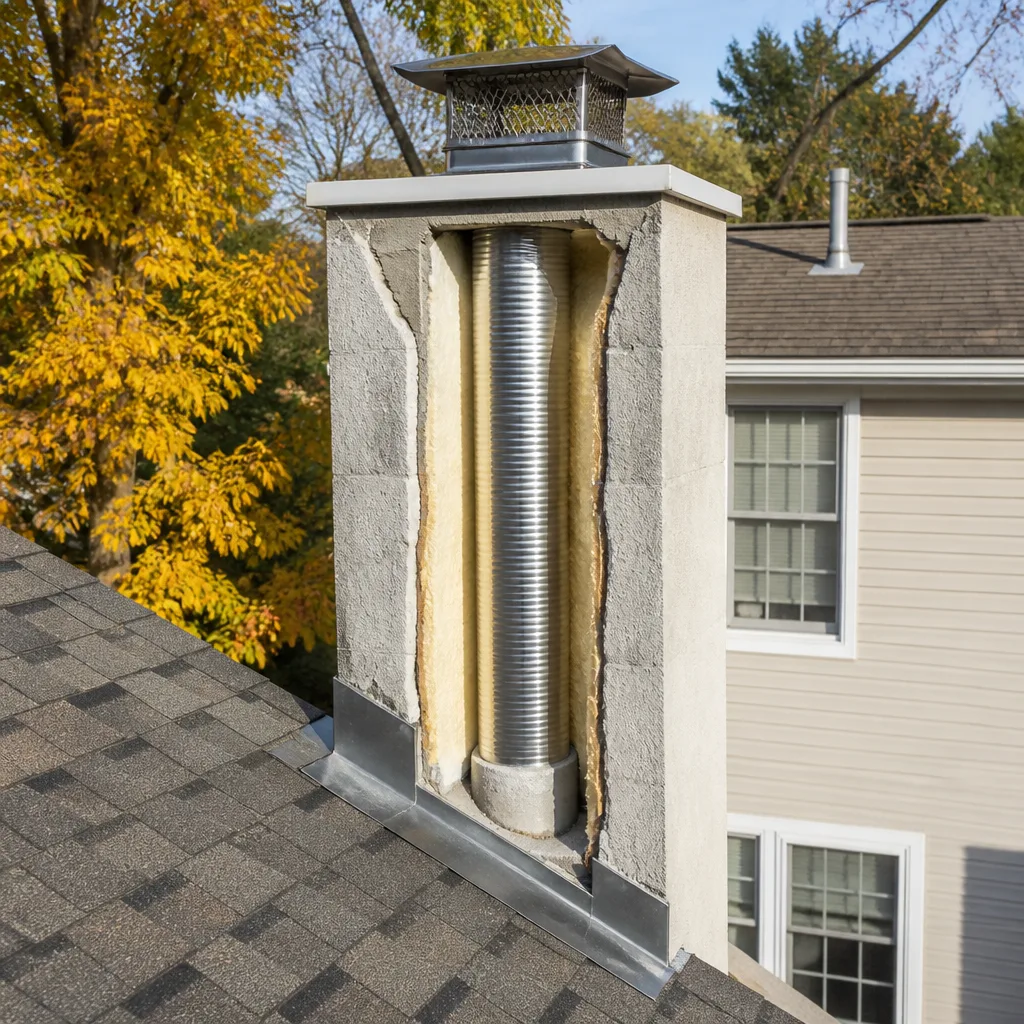
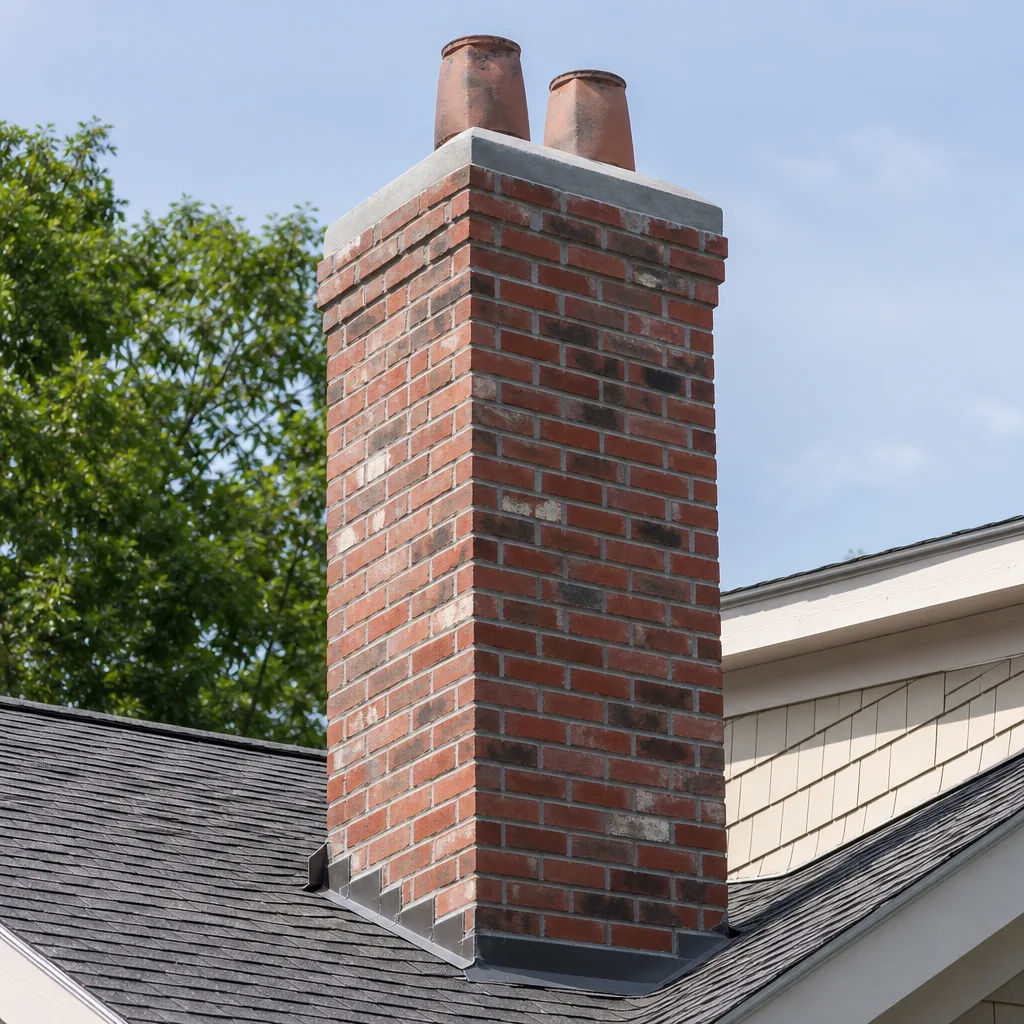
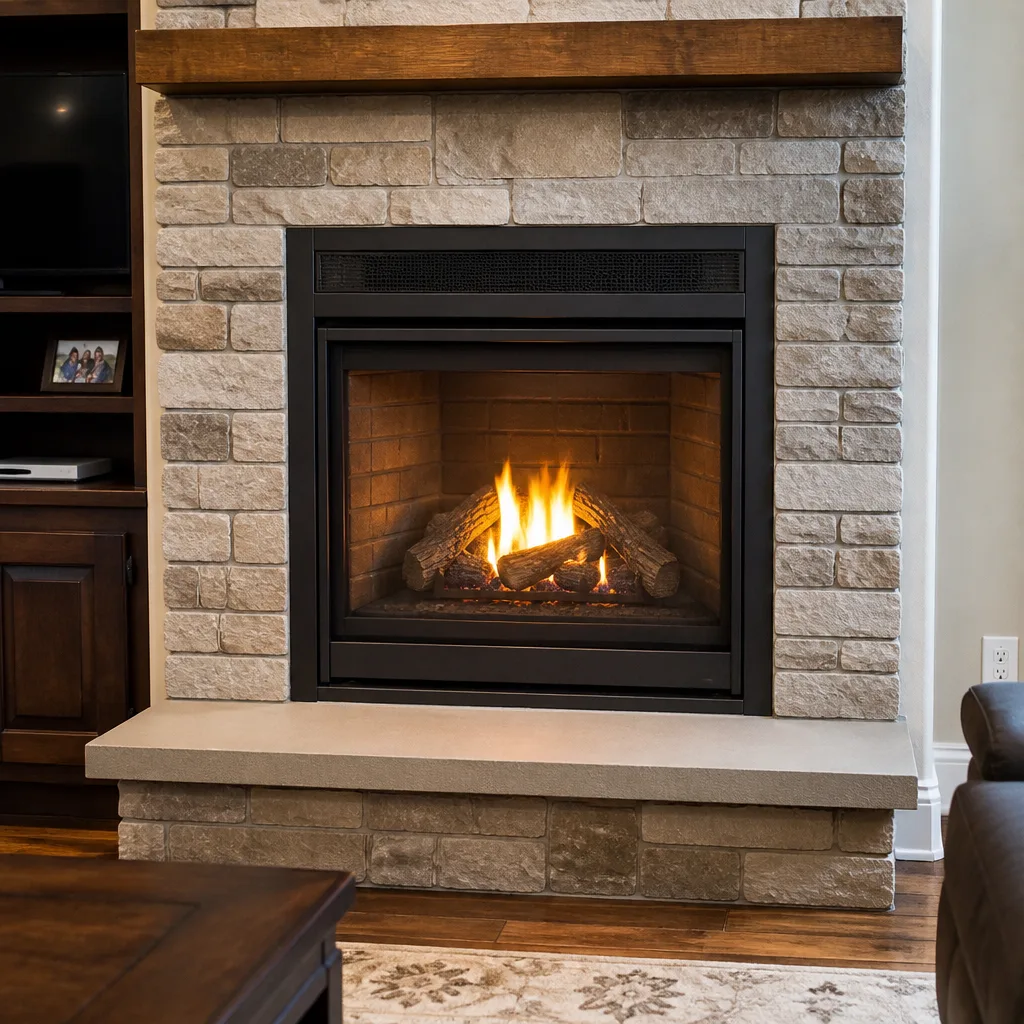
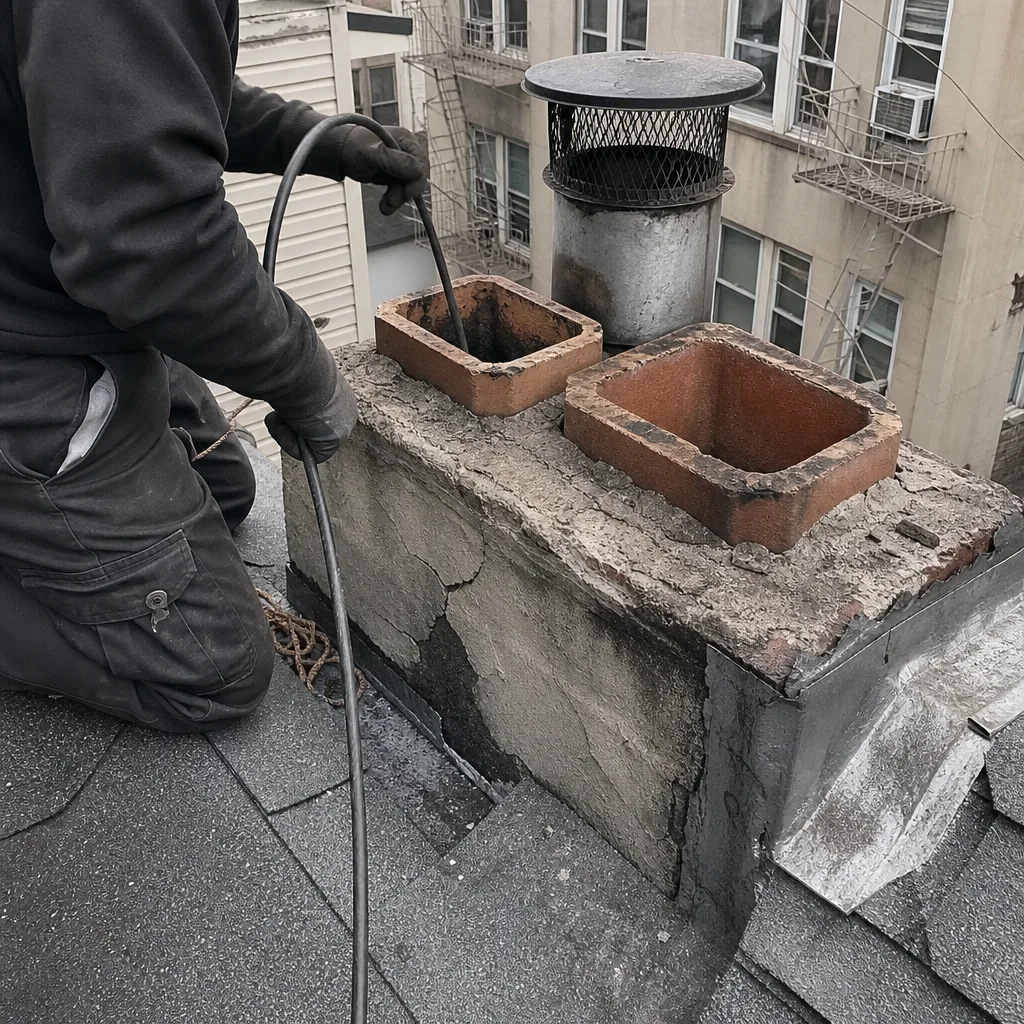 Before
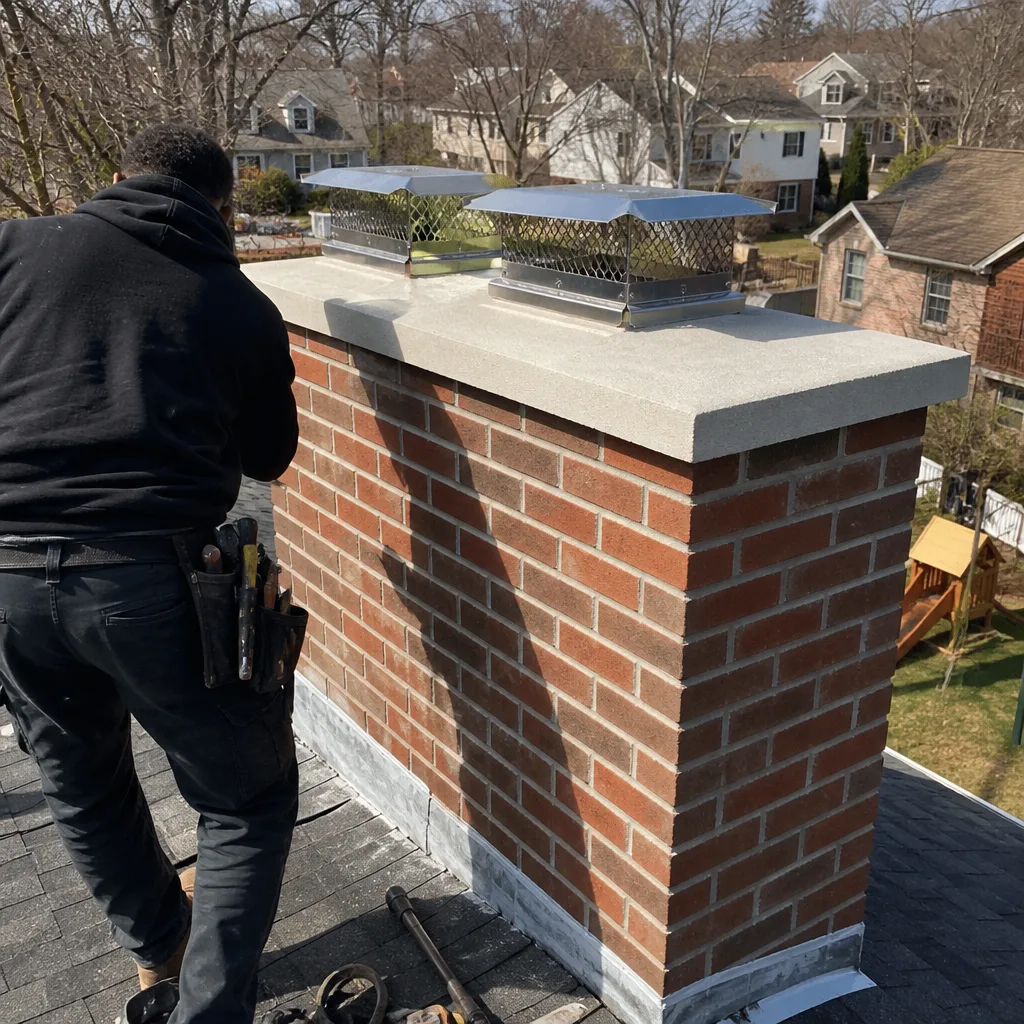 After
After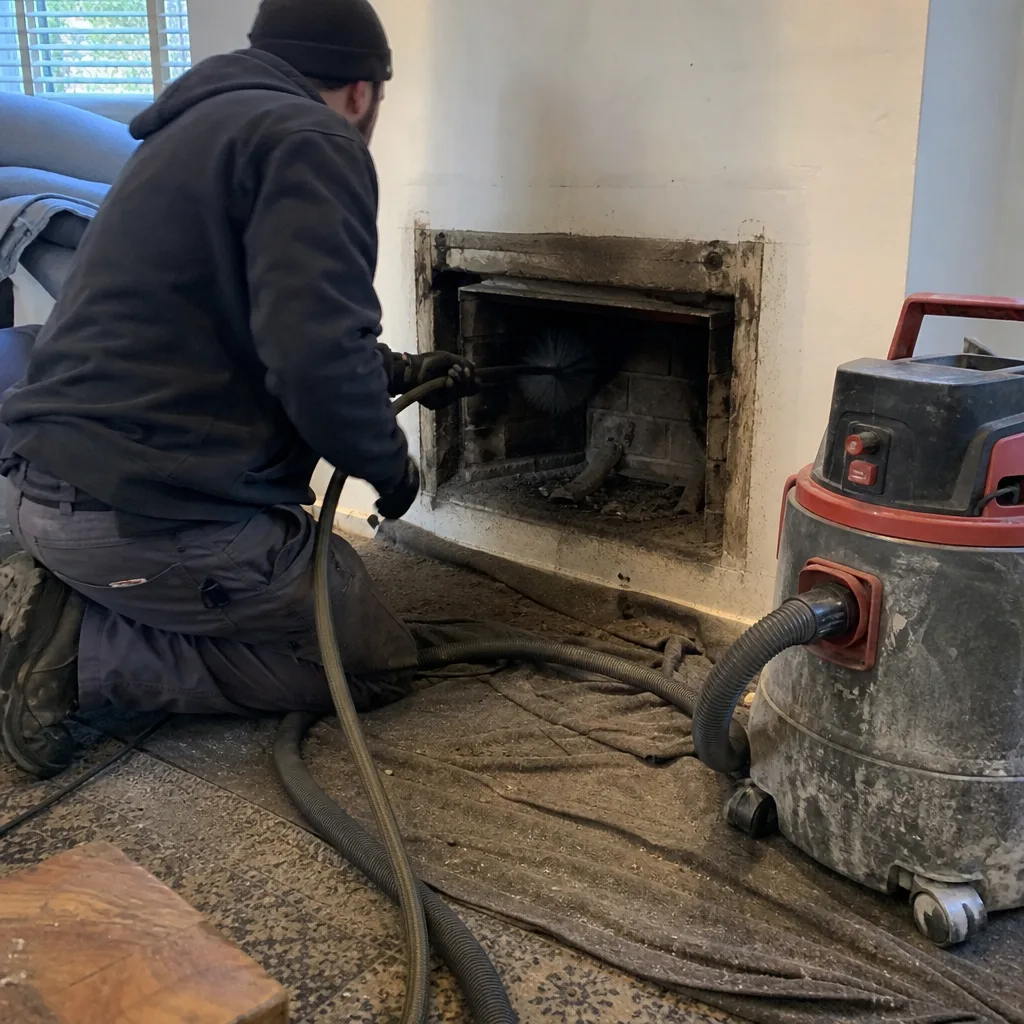 Before
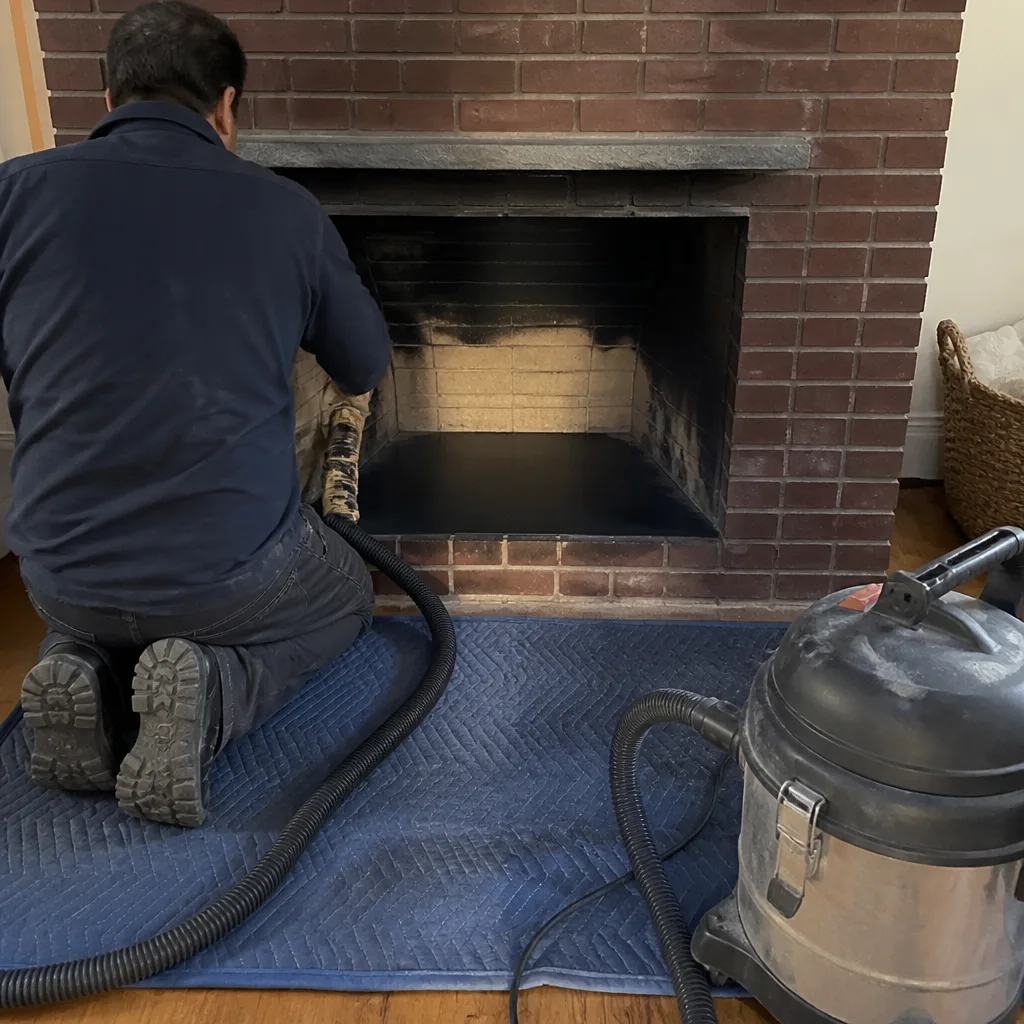 After
After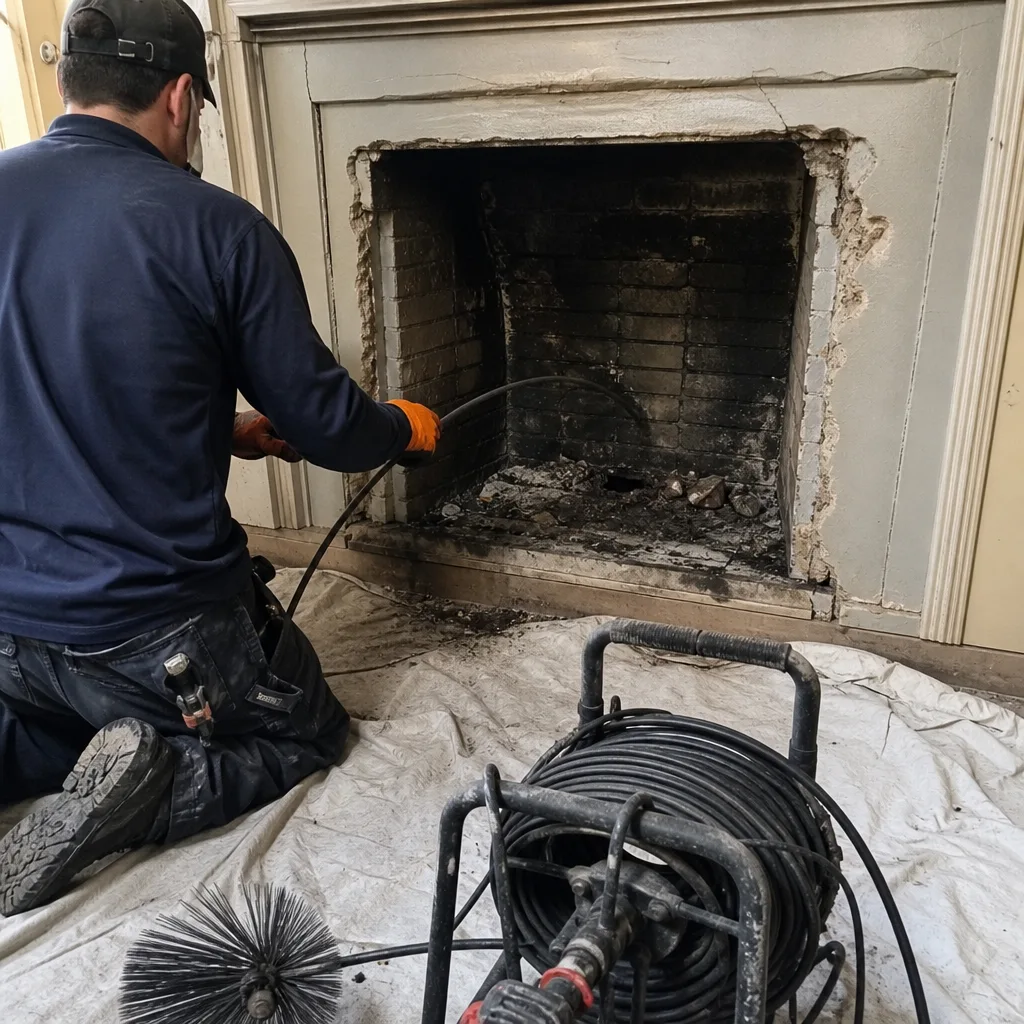 Before
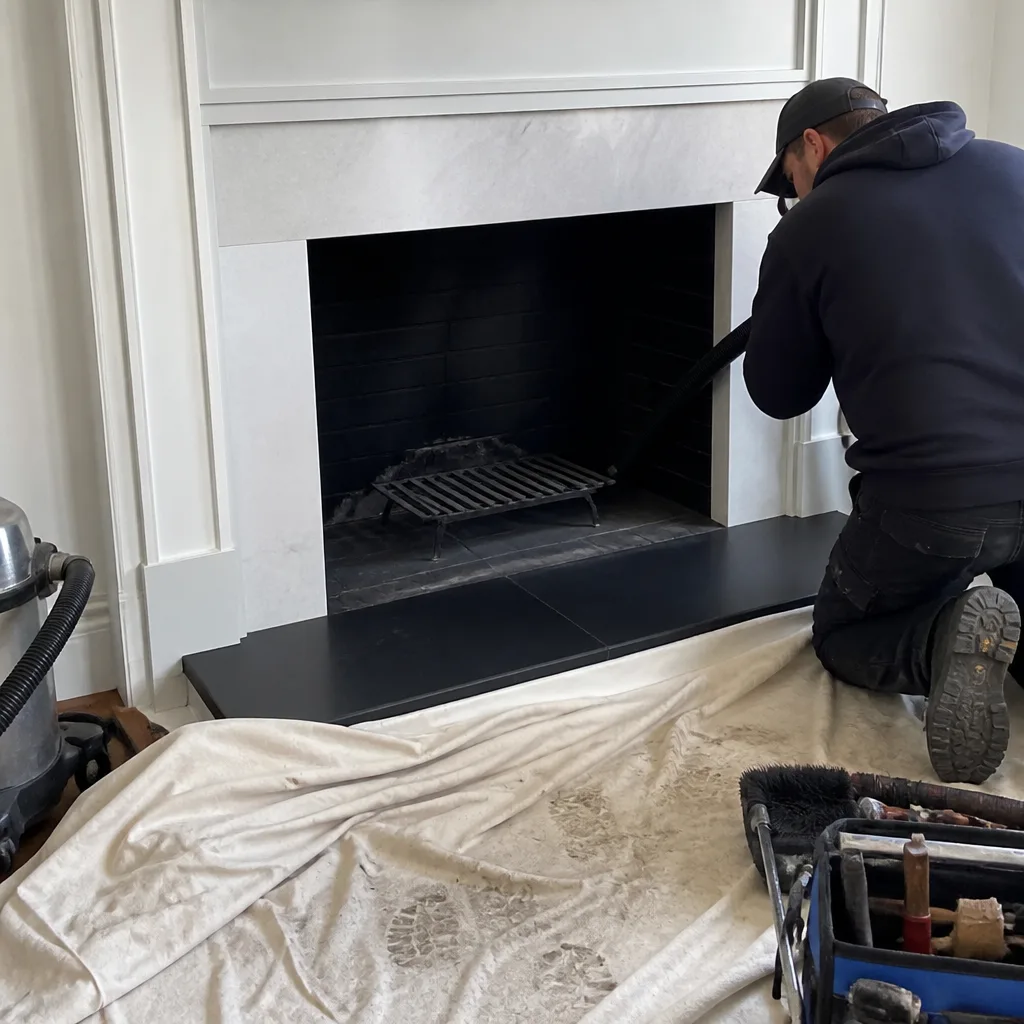 After
AfterFast, Reliable Chimney Repair Across Newark
Chimney repair in Newark, NJ typically runs $400-$2,800 depending on whether you need mortar repointing, flashing replacement, a new liner, or partial rebuilding. Most repairs on Newark rowhouses take one to two days once we’re on the roof. The bigger question for homeowners here isn’t usually the price, it’s whether the repair will actually hold up against the Passaic River valley’s freeze-thaw cycles and the shared-stack venting problems unique to attached brick housing. We’ve been working on Newark chimneys long enough to know the answer starts with a camera inspection, not a guess. Call (551) 213-4778 for a written estimate.
Why Level Two Chimney Financial District Is Newark’s Preferred Chimney Repair Company
Newark’s housing stock doesn’t forgive shortcuts. A rowhouse chimney built in 1910 has a century of freeze-thaw expansion working against its mortar joints, and if it shares a stack with the building next door, the repair question gets complicated fast. We inspect before we quote, every time. Our technicians run an NFPA 211 Level 2 camera-scan on every job, which means when we tell you a liner is spalled or a neighbor’s water heater is cross-venting into your flue, we can show you the footage. That’s Clause 4 of the Haven Standard, the inspection protocol we’ve worked to since 2009.
Newark homeowners research before they call. We get it. That’s why every quote is written, with a written scope and written warranty delivered before any work starts, not after a tech is already on your roof. No “call for a quote” games. We also offer a free second opinion on any written estimate you bring us from another company. If a competitor has already quoted you a liner job, bring it over. We’ll tell you honestly whether it’s necessary. Corrine Halstead leads our team, and she’s built the business around one principle: the customer walks away with evidence, not a sales pitch.
Our Chimney Repair Services in Newark
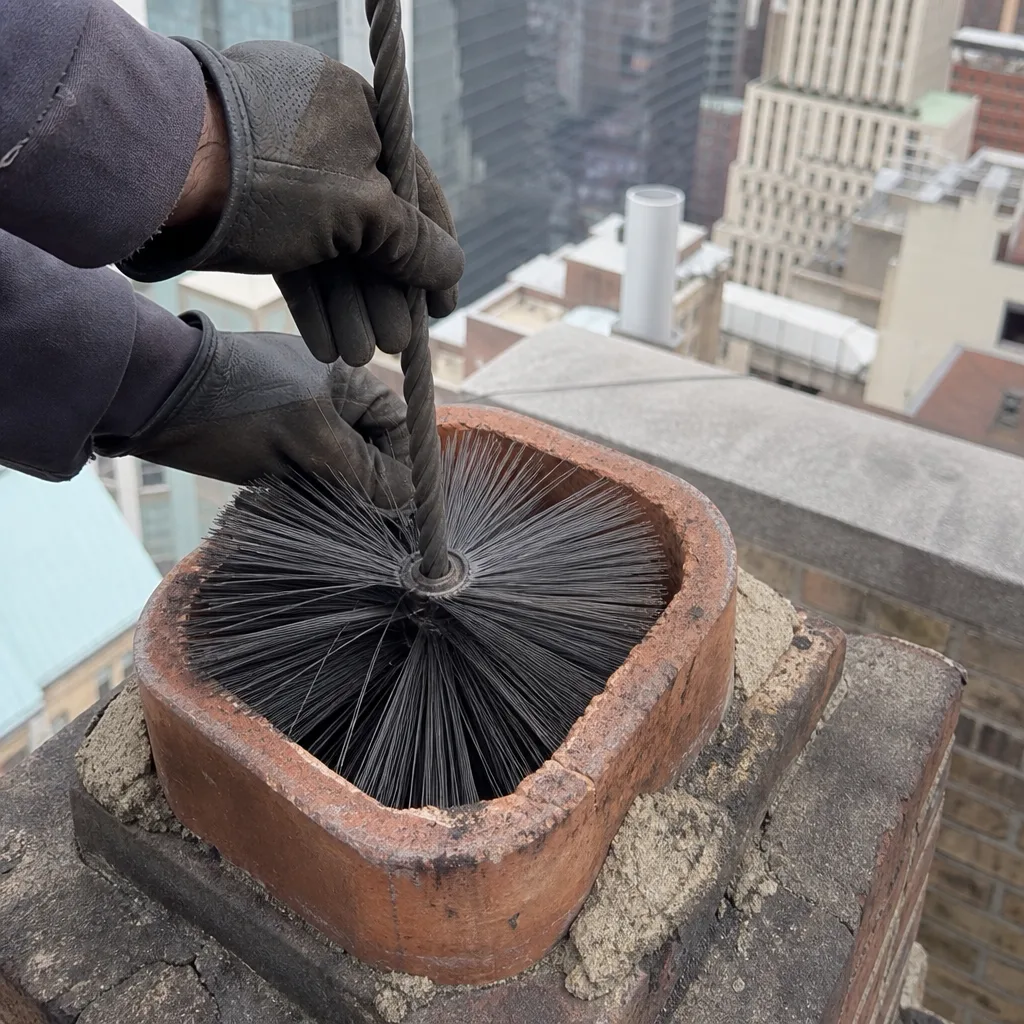
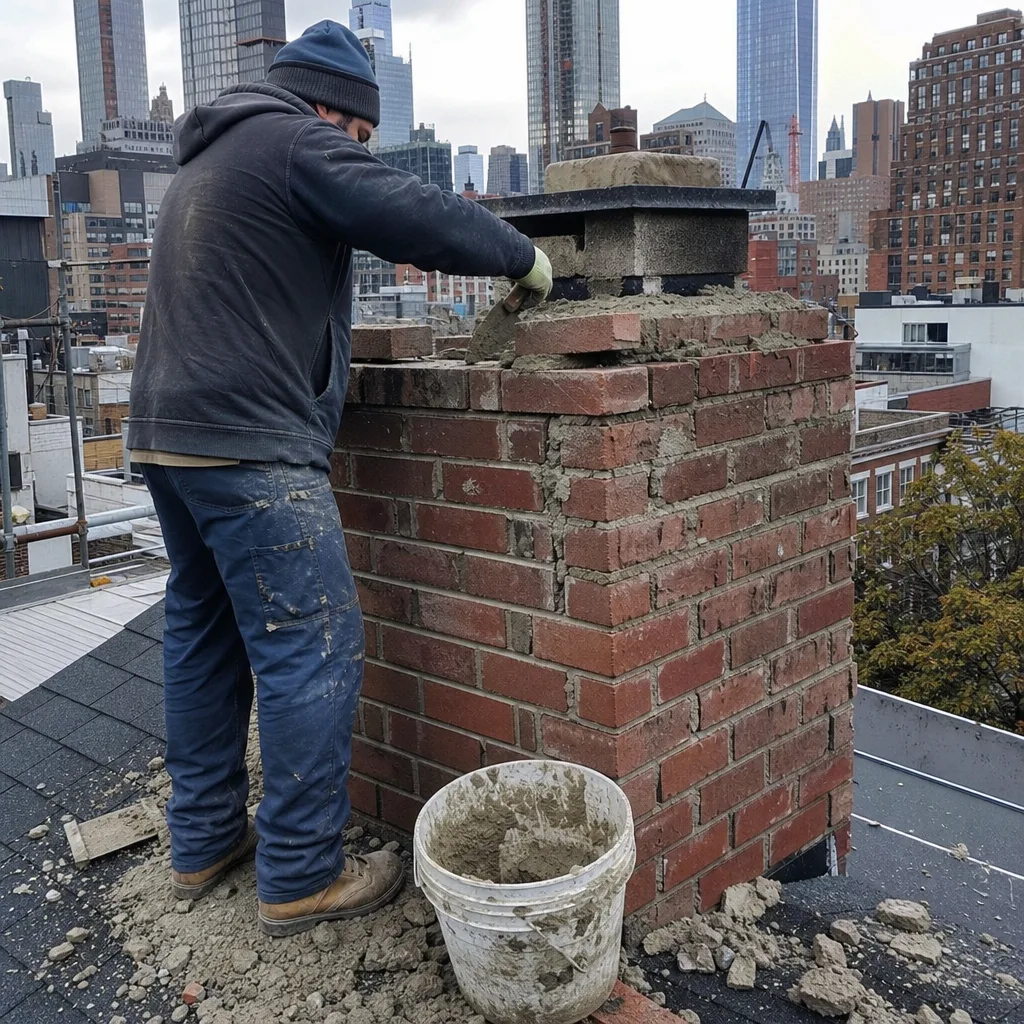
Most Newark calls we field involve one of four failures: water getting into the stack, flashing pulling away from the roof line, mortar turning to sand, or brick faces popping off after decades of damp winters. Here’s how we handle each.
Mortar Repointing
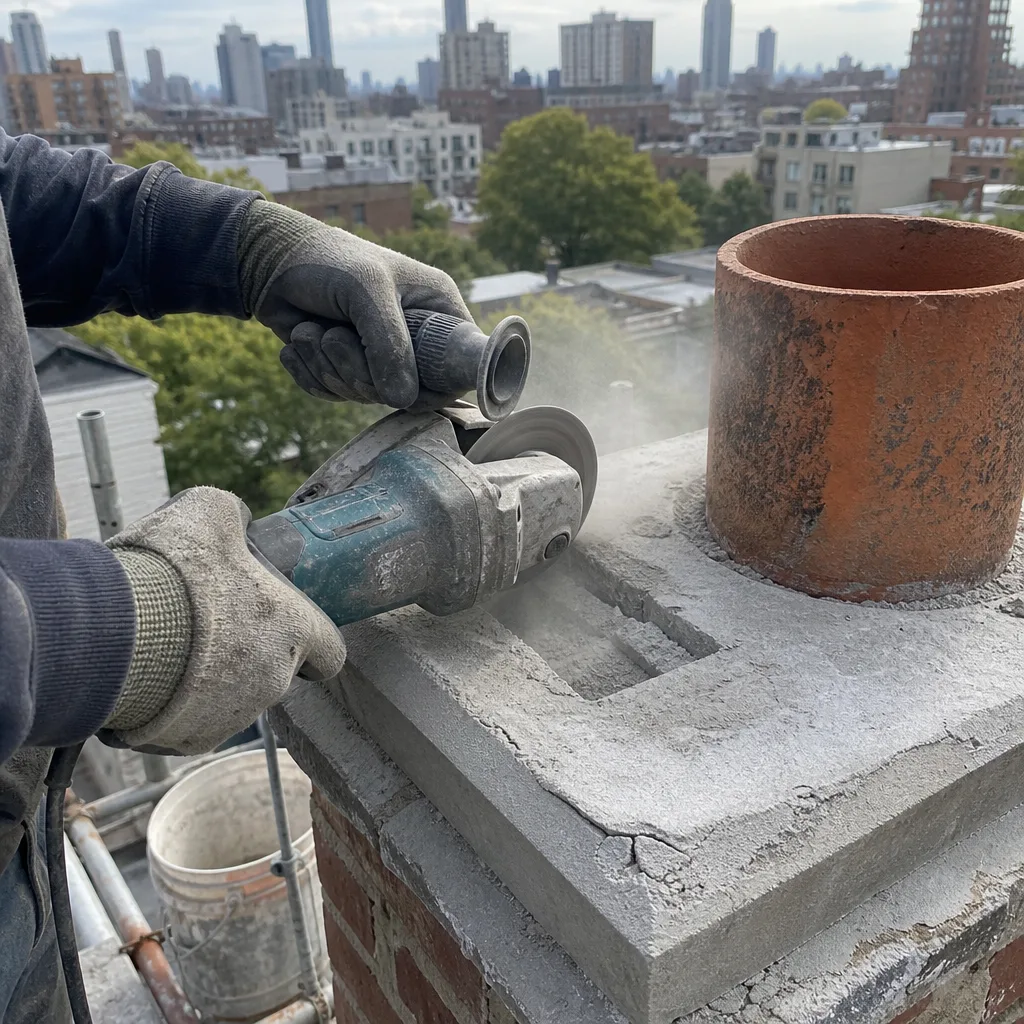
The original lime mortar used in Newark’s pre-1935 brickwork was softer than modern cement, which is actually a good thing: it flexes. When someone repoints with hard Portland cement over old soft brick, the brick itself starts to crack. We match mortar composition to the existing wall so the repair moves with the building. In the North Ward and Ironbound, where salt air from the port meets freeze-thaw cycles, failing mortar is the single most common call we get.
Spalling Brick Repair
Spalling is when the face of a brick pops off, usually because water has soaked into the masonry and frozen. Newark sits in the Passaic River valley, which traps cold damp air in winter. That’s why spalling here is worse than in surrounding towns at higher elevation. We cut out the damaged brick, match it as closely as possible to your existing face, and reset it. If the damage is widespread, we’ll tell you plainly whether a partial rebuild makes more sense than patching.
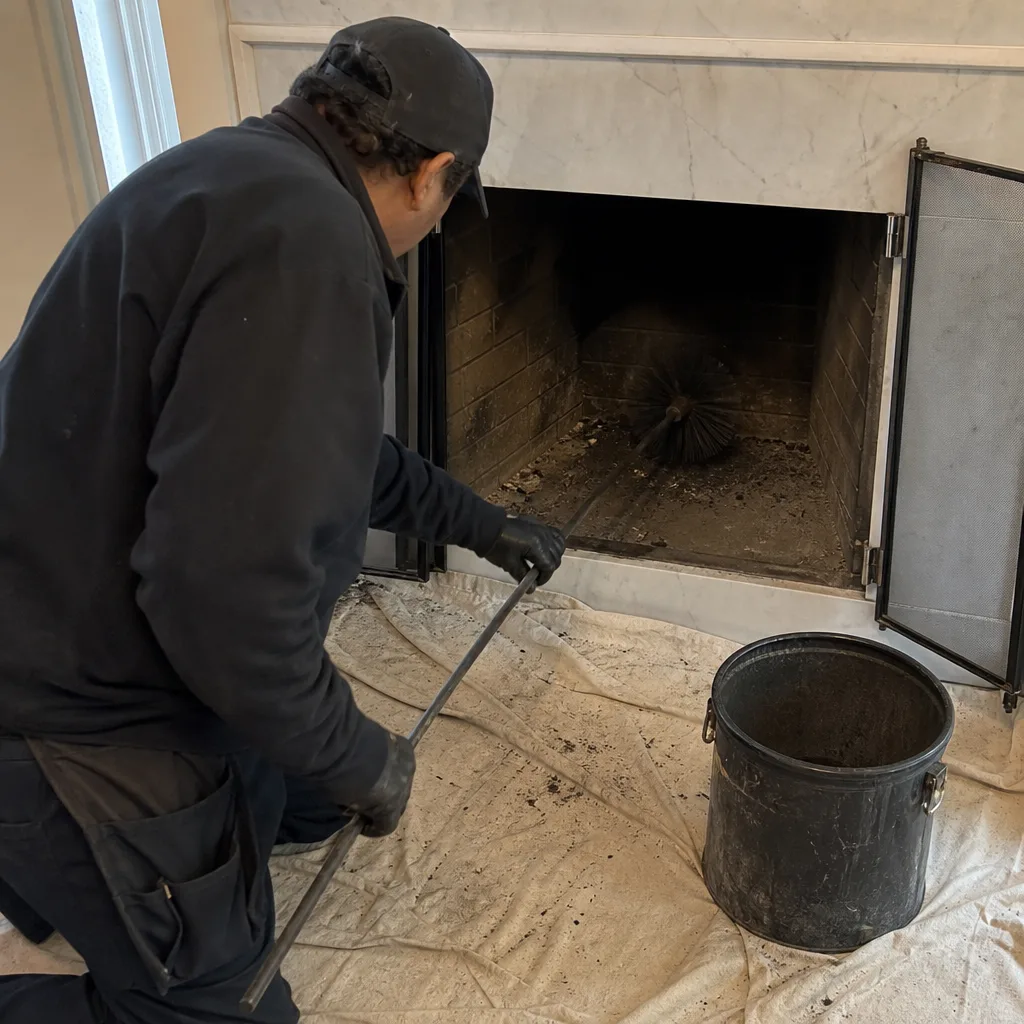
Chimney Waterproofing
A clay-tile flue liner that’s been oversized since 1920 doesn’t just hold heat, it holds moisture. Once Newark homes converted from oil heat to gas, the low-temperature exhaust stopped drying out the flue interior. Condensation now sits inside the liner, while outside, rain and freeze-thaw cycles work the brick. Waterproofing isn’t a substitute for a sound liner, but it’s a critical layer on the exterior. We use breathable sealants that keep liquid water out while letting the masonry release trapped vapor. Applying one to a saturated chimney is pointless, which is why we inspect first.
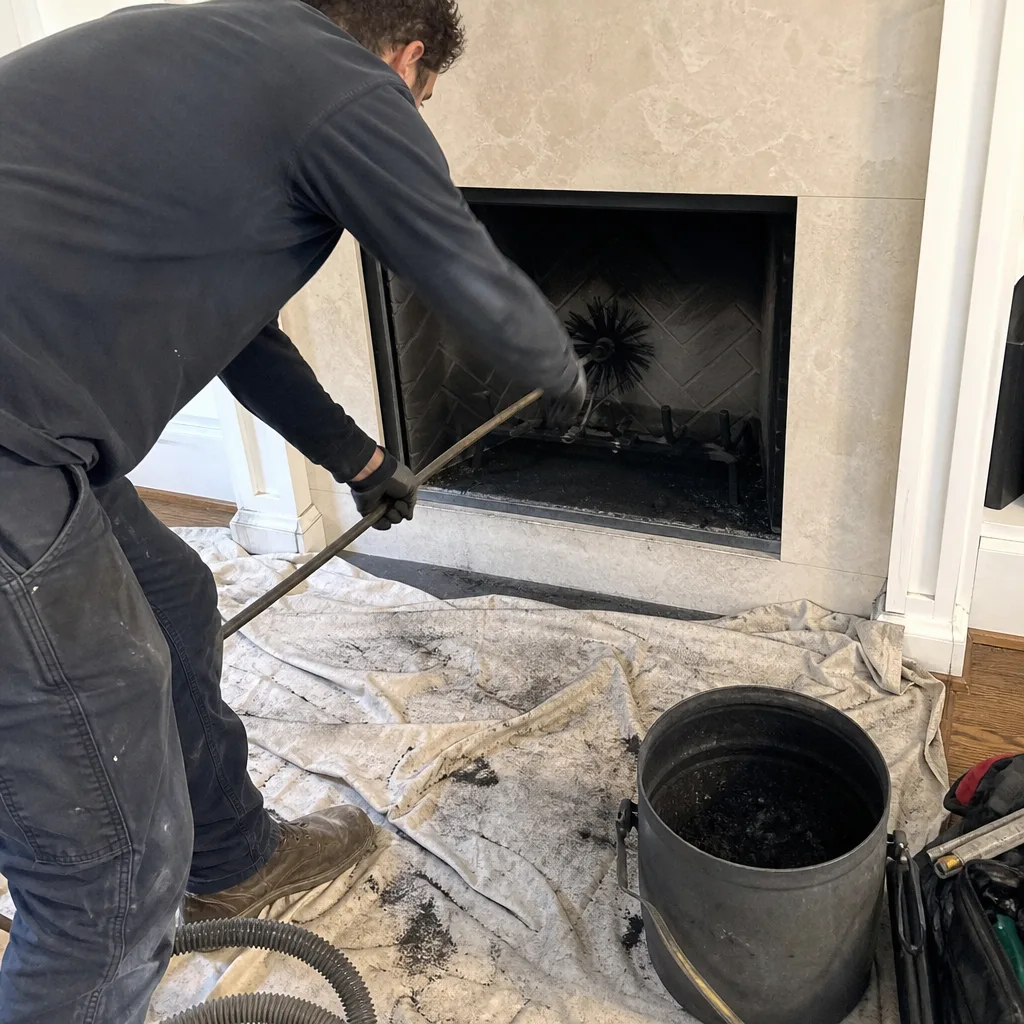
Flashing Repair
Flashing is the metal transition where the chimney meets the roof. In Newark’s rowhouse blocks, flashing fails in the same pattern: the original galvanized steel corrodes along the mortar seam, and driving rain from the northeast finds its way into the roofline. We see it most on flat-roofed two- and three-family homes along Ferry Street and Bloomfield Avenue. Our repair replaces the flashing entirely and seals the new run with a watertight membrane under the shingle or membrane lip, not just a bead of caulk over the old metal.
What happens when you call
- 1
A real person answersNo phone trees - you reach a local pro.
- 2
You get an upfront price rangeHonest numbers before anyone is dispatched.
- 3
A background-checked tech heads outLicensed & insured, dispatched right away.
- 4
You approve before work beginsNothing starts until you say go.
BeforeAfterTrusted Brands We Service in Newark
When a Newark liner needs replacement, we specify materials from DuraFlex for stainless steel relining systems and HeatShield for ceramic resurfacing where a liner can be salvaged rather than removed. Both systems are in regular use across the city’s rowhouse stock, and we keep common component sizes stocked for Newark jobs, which keeps turnaround shorter than ordering through a distributor after the inspection. For crown repair and waterproofing work, we source through our established supply network specifically to keep customer pricing honest. You’ll see the exact product name on your written quote, never a generic “liner system.”
Common Chimney Repair Problems We See in Newark Homes
- Oversized coal-era flue liners condensing gas exhaust. Newark’s 1890-1935 housing stock was built with chimneys sized for coal and oil, not gas. Modern gas appliances vent at lower temperatures, so moisture condenses inside the flue instead of being driven out. That condensation accelerates clay-tile spalling and, over time, creates carbon monoxide backdraft risk. This failure pattern is concentrated in Newark’s age and type of housing, far less common in newer surrounding suburbs.
- Freeze-thaw erosion of mortar and brick faces. The Passaic River valley traps cold, wet air across Newark in winter. Water penetrates cracked crowns and open joints, freezes, and expands. Repeated cycles turn mortar joints to powder and pop brick faces off the stack. We see this on nearly every inspection of an unmaintained rowhouse chimney.
- Shared-stack cross-contamination between attached homes. In the Ironbound and similar dense rowhouse blocks, adjacent chimney stacks often share masonry or run flues side by side with inadequate separation. A neighbor’s gas appliance venting into a shared clay-tile flue can push exhaust into your unit. We’ve found this on camera more times than we can count. It requires coordination between both owners before any liner work begins.
- Deteriorating flashing on flat-roofed rowhouses. Newark’s flat and low-slope roofs hold water longer than pitched roofs, which means flashing is under attack from standing moisture as well as rain. The original galvanized steel installed in the 1920s and 30s is now well past its service life, and the caulked seams are the first point of failure.
Pricing for Chimney Repair in Newark, NJ
| Service | Typical Newark Range |
|---|---|
| Mortar repointing (partial stack) | $400-$900 |
| Flashing replacement | $600-$1,400 |
| Chimney crown rebuild | $800-$1,800 |
| Stainless steel liner installation (DuraFlex) | $1,800-$3,200 |
| Spalling brick repair (small area) | $300-$800 |
| Full chimney rebuild (above roofline) | $2,400-$4,800 |
These are the numbers we actually quote in Newark, not teaser prices. A rowhouse with shared-stack complications can push a liner job toward the upper end, because we have to coordinate access and venting with a neighbor. A straightforward crown repair on a detached two-family in the West Ward typically lands at the lower end. Every quote is written before work starts, per Haven Standard Clause 1. You’ll see the line items, the materials, and the warranty in writing. Call (551) 213-4778 and we’ll schedule a camera inspection, then put the number in front of you.
We Also Serve Cities Near Newark
Our crews work throughout Essex and Hudson counties. If you’re in Elizabeth, Jersey City, Hoboken, or Union City, the same inspection standard and written pricing apply. Each city has its own housing patterns, but the Haven Standard travels with every truck. For readers outside city limits, our Chimney Repair services cover the full range of liner, crown, and masonry work wherever your chimney is.
Serving Newark, NJ - Our Local Coverage Area
We’re based in the Newark area and know this community well. Use the map below to see our service coverage - if you’re nearby, we can almost certainly help.
FAQs - Chimney Repair in Newark
The sign is usually a faint exhaust smell in your upper floors or a water heater that keeps blowing its pilot light. But you can’t confirm it without a camera. We run a Level 2 camera-scan up your flue and look for cross-venting at the shared stack level. If we find it, we’ll document the footage, explain the liability situation, and coordinate with both owners before recommending liner work. In the Ironbound, we recently inspected a three-story rowhouse where a neighbor’s water heater was venting into a shared clay-tile flue. Our camera found the cross-contamination and a spalled liner. We worked with both owners, relined the stack with a DuraFlex stainless system, and rebuilt the cracked crown. Both appliances now draft correctly. Call (551) 213-4778 if you suspect this in your building.
No, not if the stack is structurally shared. You can reline your own flue if it’s independently separated inside the masonry, but if flues run side by side with shared brickwork, the liner installation affects the thermal envelope of the whole stack. Newark’s older rowhouses often have this configuration. We won’t do work that could destabilize a neighbor’s flue or shift their venting. The honest answer is we inspect first, determine the physical separation, and then advise you on what’s legally and safely possible without cross-owner involvement. Sometimes it’s a simple reline. Sometimes it takes a conversation with the neighbor. We’ll tell you which.
Because the flue no longer gets hot enough to dry itself out. When your home burned coal or oil, the chimney ran hot and drove moisture out of the masonry. After converting to gas, the exhaust temperature drops dramatically. The clay liner never dries, condensation soaks into the surrounding brick, and exterior moisture adds to the load. Waterproofing the exterior with a breathable sealant slows that saturation, but it only works when the liner is sound and the crown is intact. We’ll inspect both before recommending waterproofing. If the liner is already spalled, waterproofing alone is wasted money. Call (551) 213-4778 for a camera inspection and a straight answer.
Deteriorated mortar joints caused by freeze-thaw cycling, with cracked crowns running a close second. Newark’s location in the Passaic River valley means the city gets heavier cold-air pooling than surrounding higher-ground towns. Water finds the open joint or the crown crack, freezes, and the expansion forces the brick apart. Over ten or fifteen winters, the top four or five courses of brick start to lean or shed faces. On attached homes, the problem often starts at the shared party wall where two owners each assume the other is maintaining the stack. We inspect, document, and quote the repair before any brick is touched.
Yes, and the reason is that occasional use is worse than regular use for some Newark chimneys. A fire once or twice a winter means the flue stays cold and damp most of the year, which accelerates condensation damage on already oversized clay liners. You also won’t notice a developing problem as quickly as someone using the fireplace weekly. A Chimney Repair in Newark inspection with a camera costs less than most people expect and gives you a written photo record of the flue condition, whether you decide to repair now or wait. The point is knowing, not guessing. Call (551) 213-4778 to schedule.
The Newark Repair Picture Other Chimney Pages Won’t Give You
Most generic chimney repair pages talk about caps, crowns, and liners as if every house is a detached colonial in a suburb built after 1980. Newark isn’t that. The city’s pre-WWII brick rowhouses and two-to-three-family attached homes were built with oversized clay-tile flues engineered for coal and oil. After the city’s near-universal switch to gas heat, those flues now vent low-temperature exhaust that causes chronic condensation and liner spalling. Add the Passaic valley’s freeze-thaw cycle working the exterior masonry, and you get a compound failure: the inside of the flue is rotting from condensation while the outside is eroding from ice expansion. Throw in shared chimney stacks between attached homes, where a neighbor’s venting choices directly affect your flue, and the repair picture is one a generic page never addresses. That’s the Newark chimney problem. We deal with it every week.
Contact Level Two Chimney Financial District in Newark
If you’ve got visible brick damage, a water stain on the ceiling near the chimney, or a smell you can’t place, don’t wait for the next freeze cycle to make it worse. We’ll send a background-checked, uniformed technician to your Newark address, run a camera-scan inspection, and hand you a written price with a written scope and written warranty before any work starts. No pressure, no scare selling, just footage and a number. Call (551) 213-4778 for a free estimate. Live phone support runs 24/7, and every job is backed by the 365-Day Done Right Promise: if it’s not done right, we make it right.
Written by Corrine Halstead, Owner at Level Two Chimney Financial District.