
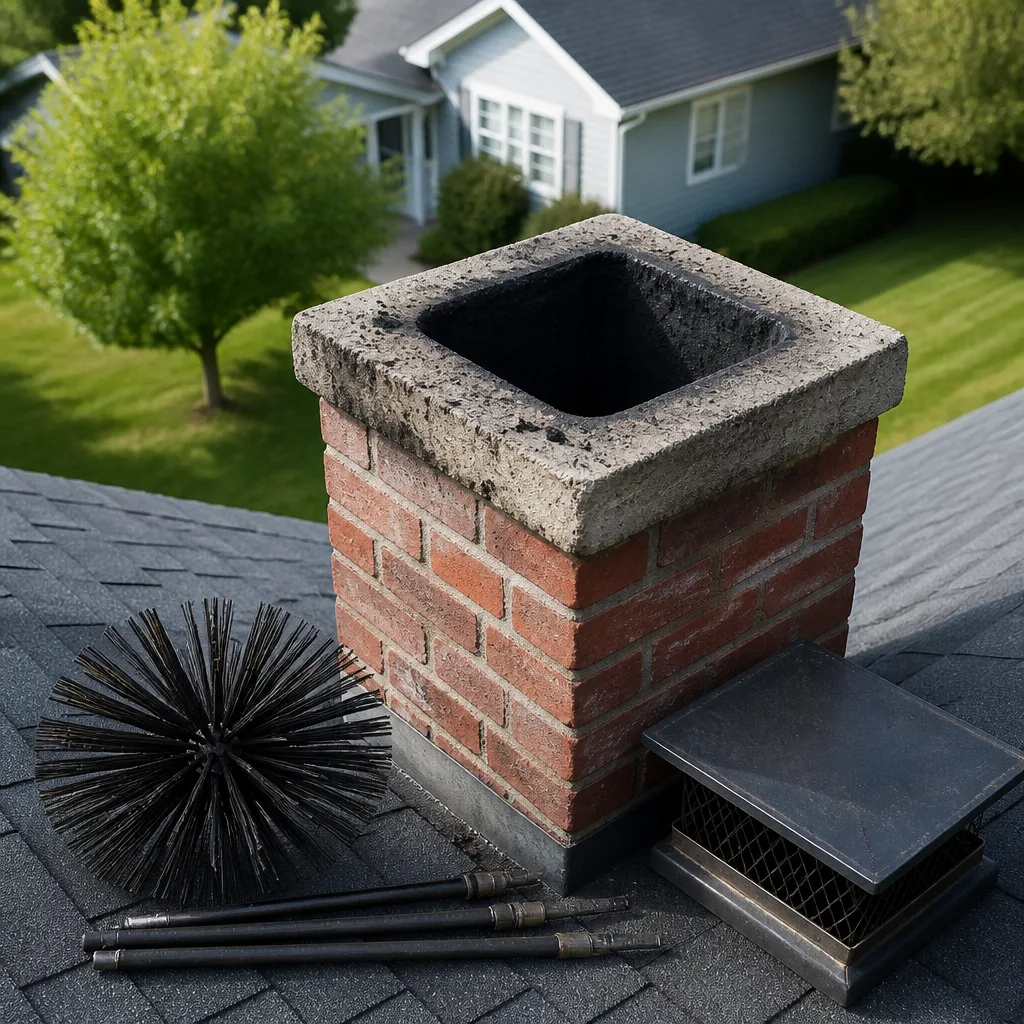
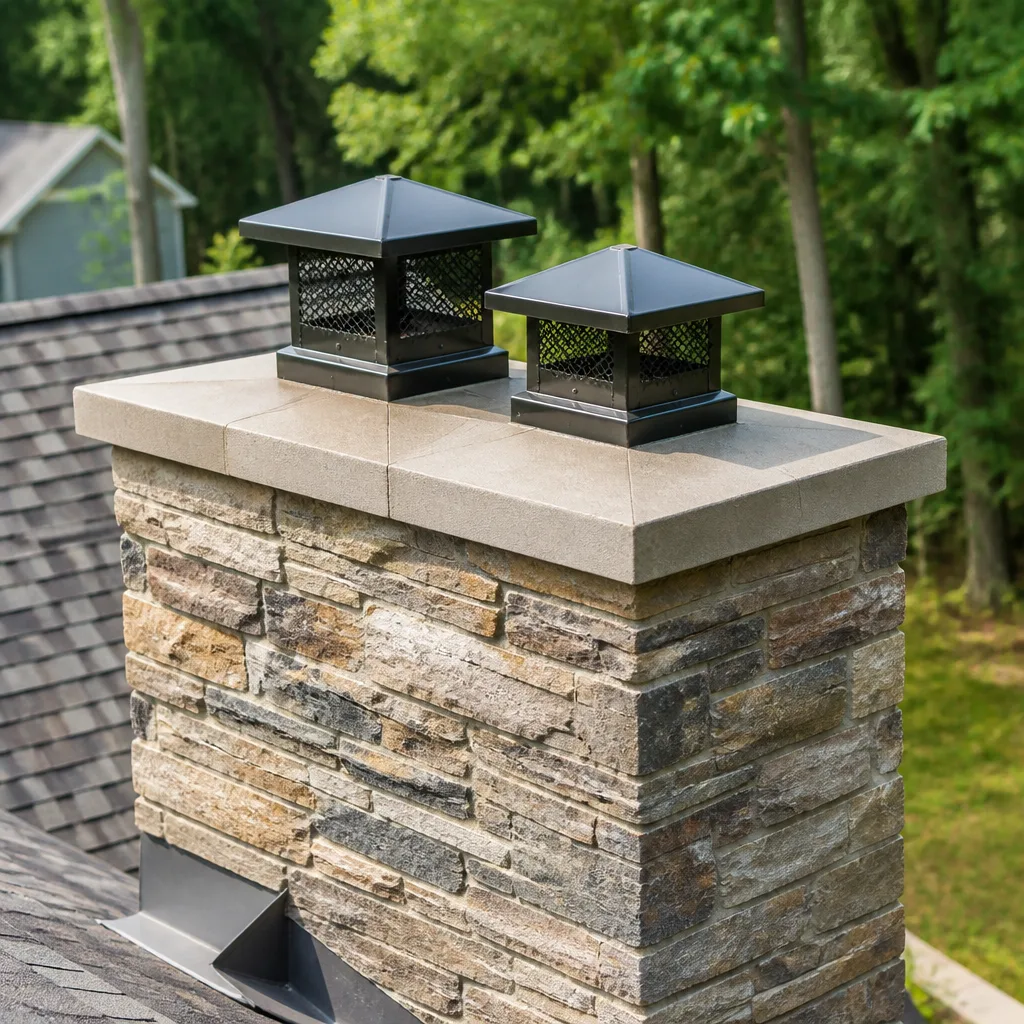
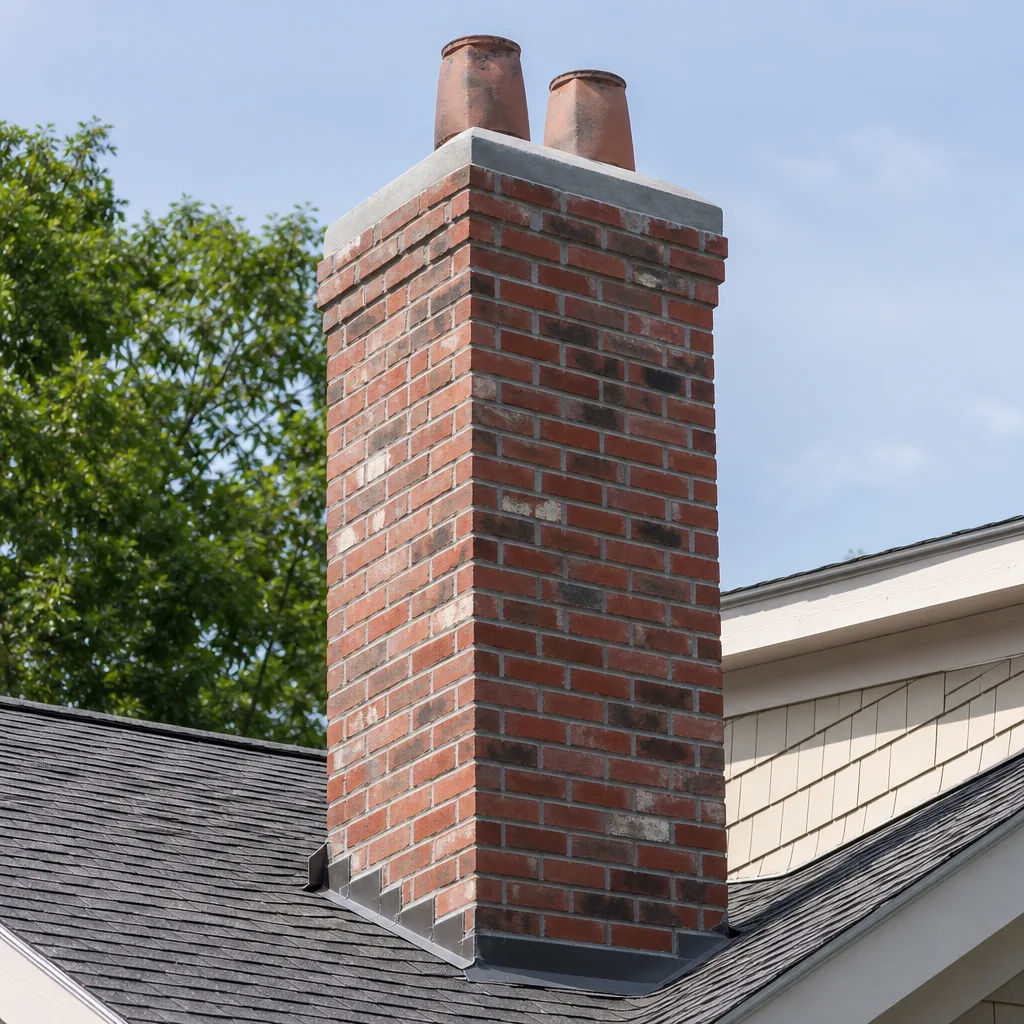
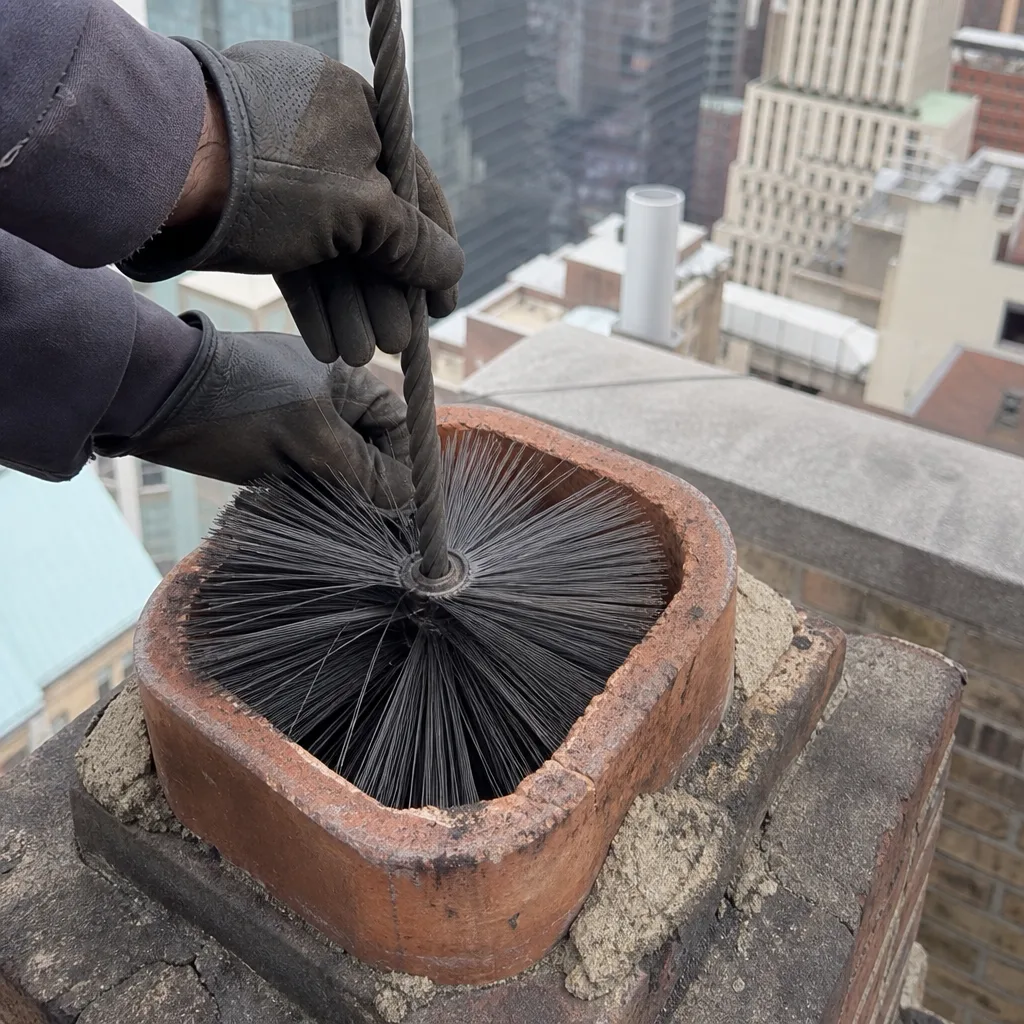
Level 1 sweep and inspection to the NFPA 211 annual standard - flue, crown, cap, and flashing checked and photographed
Chimney sweep logs do not sweep chimneys. They loosen some creosote - which then falls where a brush and vacuum still have to collect it.
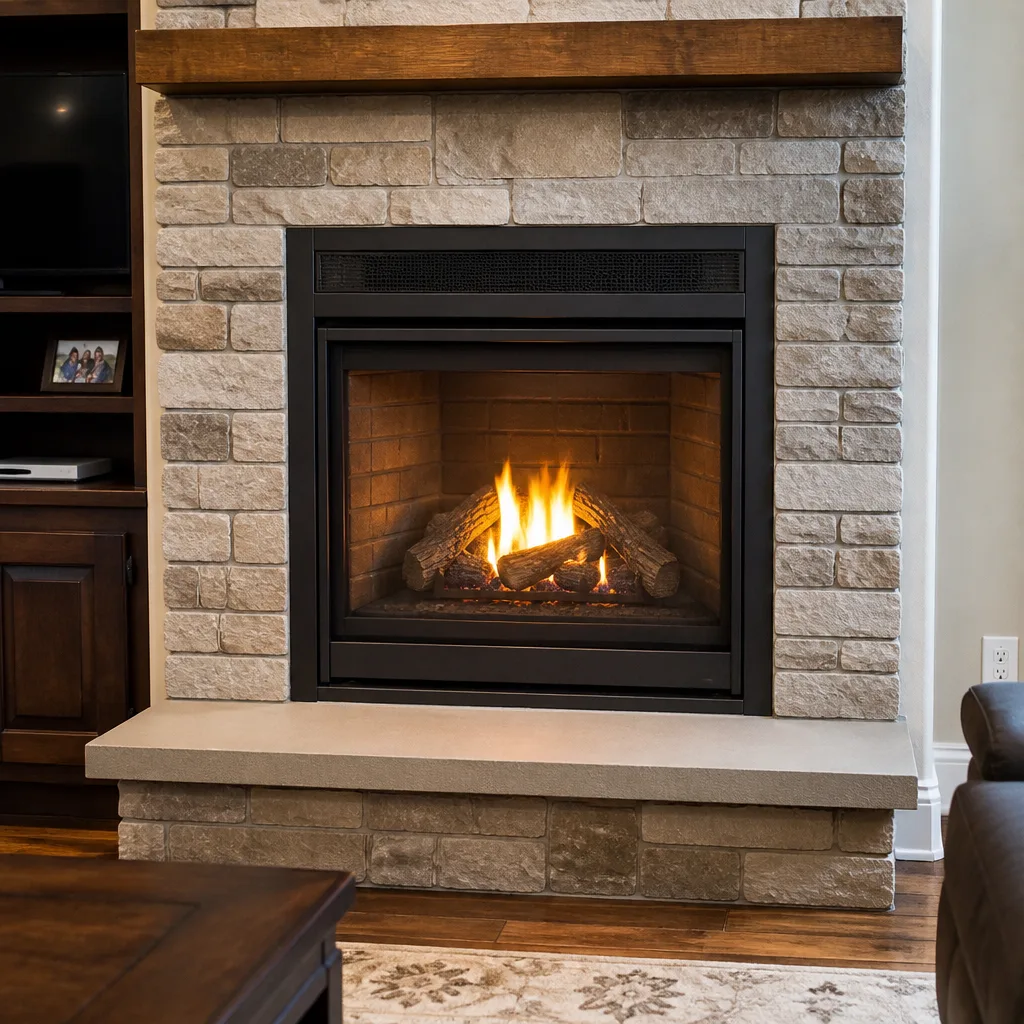
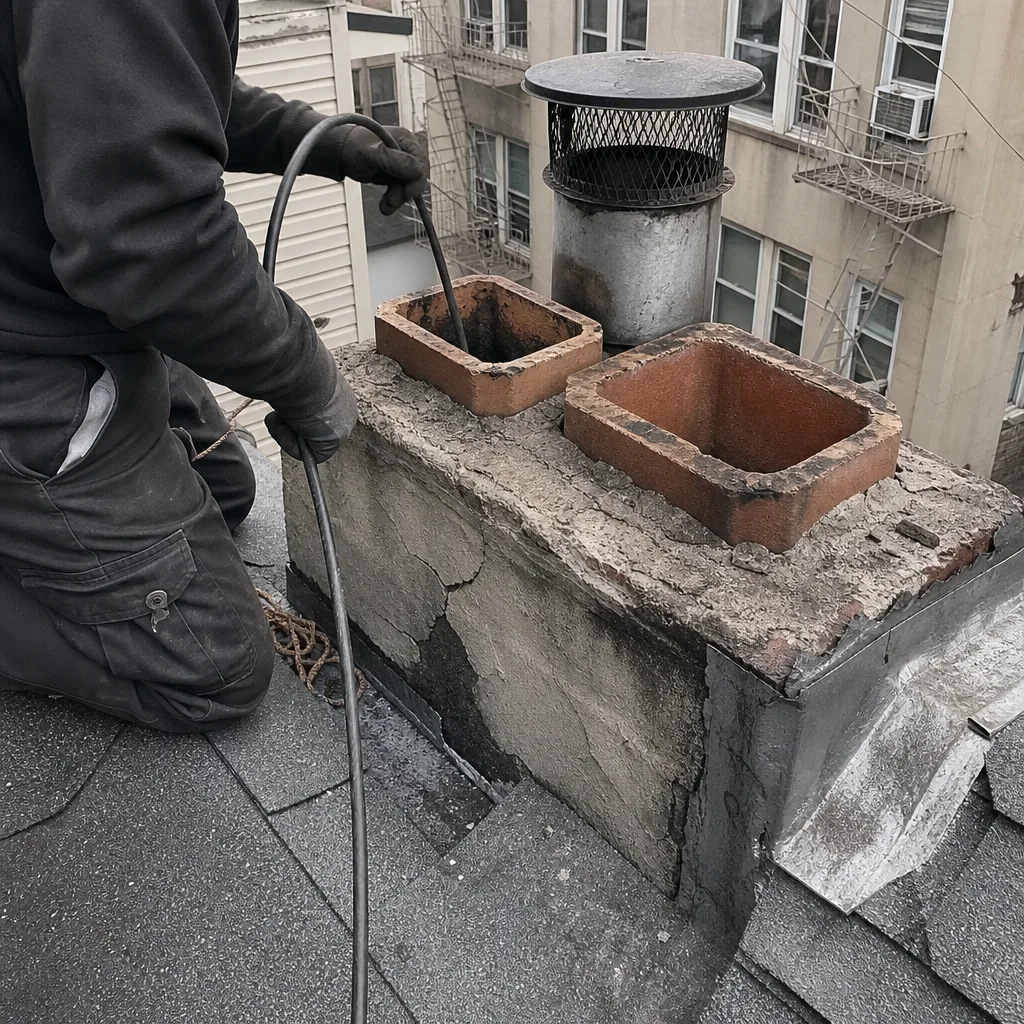 Before
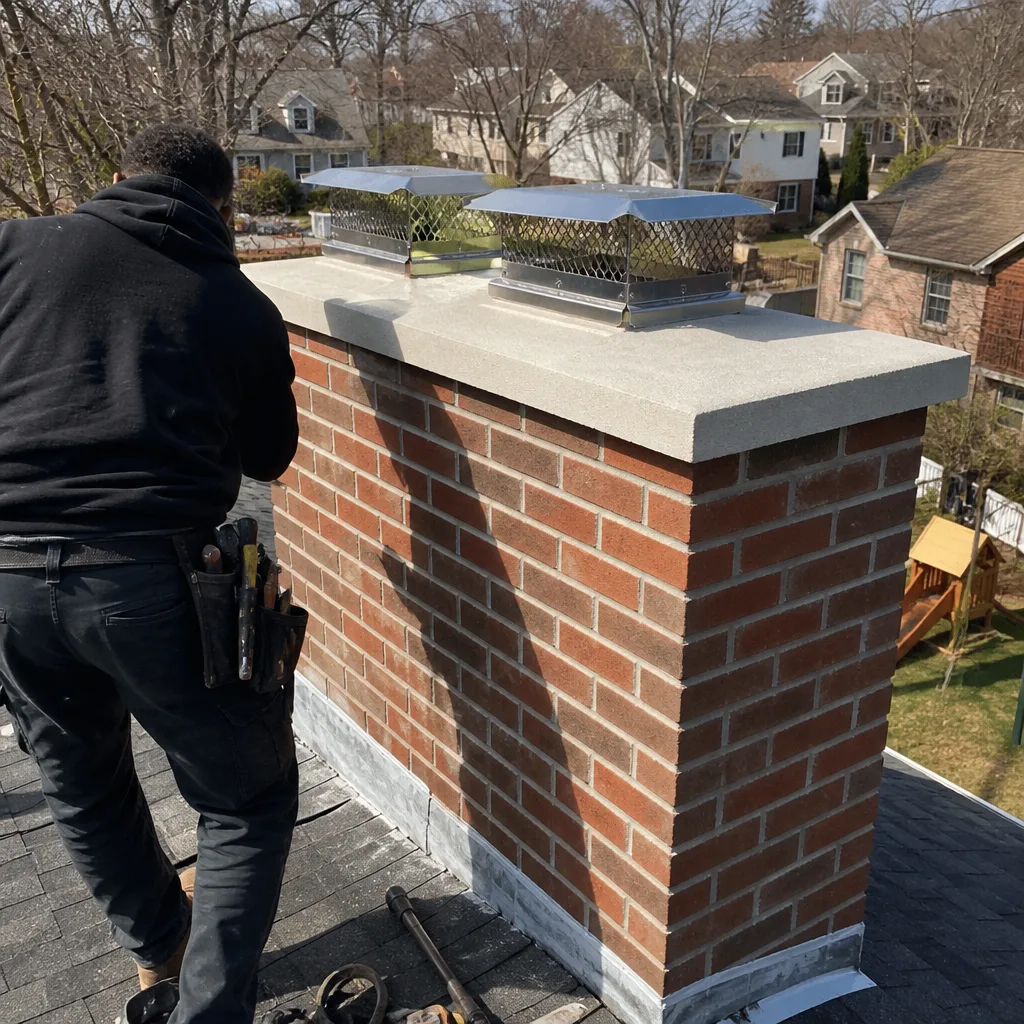 After
After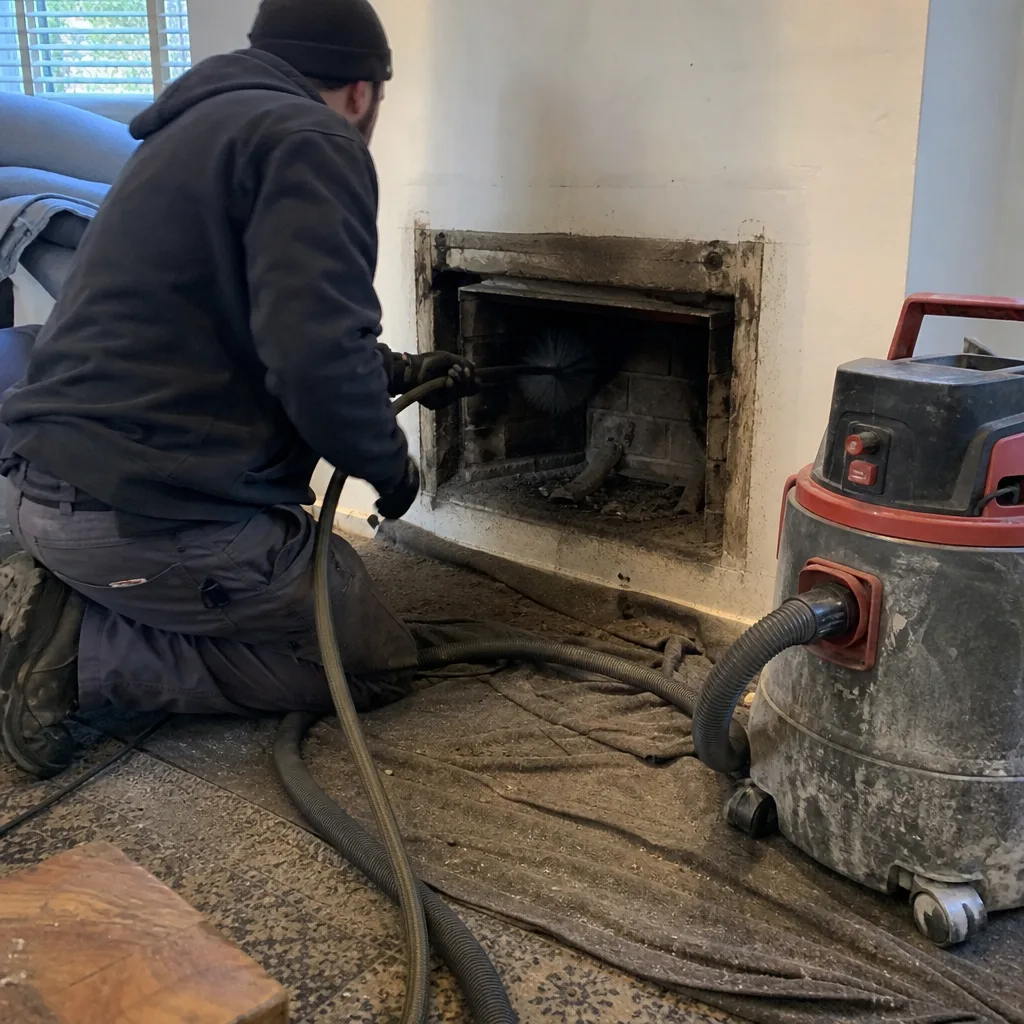 Before
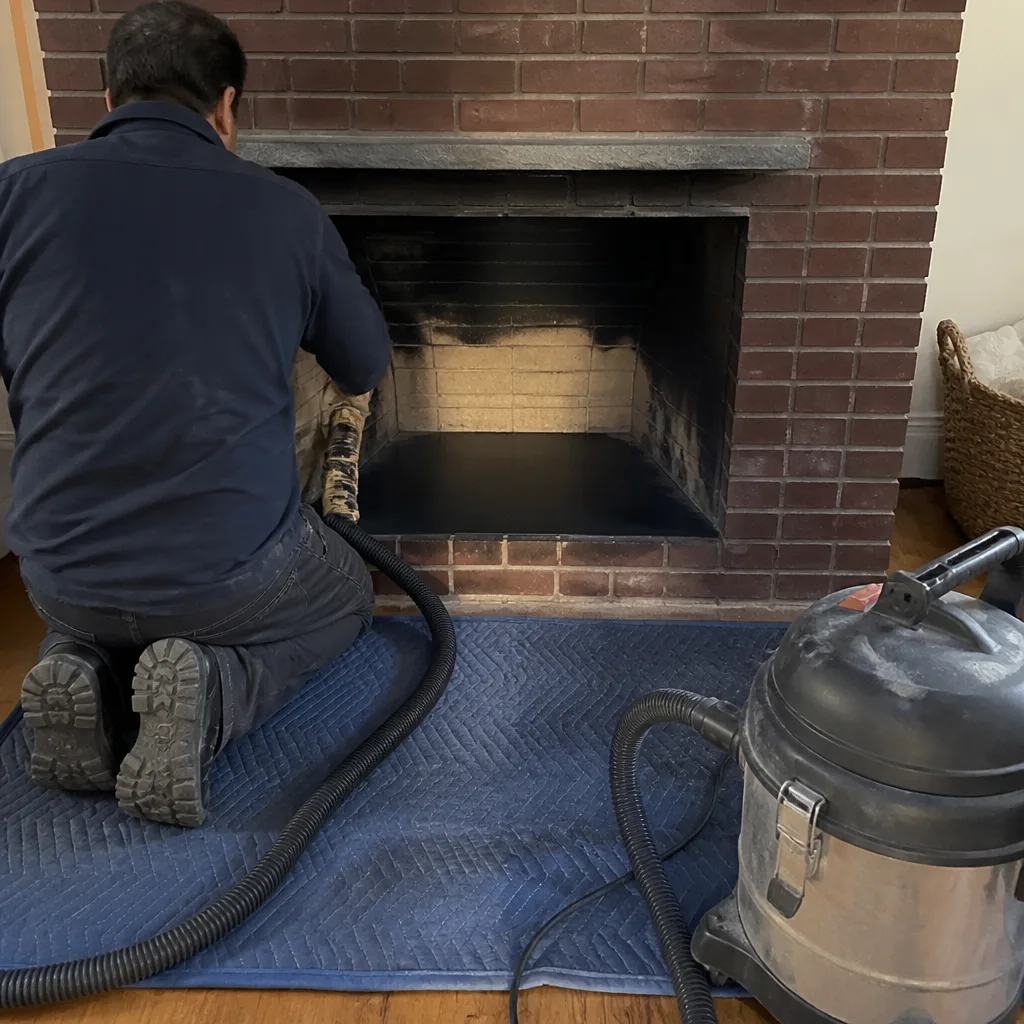 After
After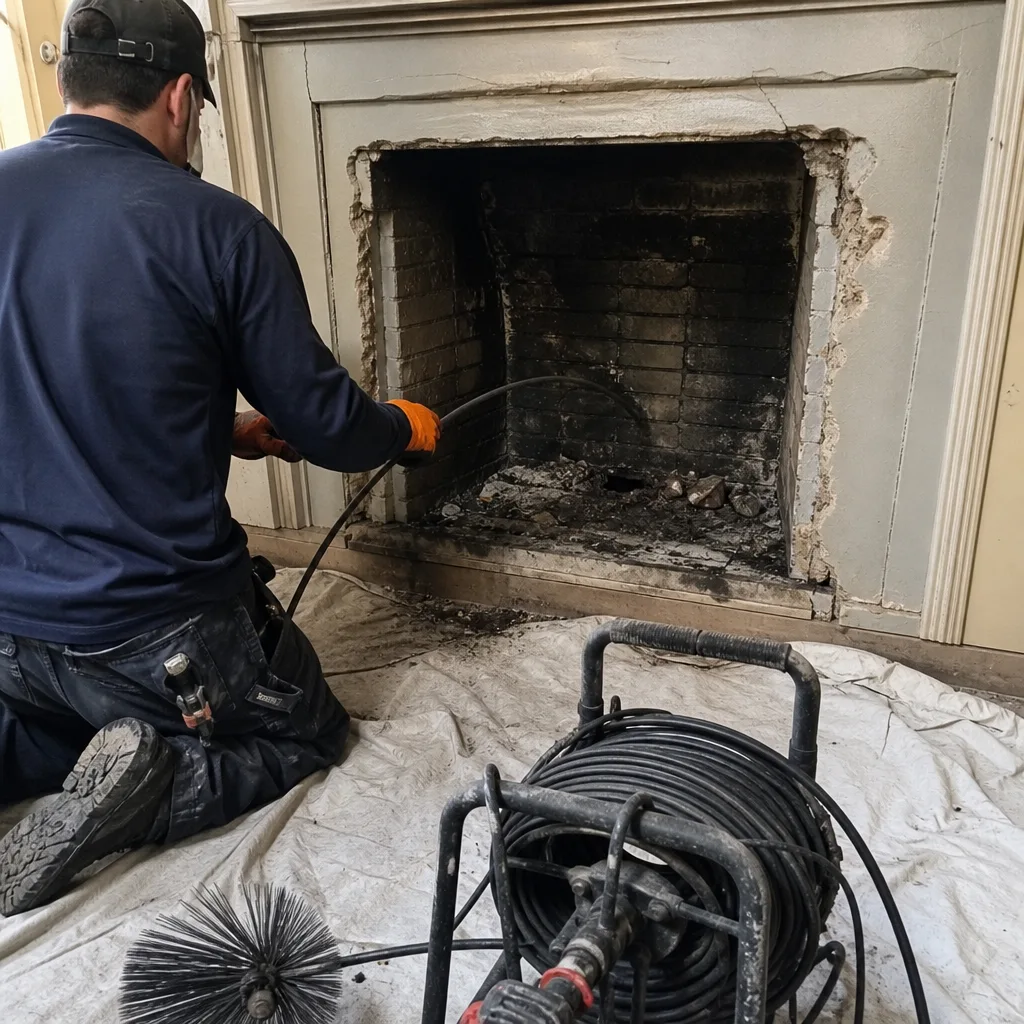 Before
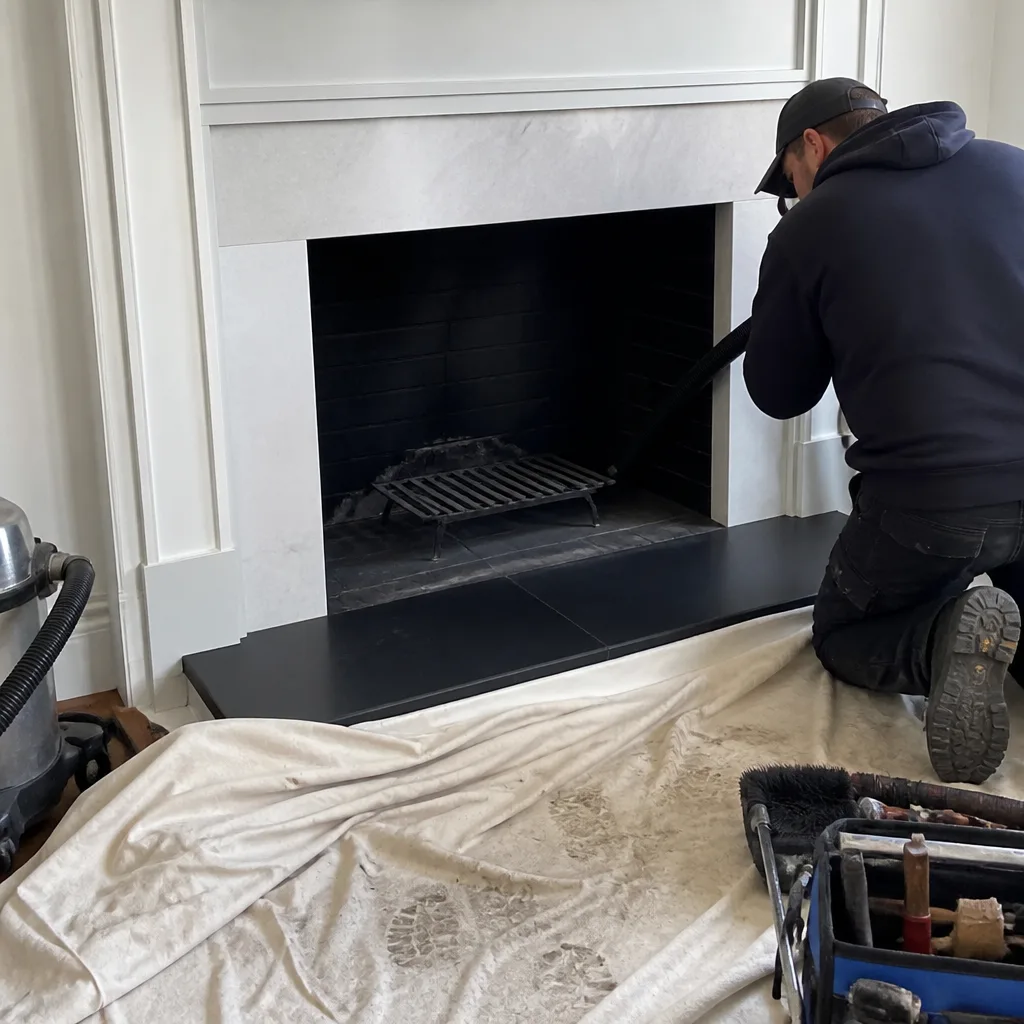 After
AfterHeatShield Flue Liner Replacement: The Financial District Owner’s Guide
We stock and install HeatShield flue liner replacement systems throughout the Financial District, with most installations running between $2,800 and $4,600 depending on flue height and access. We keep the most common HeatShield components on the truck, so in many FiDi buildings the swap is completed in a single visit. Most owners discover a failed liner during a Level 2 inspection after noticing flaky ceramic material at the base of the fireplace or on the smoke shelf.
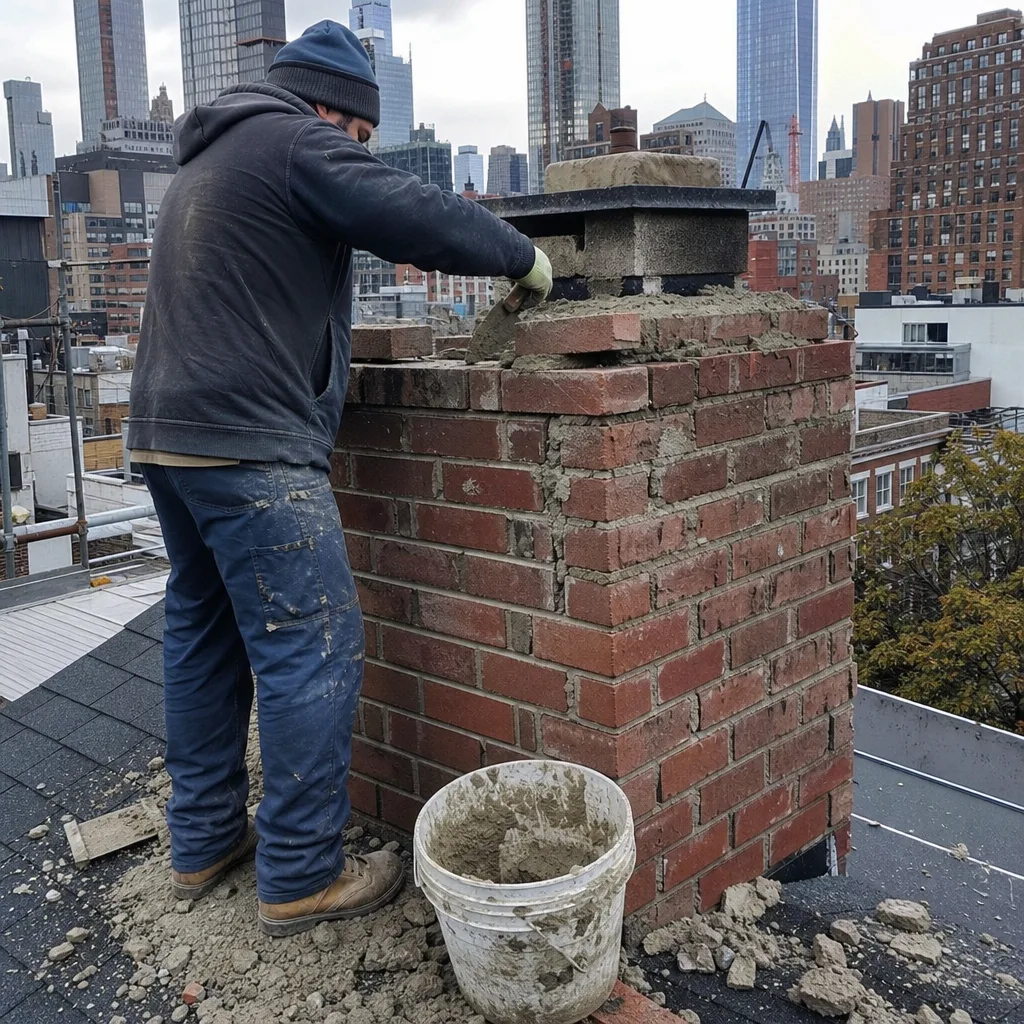
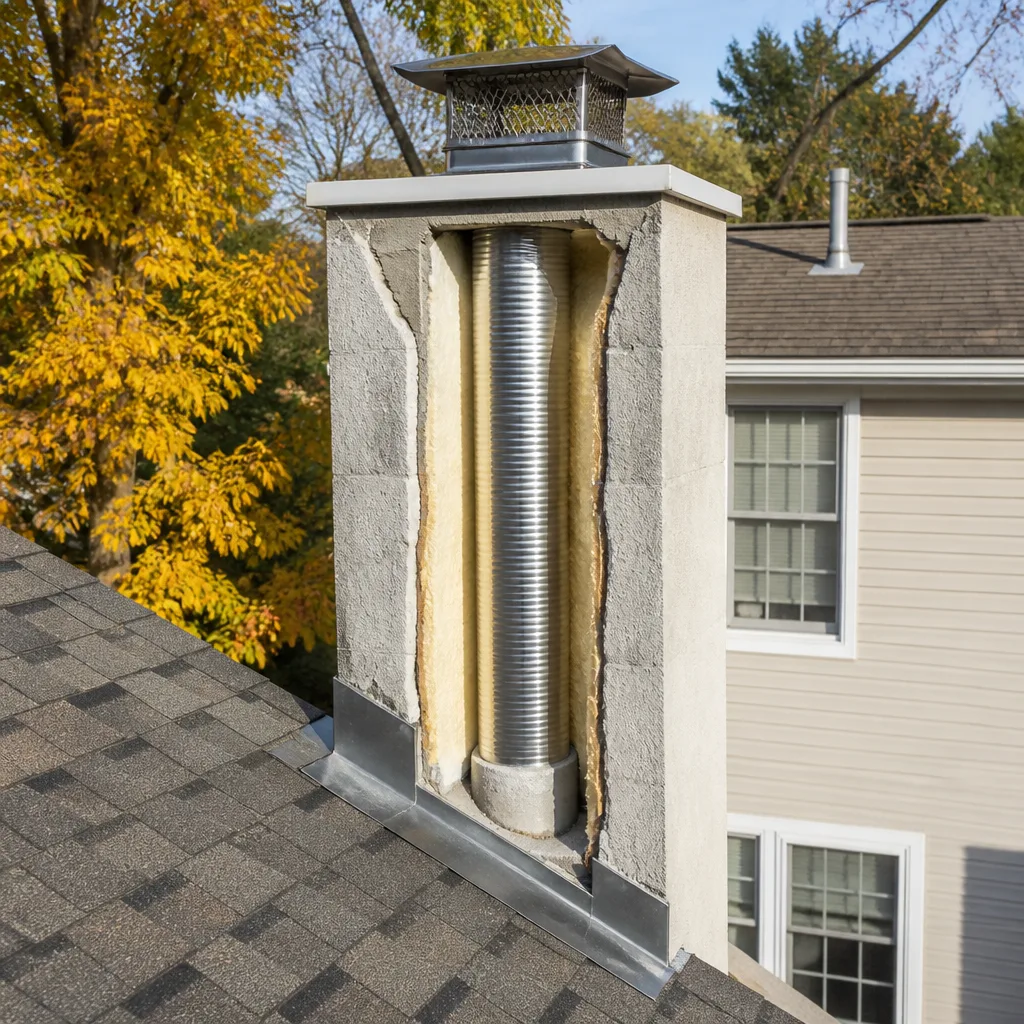
HeatShield is a cerfractory flue repair system, a ceramic sealant that’s pumped through the flue to create a smooth, insulated barrier inside a deteriorating clay tile liner. When the original HeatShield application fails, it usually fails in the same places the underlying masonry failed first: at flue tile offsets, near the smoke chamber, or where water has been getting in from a cracked crown. In the Financial District, we see this pattern regularly in converted loft buildings and prewar co-ops where the original clay liners date back 80 to 100 years.
Which HeatShield Models This Applies To
HeatShield is applied as a system rather than sold in discrete model numbers the way a furnace part would be. The application is specified by flue dimensions and liner condition, not by a product SKU. When we replace a failed HeatShield application in the Financial District, we’re typically re-lining a flue that was first treated because the original clay tile liner had cracked, spalled, or separated at the joints.
The compatibility question that matters is whether your flue was treated with HeatShield’s standard cerfractory mix or the HeatShield Joint Repair System, which targets specific joint failures rather than full resurfacing. If you have the original paperwork from a previous owner, the application type should be listed. If you don’t, we can determine what was applied by running the camera down the flue and examining the surface texture, thickness, and failure pattern. A full resurfacing delaminates in sheets. A joint repair fails as isolated ring fractures at tile seams.
One compatibility gotcha specific to HeatShield in Financial District buildings: older flues treated in the 2000s often lacked a properly sized top plate or rain cap, which allowed water to pool at the bottom of the flue and undermine the cerfractory bond from below. We check for this on every HeatShield call because it changes whether a simple re-application will hold or whether the underlying masonry needs attention first.
Signs Your HeatShield Flue Liner Replacement Is Failing
- Ceramic flakes in the firebox. HeatShield material delaminates from the underlying clay tile when the bond fails, and the pieces collect at the base of the flue. If you’re finding pale gray or tan fragments that crumble when pinched, that’s cerfractory material, not creosote.
- Fine dust on the smoke shelf after a sweep. A failing application sheds fine ceramic powder before it sheds visible flakes. Our techs find it during cleaning, and the photo record shows it clearly.
- Draft problems that got better, then worse again. HeatShield smooths the flue surface and improves draft. When the material starts separating, the surface becomes irregular and draft drops off. If your fireplace drew fine for a few years after treatment and then gradually worsened, the application may be failing.
- Visible cracking or bubbling on the flue surface during inspection. Camera footage shows the inside of the flue in detail. HeatShield should look smooth and uniform. Cracked, bubbled, or peeling areas are failures in progress, even if the flue still drafts today.
- Water staining on the exterior of the chimney chase or adjacent walls. A compromised flue surface allows moisture to penetrate the masonry from inside, which shows as efflorescence or damp spots long before structural damage appears.
BeforeAfterReplacement Cost & What’s Included
A HeatShield flue liner replacement in the Financial District typically runs $2,800 to $4,600 installed. The spread is driven by three factors: flue height (most FiDi rowhouses and converted lofts run 25 to 45 feet), roof access difficulty, and the condition of the underlying clay tile structure. If the original tile liner is structurally intact and only the cerfractory surface has failed, a re-application is straightforward and lands at the lower end. If the underlying tiles have shifted, separated, or collapsed since the original application, we’re looking at a partial or full stainless liner installation instead, which changes the scope of work.
| Component | Typical Range (Financial District) |
|---|---|
| Camera inspection + written assessment | $0 (included with service visit) |
| HeatShield full resurfacing (single flue, moderate height) | $1,800 - $2,800 |
| HeatShield joint repair system (targeted) | $900 - $1,500 |
| Stainless steel liner conversion (if clay tiles failed structurally) | $2,400 - $3,800 |
| Top plate, rain cap, and mortar crown repair | $600 - $1,200 |
Every quote is written before work starts, and the price on that sheet is the price you pay. The written scope lists the exact application spec, the warranty period, and what the photo record will cover when the job is done. That’s Clause 1 of the Haven Standard, and it’s the only way we’ve ever worked. Materials are sourced through Haven’s buying network, which is how we keep the per-foot cost competitive for Financial District clients.
DIY or Call Us?
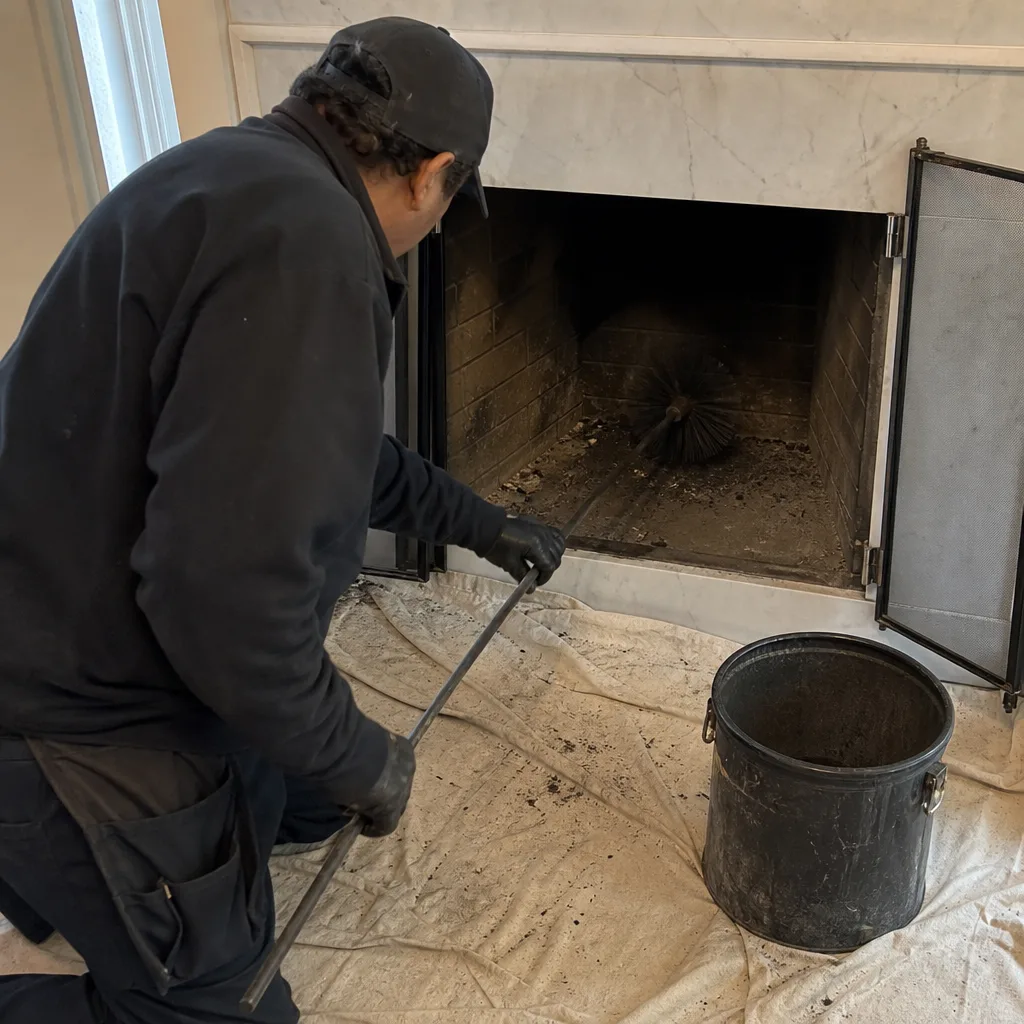
You can check for visible flaking material in the firebox and on the smoke shelf, and you can look for dampness or staining on the exterior chimney surface. Those are safe, useful observations that help us understand what’s happening before we arrive.
You should not attempt to remove failing HeatShield material, patch it with any product, or reline the flue yourself. The cerfractory removal process generates fine silica dust that requires proper containment and respiratory protection. And the failure pattern has to be evaluated with a camera before anyone knows whether the underlying clay tiles are sound enough for re-application. Get that wrong and you’re spending money on a fix that won’t hold. If you’re seeing any of the signs above, call (551) 213-4778 and we’ll run the camera, show you the footage, and quote the right repair in writing.
FAQs
A properly applied HeatShield full resurfacing typically lasts 15 to 25 years in New York’s climate, provided the crown and cap keep water out of the flue. The applications that fail early, at 5 to 10 years, are almost always undermined by water entry at the top of the chimney or by underlying clay tiles that shifted after the application. Call (551) 213-4778 and we’ll camera-scan your flue to tell you which situation you have before you spend anything.
Sometimes, yes. If the failure is localized to a few tile joints and the surrounding material is still well-bonded, a targeted joint repair system may be all that’s needed. The camera footage is the deciding factor, and our written assessment will state plainly whether a repair will hold or whether full resurfacing is the honest fix. Call (551) 213-4778 to schedule the inspection.
Most single-flue HeatShield applications in the Financial District take one day from setup to final cure inspection. Multi-flue jobs or flues requiring underlying masonry repair before application extend to two or three days. We’ll give you a written timeline with the quote, not after the work starts.
We stock the most common HeatShield mixer components, pumping equipment, and application-spec materials on our trucks, and we maintain standing inventory with Haven’s supplier network. We also stock DuraFlex and Gelco liner systems, so if the inspection shows a stainless conversion is the right call, the materials are available the same day. Think of it this way: the camera doesn’t guess, and neither do we.
Written by Corrine Halstead, Owner, Level Two Chimney Financial District at Level Two Chimney Financial District, serving Financial District and nearby areas.