
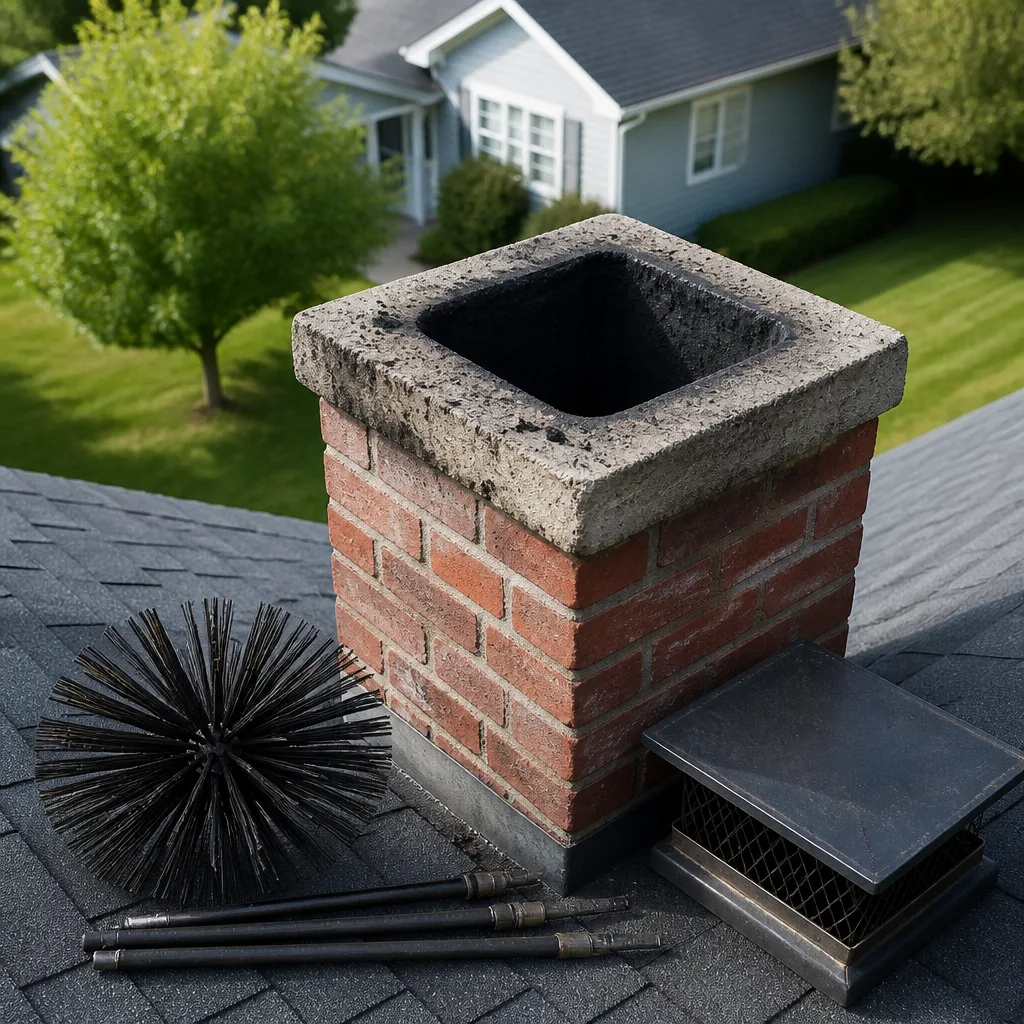
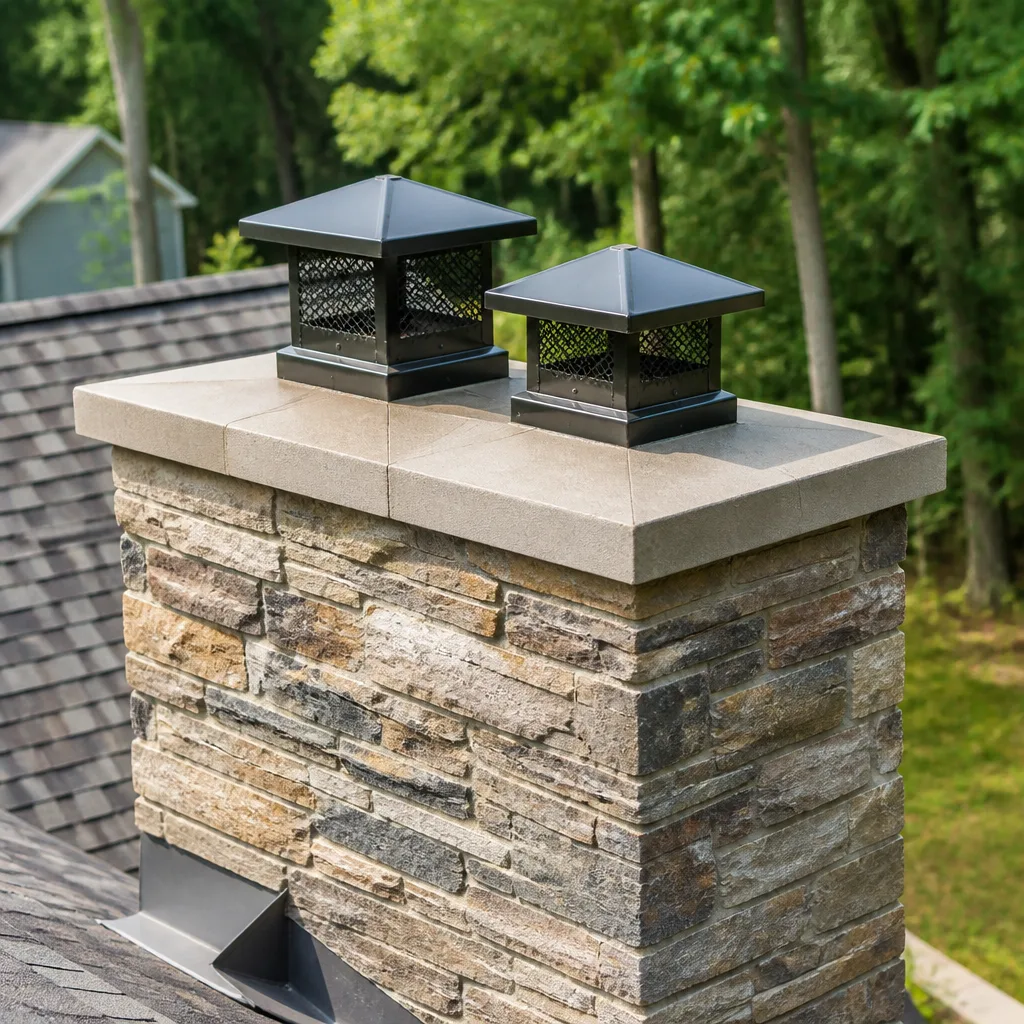
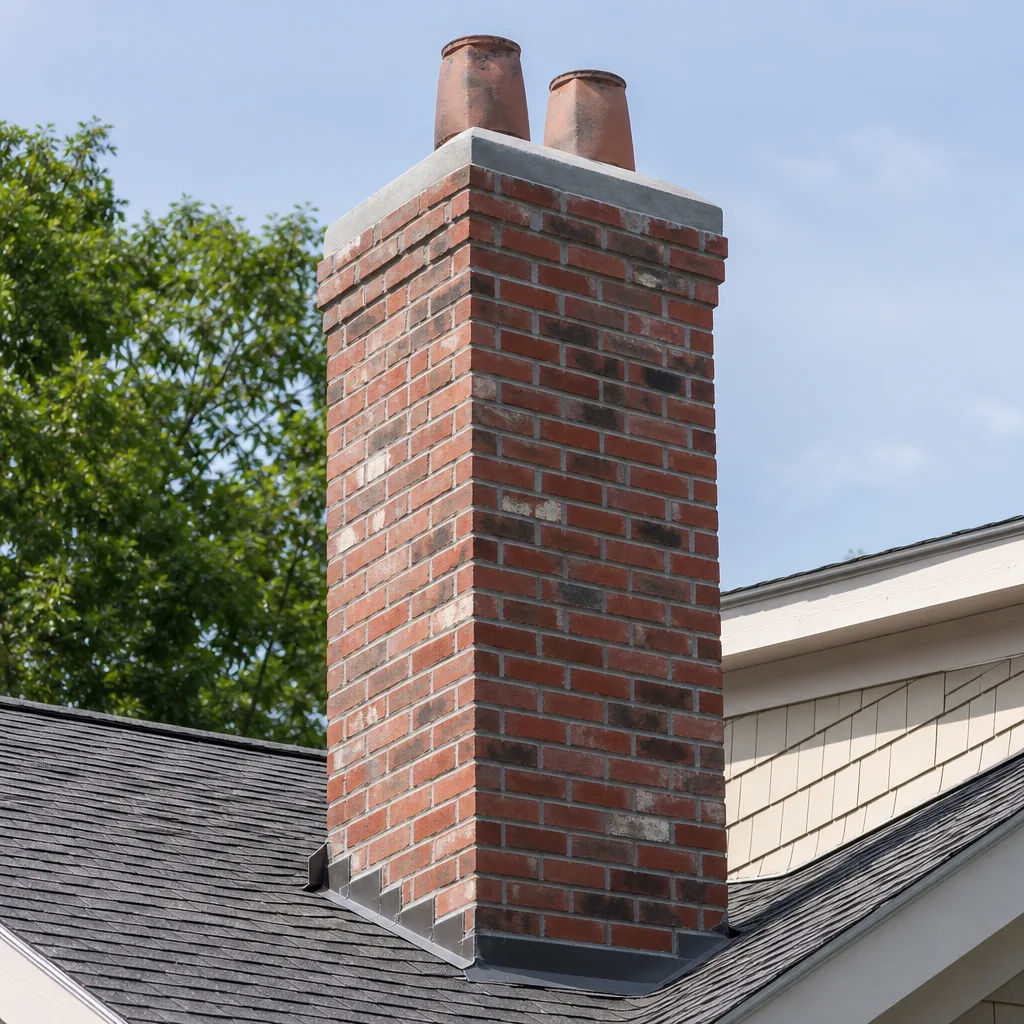
Level 1 sweep and inspection to the NFPA 211 annual standard - flue, crown, cap, and flashing checked and photographed
Chimney sweep logs do not sweep chimneys. They loosen some creosote - which then falls where a brush and vacuum still have to collect it.
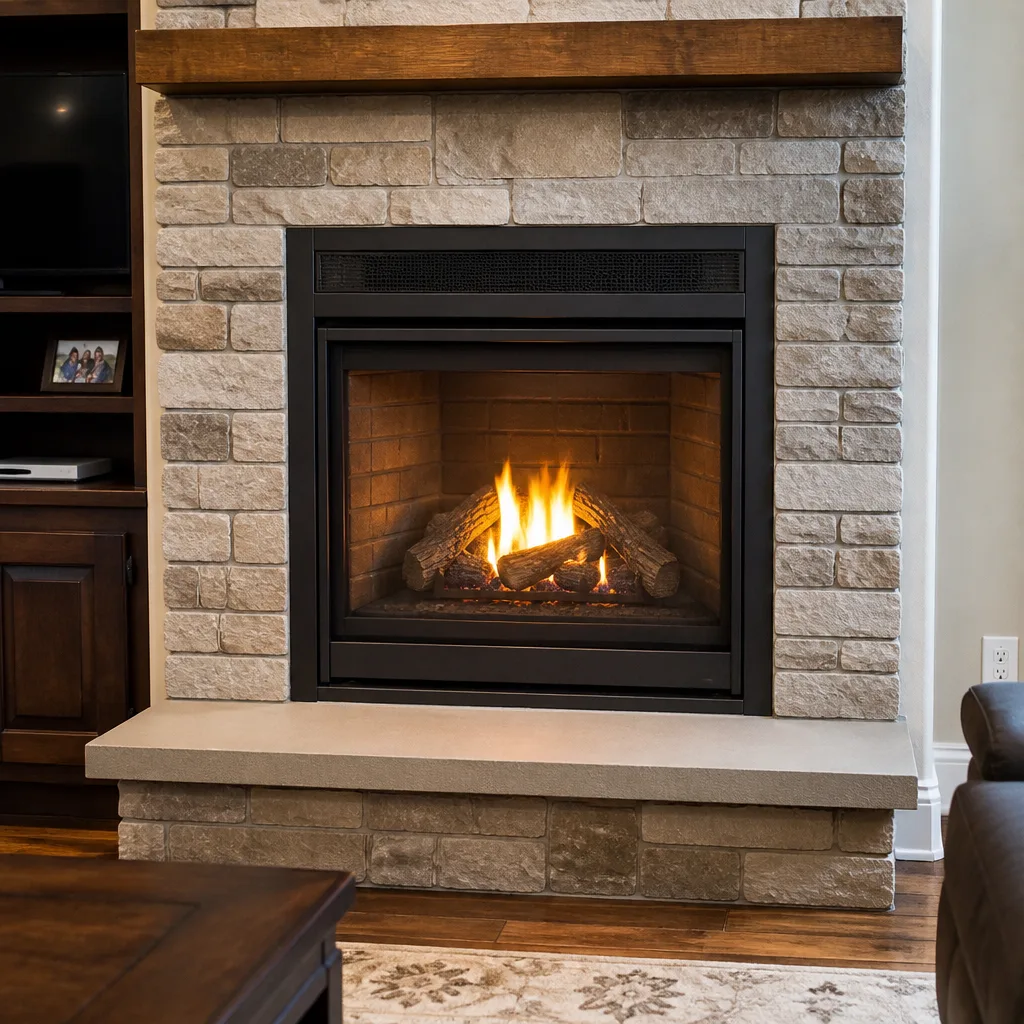
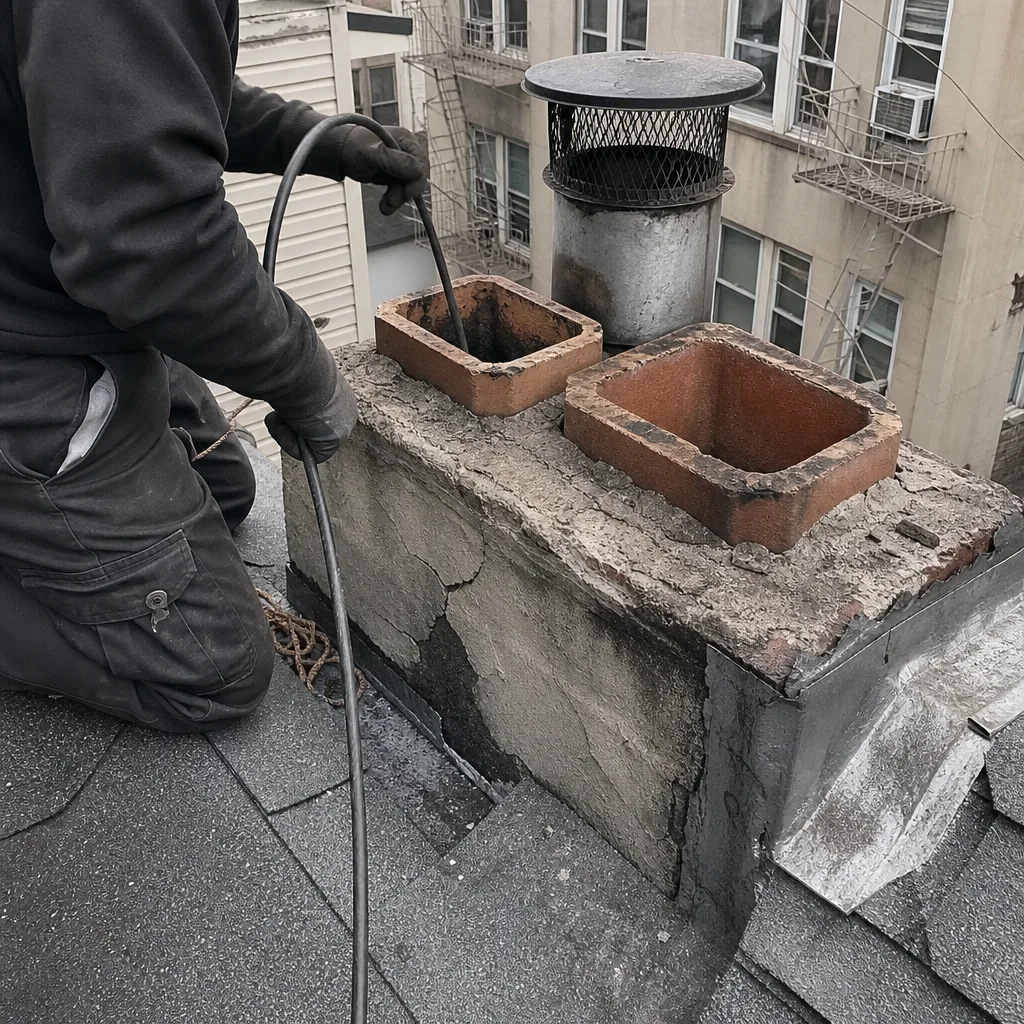 Before
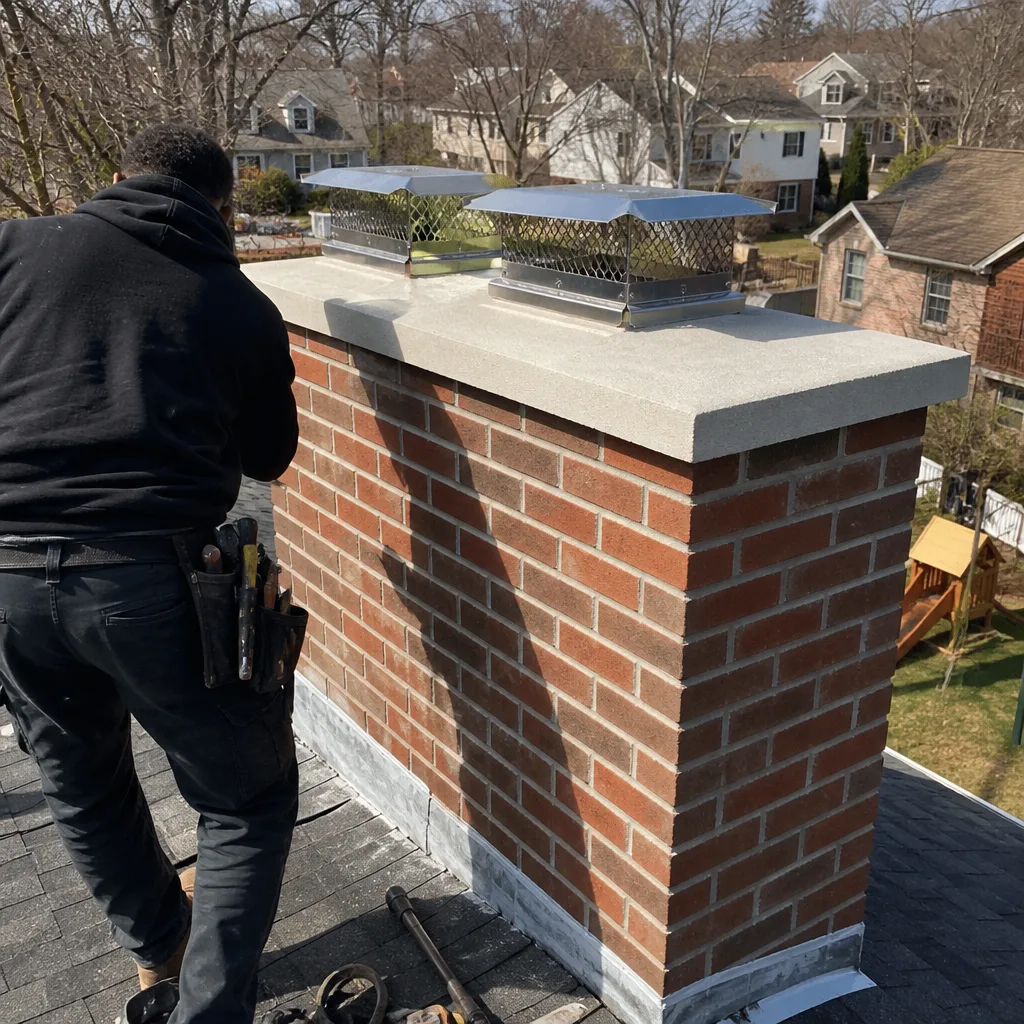 After
After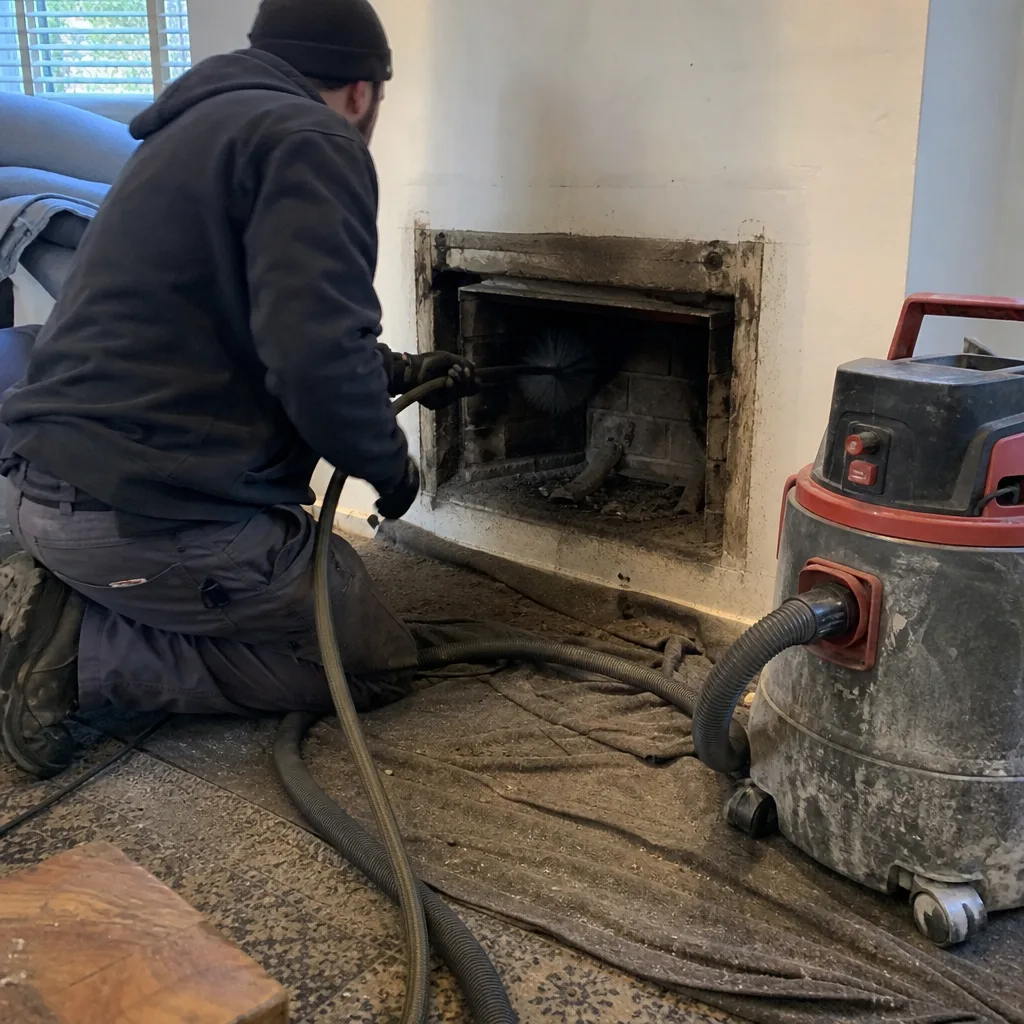 Before
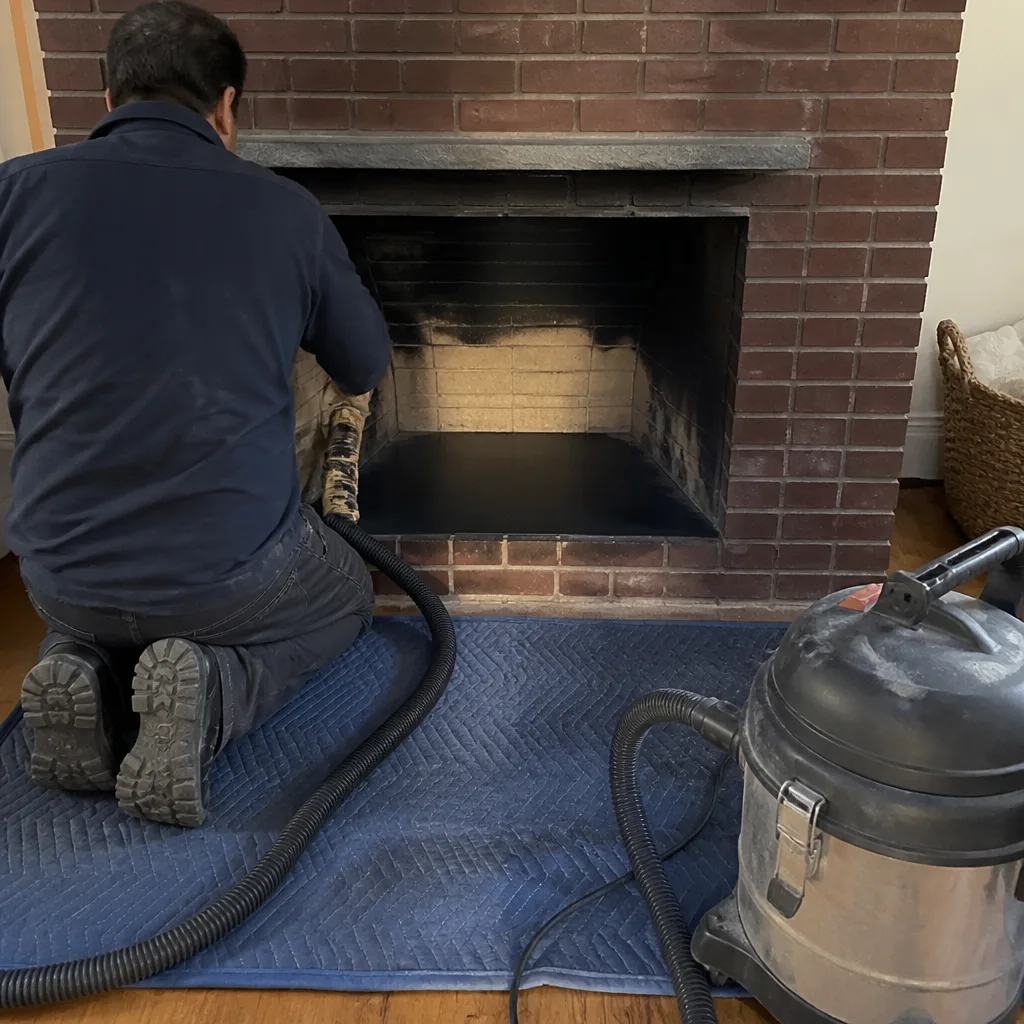 After
After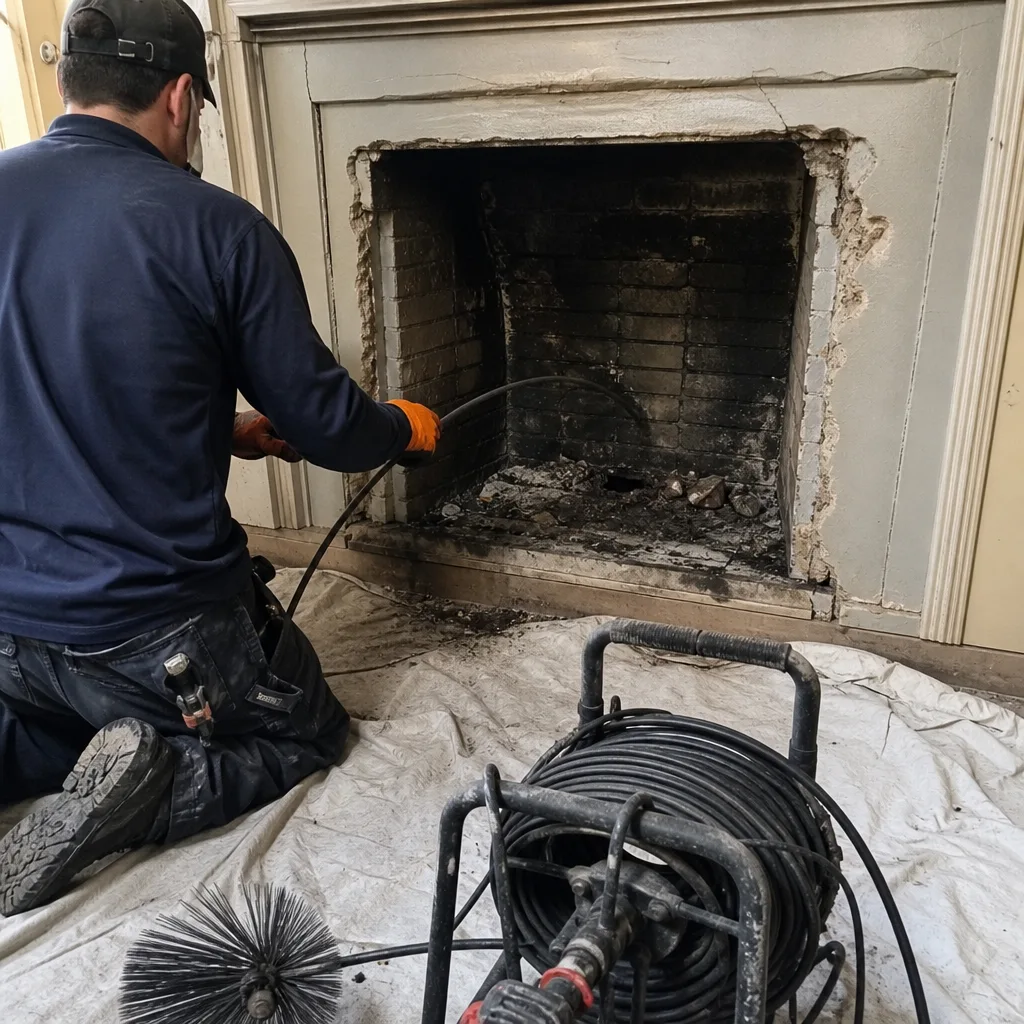 Before
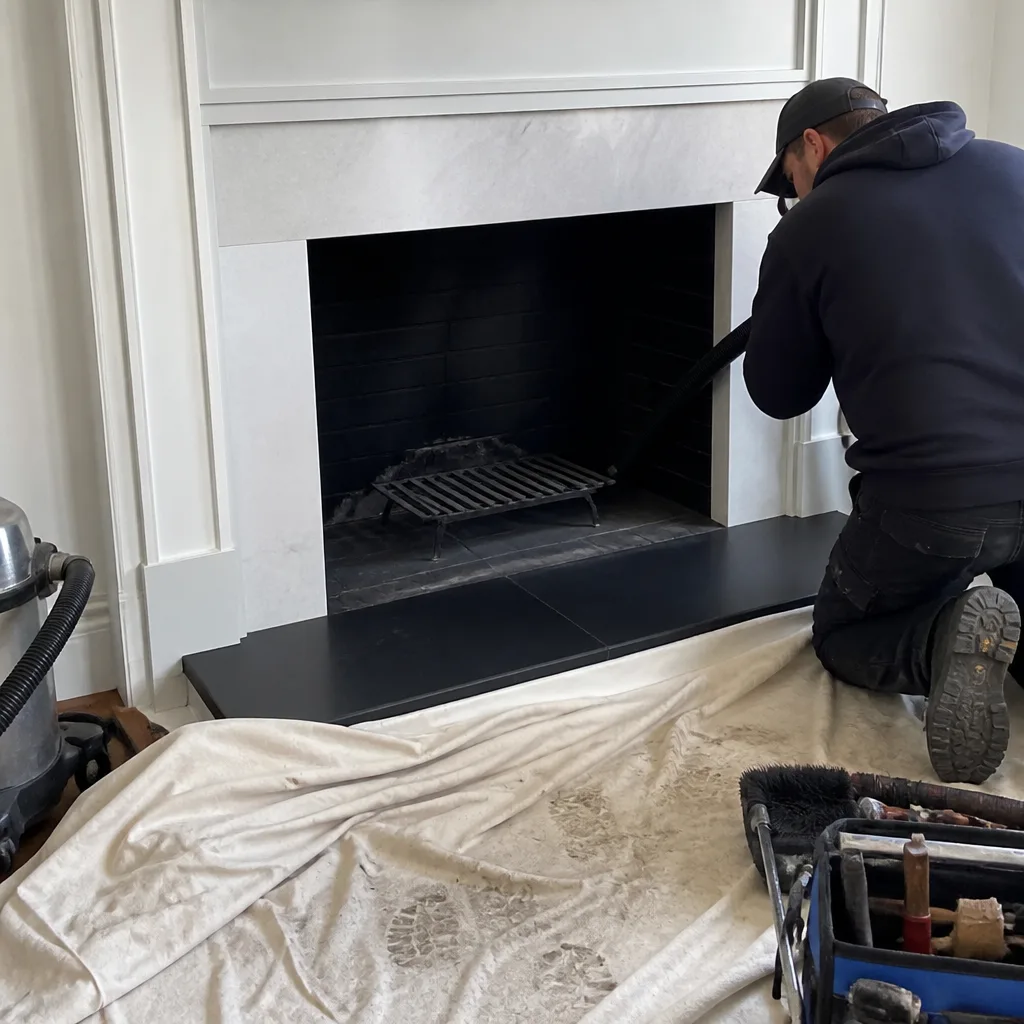 After
AfterSoot Removal in Financial District, NY
Soot removal in Financial District, NY typically runs between $180 and $420, depending on flue length, soot depth, and whether a full Chimney Cleaning & Sweep in Financial District is needed alongside it. Most appointments are completed in a single visit, with a written price confirmed before any work starts.
At Level Two Chimney Financial District, our Chimney Cleaning & Sweep services clear soot from fireboxes, smoke chambers, flue liners, and damper assemblies in buildings up and down Lower Manhattan since 2009 – co-ops on Water Street, townhouses near Stone Street, loft conversions in the Fulton corridor, and everything in between. This part of the city runs a unique mix of pre-war brick chimneys and retrofitted gas-insert flues, and soot behaves differently in each. Corrine Halstead built this company to be specific about what we find and what it costs, not to give you a flashlight look and a vague estimate.
If you’d like a written price before we touch anything, call us at (551) 213-4778. A live person answers, around the clock.
What Soot Actually Is – and Why It Matters in Financial District
Soot is the fine, carbon-rich byproduct of incomplete combustion. When wood or gas doesn’t burn at full efficiency – because of restricted airflow, wet fuel, a cold flue, or a partially blocked liner – unburned carbon particles drift upward and coat the interior surfaces of your chimney system. Left alone, soot accumulates fast enough to narrow the flue, degrade the liner, and create the conditions where Class II or Class III creosote (a thicker, tar-like deposit that burns) can take hold.
In Financial District specifically, we see higher-than-average soot buildup in chimneys that share masonry chases between units – a common configuration in the older mixed-use buildings along Broadway and Maiden Lane. When one unit’s flue draws poorly, it creates back-pressure that pushes exhaust into adjacent flues. That cross-contamination deposits soot in places that never even had a fire burning in them. It’s an unusual pattern and one you’ll rarely read about on a generic chimney cleaning page, but we document it in the photo record on every job, per Clause 4 of the Haven Standard.
When You Need Soot Removal
- Black dust on the fireplace surround or hearth: If you’re wiping a film of dark powder off the mantel or the floor tiles in front of the firebox, soot is already migrating back into the room – a sign the flue isn’t drawing cleanly and the deposit level inside is high enough to matter.
- A persistent smoky odor when the fireplace isn’t in use: Financial District apartments and townhouses tend to run forced-air HVAC systems that create negative pressure indoors. That negative pressure pulls air down the flue, and when the flue walls are coated in soot, that air carries the smell directly into your living space.
- Gray or black staining on the exterior brickwork above the chimney crown: Staining on the outside of the stack usually means soot and condensate are getting past a compromised crown or cap. We see this frequently on pre-war buildings near the East River waterfront, where moisture cycling through the masonry accelerates the damage.
- A fireplace you haven’t used in more than two years: Soot doesn’t just come from active fires. Moisture, bird activity (sparrows and starlings nest in uncapped flues throughout Lower Manhattan between April and July), and general particulate settling all contribute. An unused fireplace can have a surprisingly heavy soot load.
- A new property purchase: If you bought a home in Financial District in the last few years and the inspection report didn’t include a camera scan of the flue, you don’t know what’s in there. A written chimney inspection with photo documentation is the only way to confirm soot levels and liner condition before you light a fire.
- Visible soot on the damper plate or smoke shelf: The smoke shelf – the horizontal ledge just above the smoke chamber behind your damper – collects soot and debris at a rate that surprises most homeowners. When that shelf fills up, soot spills back into the firebox during use and sometimes during HVAC cycling even when the fireplace is idle.
BeforeAfterOur Soot Removal Process
- Written scope and price before we start: Clause 1 of the Haven Standard – H.A.V.E.N. “Have it in writing” – means you receive a written price and written scope of work before anyone opens a tool bag. No surprise charges after the tech is already in your home. This applies to soot removal whether it’s a single firebox cleaning or a full flue clear-out on a 12-story stack.
- Camera scan of the flue liner: We run a camera down the flue before we clean so we know exactly what we’re dealing with: the soot depth, whether there are ledges or obstructions concentrating the buildup, and whether the liner itself shows any cracking or spalling that would change the scope of work. This is an NFPA 211 Level 2 inspection protocol, and the footage becomes part of the documented photo record you walk away with. We’ve been doing this since 2009 – before most local operators had even considered it a standard practice.
- Containment setup at the firebox: Before any brushing or vacuuming begins, we seal the firebox opening with a containment system and run HEPA-filtered vacuum equipment. Financial District brownstones and co-op units have hardwood floors, original tile surrounds, and built-in cabinetry that can’t be replaced easily – we treat the space accordingly. No soot clouds. No cleanup left for you.
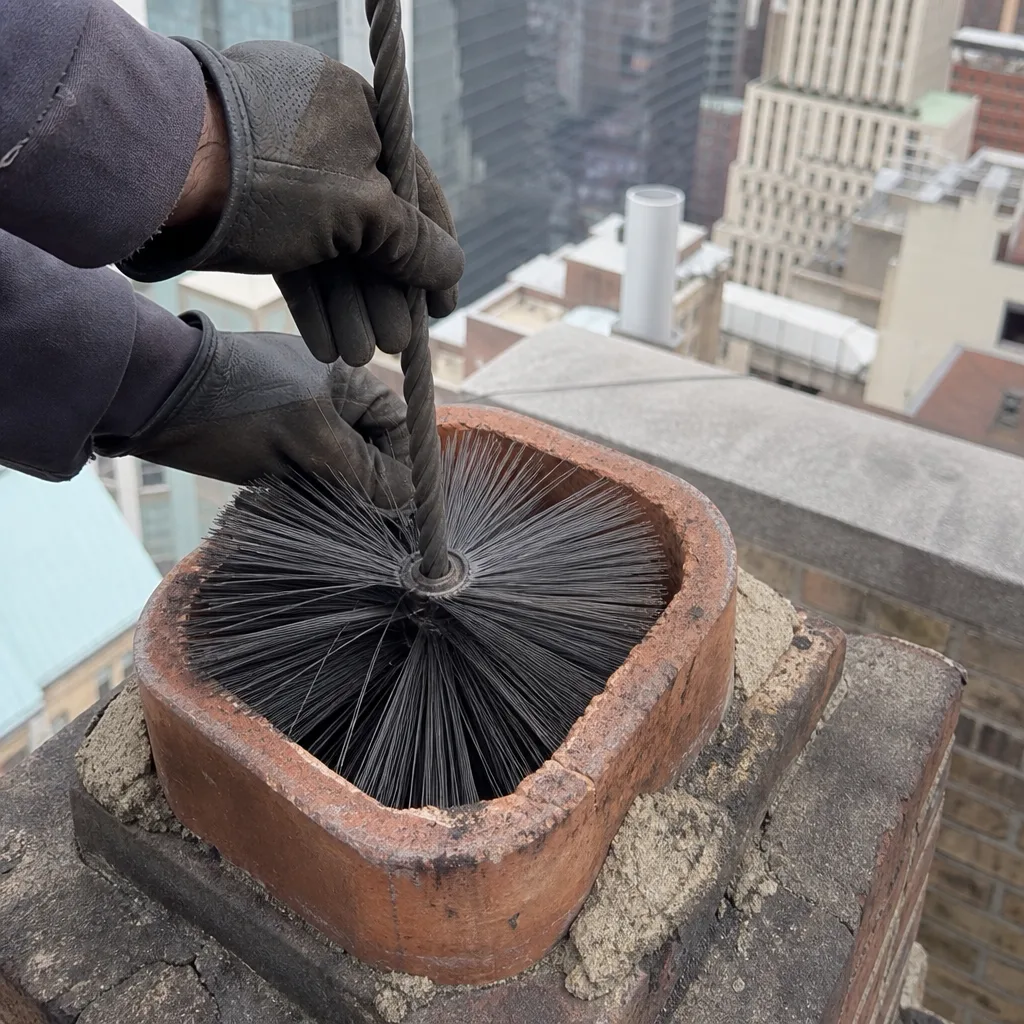
- Mechanical brush cleaning from the top down: Using professional-grade Copperfield brushes sized to the specific flue dimension, we work from the crown downward, loosening and dislodging soot from the flue liner walls, smoke chamber, and firebox interior. For heavier deposits in gas-insert chimneys – which are common in converted Financial District loft buildings – we use chemical soot removers where mechanical brushing alone won’t clear the glazed deposits cleanly.
- Smoke shelf and damper cleaning: The smoke shelf is the one spot that most crews miss or rush. We clear it by hand and inspect the damper plate for corrosion. A soot-packed smoke shelf is a draft problem waiting to happen, and in shared-chase buildings it’s often the direct cause of odor complaints from neighboring units.
- Post-clean camera pass and documented photo record: After cleaning, we run the camera again. The before-and-after footage is part of your documented record under Clause 4 of the Haven Standard – not an optional add-on, not something you have to ask for. If we found any liner damage, crown deterioration, or cap issues during the inspection, those are noted in writing with photos. You know exactly what was found, what was done, and what – if anything – still needs attention.
Soot Removal Pricing in Financial District
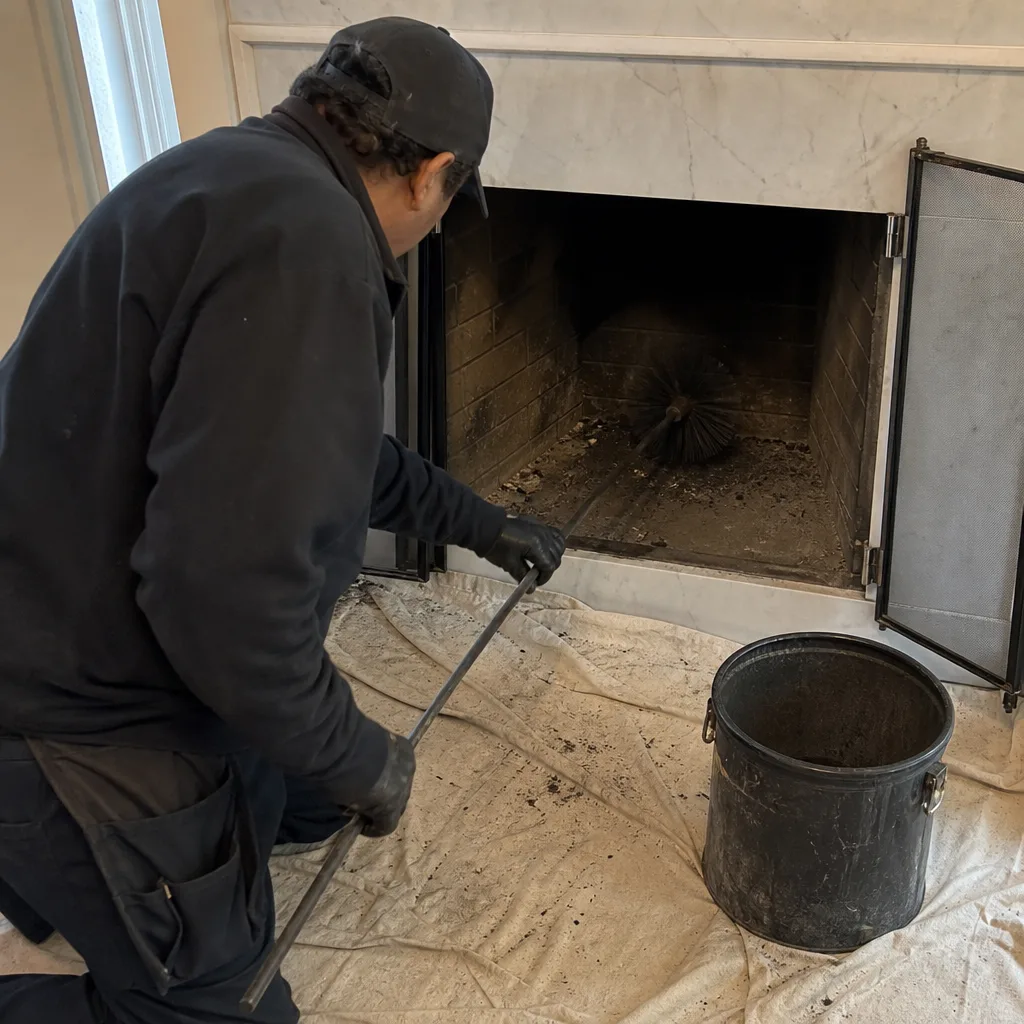
Soot removal in Financial District, NY runs on the higher end of the New York metro range for a few specific reasons: building access in high-rise and mixed-use structures takes more time, shared-chase systems often require extended inspection, and the liner configurations in pre-war masonry buildings frequently require custom brush sizing and chemical treatment. Here’s what drives the number on your written quote:
| Service | Typical Range (Financial District) |
|---|---|
| Firebox and smoke shelf cleaning only | $180 – $240 |
| Full flue soot removal (standard single-story) | $240 – $320 |
| Full flue soot removal with camera inspection (NFPA 211 Level 2) | $290 – $380 |
| Soot removal, heavy buildup or shared-chase system | $340 – $420 |
| Chemical soot treatment (glazed deposits, gas inserts) | $80 – $140 added to base service |
What affects your specific number: flue height and configuration, the class of soot or creosote present, whether the system is masonry or a prefabricated insert, and how accessible the roof termination is in your building. A Financial District high-rise with a rooftop access protocol and a 30-foot shared chase costs more to service than a three-story townhouse with a single straight flue – and the written price you receive before we start reflects exactly that, with no adjustments after the fact.
We offer a free second opinion on any written estimate from another company. Bring us the quote and we’ll tell you whether the scope matches the price.
Call (551) 213-4778 for a written estimate. You’ll get an actual price, not a range that widens after we arrive.
What the Haven Standard Means for Your Soot Removal Job
Level Two Chimney Financial District operates under the Haven Standard – a set of documented practices that govern every job, not just the ones that seem complicated. For soot removal, that means four things in plain terms:
- Written price before work starts (Haven Standard Clause 1). The number you’re quoted is the number on the invoice. We’ve run it this way on more than 38,000 chimney inspections and cleanings since 2009.
- A named, background-checked, uniformed technician assigned to your job with a text sent when they’re on the way. You’ll know exactly who is coming into your home.
- A documented photo record on every visit (Haven Standard Clause 4). Camera footage before and after cleaning, photos of any conditions noted during inspection. That record is yours.
- 365-Day Done Right Promise. If the work isn’t right, we make it right. No arguments, no fees, no conditions buried in the fine print.
Corrine Halstead built Level Two Chimney Financial District around the idea that evidence – photos, camera footage, a written price, a written warranty – does more for a customer than any amount of reassurance. That hasn’t changed since the first job in 2009.
Soot vs. Creosote: What the Camera Tells Us
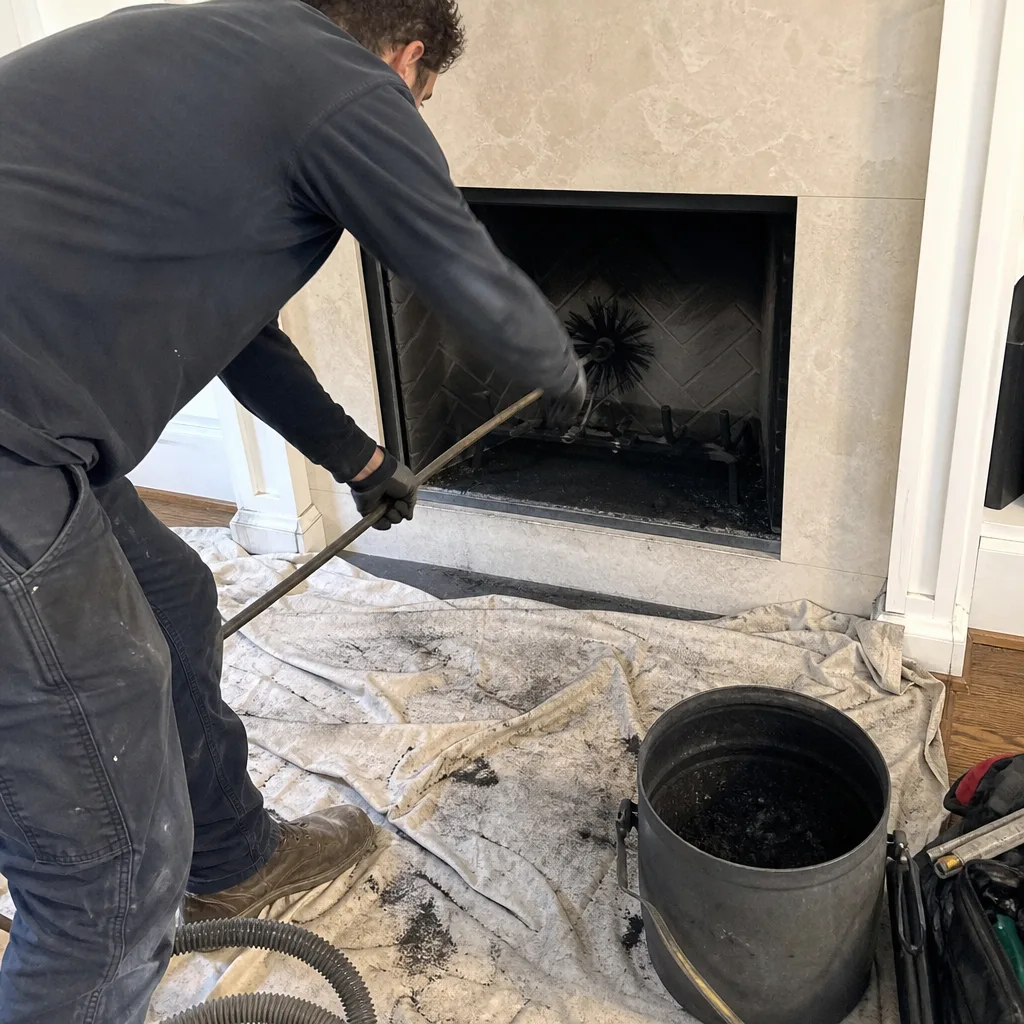
When we put the camera down the flue before cleaning, we’re not just checking for soot volume. We’re classifying what’s there, because soot and creosote require different responses.
Class I creosote is the fine, dusty soot we’re describing on this page. It brushes out cleanly and poses no immediate combustion hazard, though it will become Class II if not cleared. Class II creosote is a thicker, flaky or tar-like deposit – still manageable with mechanical brushing but more labor-intensive and a fire risk if left. Class III creosote is glazed, shiny, and hardened to the liner surface. Mechanical brushing alone won’t remove it; chemical treatment with a product designed to break down the carbon matrix is required before a follow-up mechanical clean.
In Financial District, we see Class II and Class III deposits more often in buildings where gas log inserts replaced wood-burning fireboxes without a corresponding relining of the flue. Gas inserts burn cooler, produce lower-temperature exhaust, and allow more condensation on the liner walls – the exact conditions that accelerate creosote glazing. The camera tells us which class we’re dealing with before we quote and before we start. That’s the point of the Level 2 protocol.
If the camera reveals Class III creosote rather than standard soot, we’ll tell you in writing before any chemical treatment begins, explain what’s involved, and give you a revised price. No surprises on the invoice.
Safety Note on Flue Liner Work
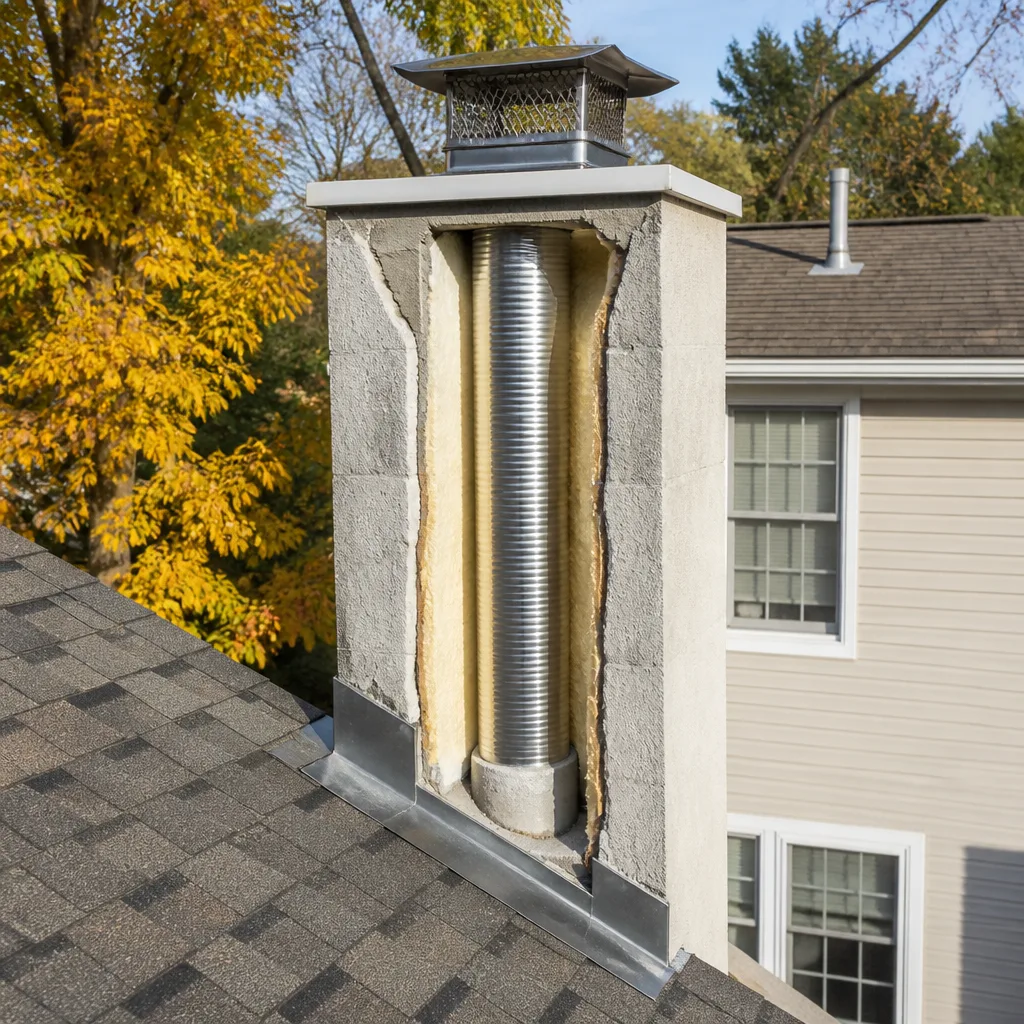
Soot removal from the smoke shelf and firebox is straightforward maintenance. But if the camera inspection surfaces cracks in the flue liner, deteriorated mortar joints, or a compromised smoke chamber, those are conditions that affect the structural integrity of the flue system. A cracked liner allows combustion gases – including carbon monoxide – to migrate into the surrounding masonry and potentially into living spaces. We flag these in writing on every inspection report. Liner repair and relining work should be performed by a trained technician, not addressed as a DIY project, particularly in shared-chase systems where a single compromised flue can affect multiple units.
FAQs – Soot Removal
How much does soot removal cost in Financial District, NY?
How Much Does Chimney Cleaning & Sweep Cost? (2026 Price Guide) - Financial District, NY: soot removal here typically runs $180-$420, depending on the size and configuration of the flue, the class of deposit present, and whether a camera inspection is included. A firebox-and-smoke-shelf cleaning on a standard single-flue residential chimney generally lands in the $180-$240 range. A full flue clean with NFPA 211 Level 2 camera inspection runs $290-$380 for most Financial District residential systems. You’ll receive a written price before work starts – not a range that changes after the tech arrives. Call (551) 213-4778 for an exact written quote.
Is soot removal the same as a chimney sweep?
Soot removal is the core task within a chimney sweep, but a full sweep also covers the smoke chamber, damper, firebox floor, and flue liner, and typically includes a visual or camera inspection to classify any deposits found. When we arrive for a soot removal appointment, we clean the complete system – not just the visible interior surfaces – and run a camera scan before and after. What you get is documented: photo record, written condition notes, and a clear account of what was removed and what, if anything, still needs attention. For more on what a full sweep covers, see our Chimney Cleaning & Sweep in Financial District page.
How often should soot be removed from a Financial District chimney?
NFPA 211 recommends an Annual Sweep – inspecting and cleaning chimneys at least once per year for any system in regular use. In Financial District specifically, we recommend not skipping this even for occasional-use fireplaces – the combination of shared masonry chases, older liner materials, and the building pressurization patterns common in this neighborhood means soot and cross-contamination build up faster than homeowners expect. Gas fireplace inserts should also be cleaned annually; the lower combustion temperature produces deposits that look minimal on the smoke shelf but accumulate on the liner walls. Call (551) 213-4778 to schedule – estimates are free and include a written price before anything starts.
Can soot removal be done without a camera inspection?
Technically, yes – but at Level Two Chimney Financial District, it isn’t. A camera scan of the flue liner is included on every visit as standard practice under Clause 4 of the Haven Standard. Cleaning a flue without first knowing what’s there risks missing glazed creosote deposits that brushing alone won’t remove, or cleaning around a cracked liner section without noting it. The camera footage is part of the documented record you receive when the job is done. We’ve included this on every job since 2009 – it’s not an upsell, it’s the baseline.
Key Takeaways
- Soot removal in Financial District, NY runs $180-$420 depending on flue configuration, deposit class, and whether chemical treatment is needed.
- Pre-war masonry chimneys in Financial District’s shared-chase buildings accumulate soot faster and in less predictable patterns than single-flue residential systems.
- Level Two Chimney Financial District includes a camera scan (NFPA 211 Level 2) and documented photo record on every soot removal appointment – not as an add-on, but as standard practice under Clause 4 of the Haven Standard.
- Every job is priced in writing before work begins, backed by the 365-Day Done Right Promise, and performed by a named, background-checked, uniformed technician.
- A free second opinion is available on any written estimate from another company.
- Call (551) 213-4778 for a written quote – a live person answers 24 hours a day, 7 days a week.
To schedule Chimney Cleaning & Sweep Near Me in Financial District, NY or get a written price on your chimney system, call (551) 213-4778. You’ll reach a live person who can give you a real timeline, a real price range, and confirm a named technician for your building. Estimates are free, written, and carry no obligation to proceed. If you have a competitor’s quote in hand, bring it – we offer a free second opinion on any written estimate.
Written by Corrine Halstead, Owner at Level Two Chimney Financial District, serving Financial District.