
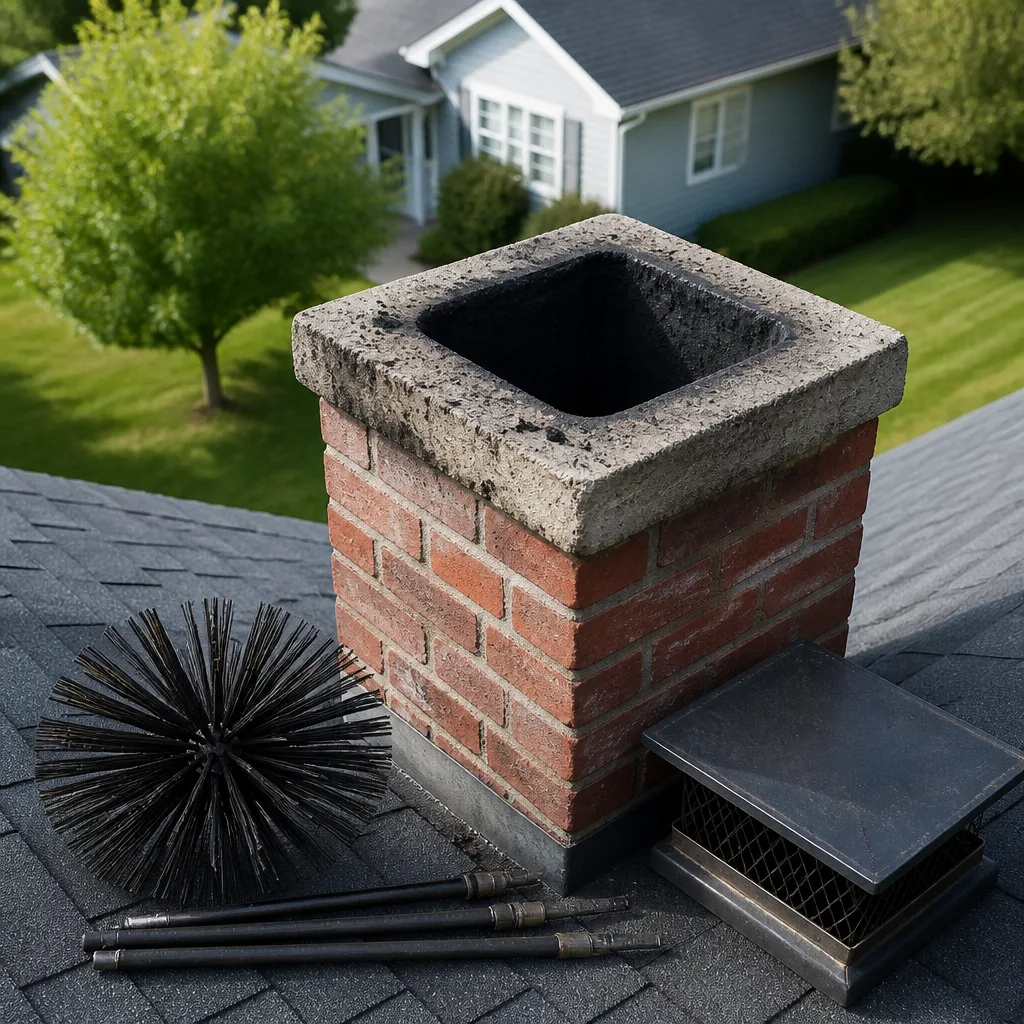
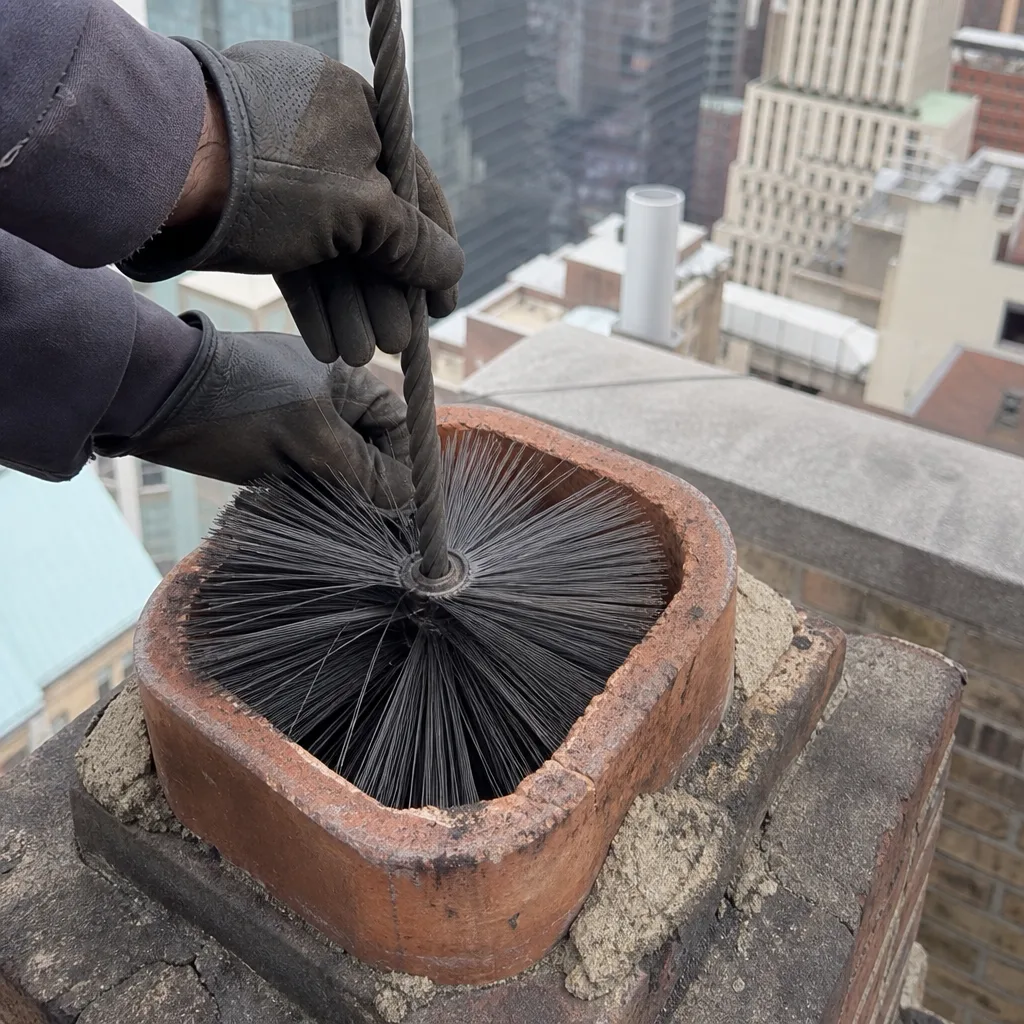
Level 1 sweep and inspection to the NFPA 211 annual standard - flue, crown, cap, and flashing checked and photographed
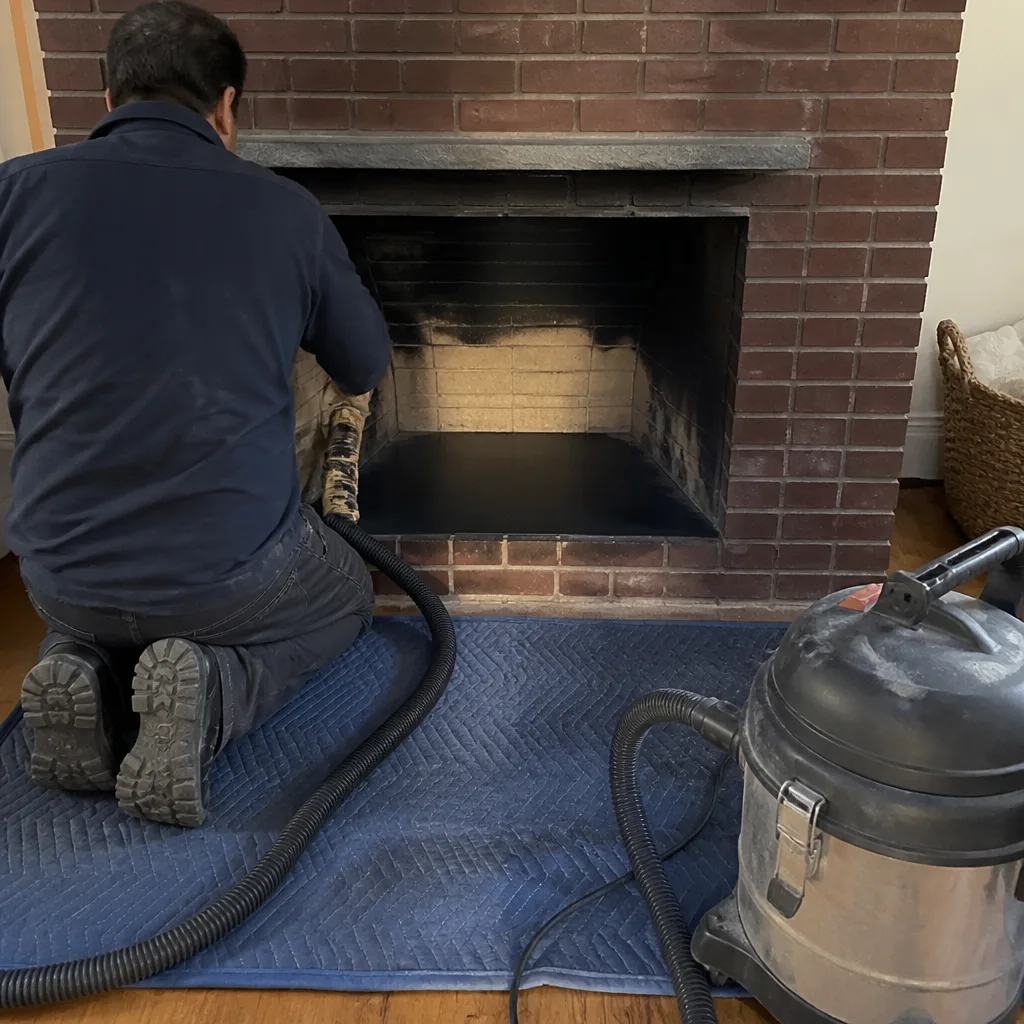
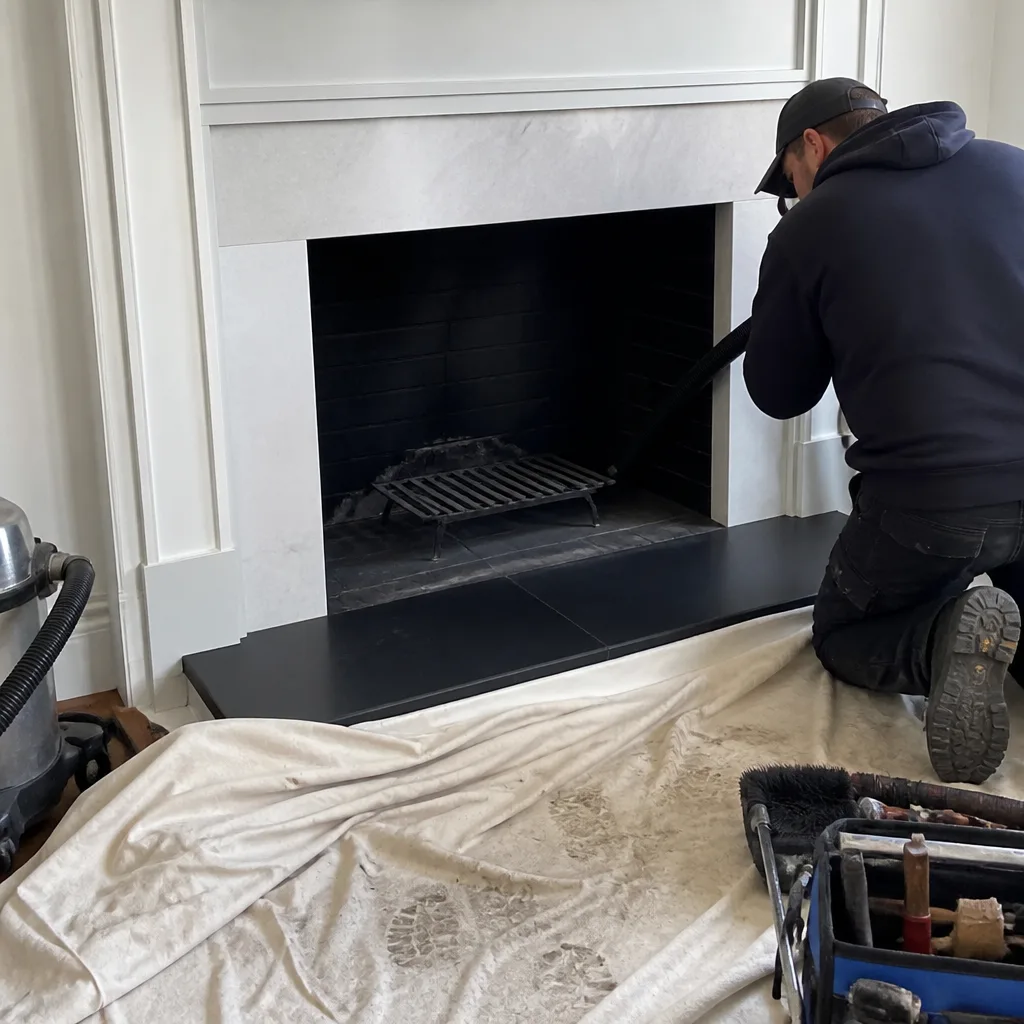
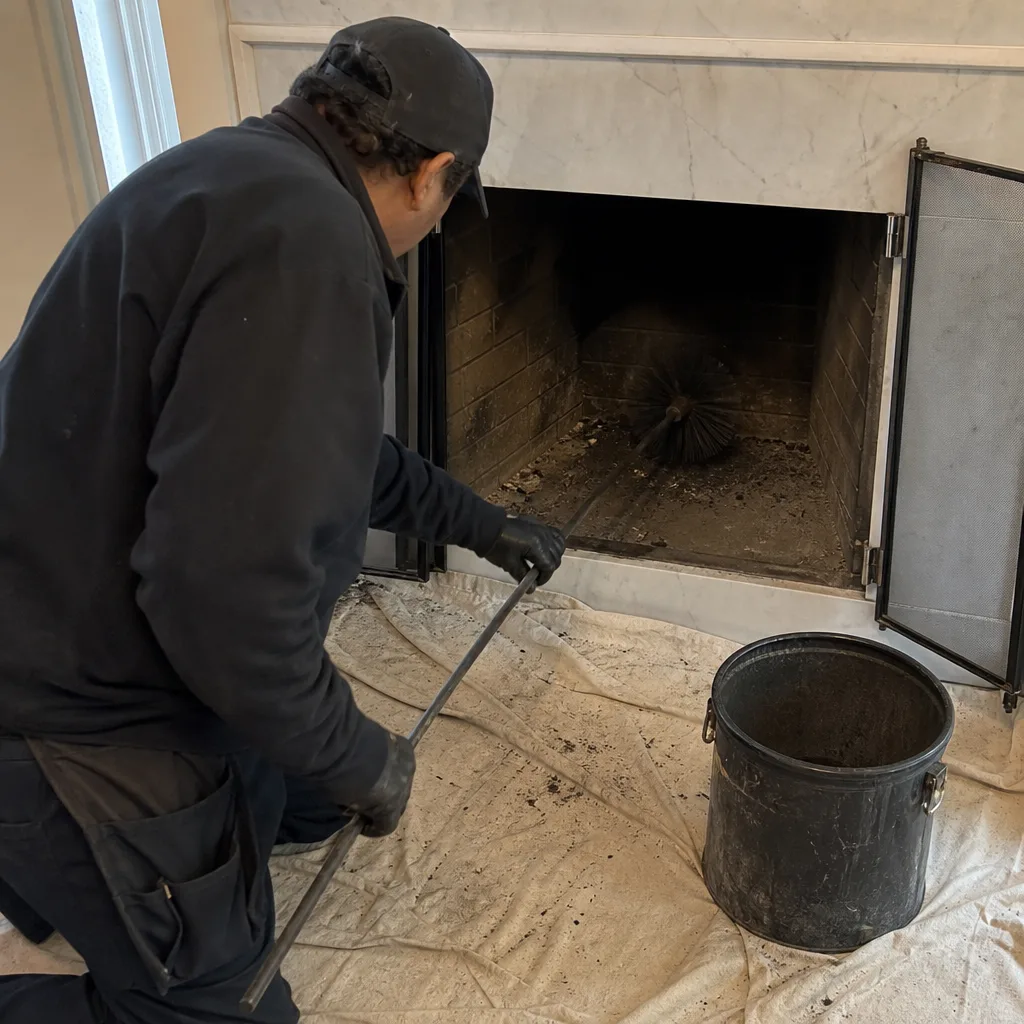
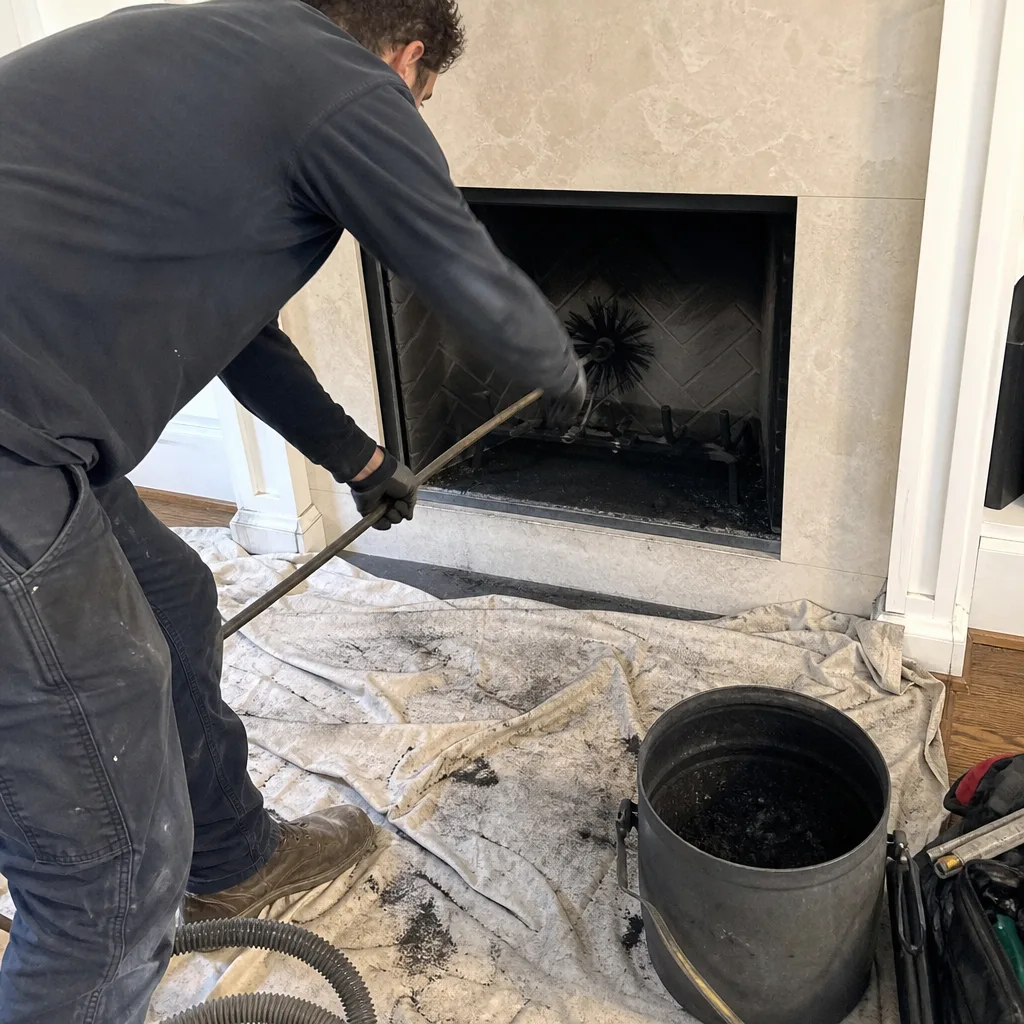
Chimney sweep logs do not sweep chimneys. They loosen some creosote - which then falls where a brush and vacuum still have to collect it.
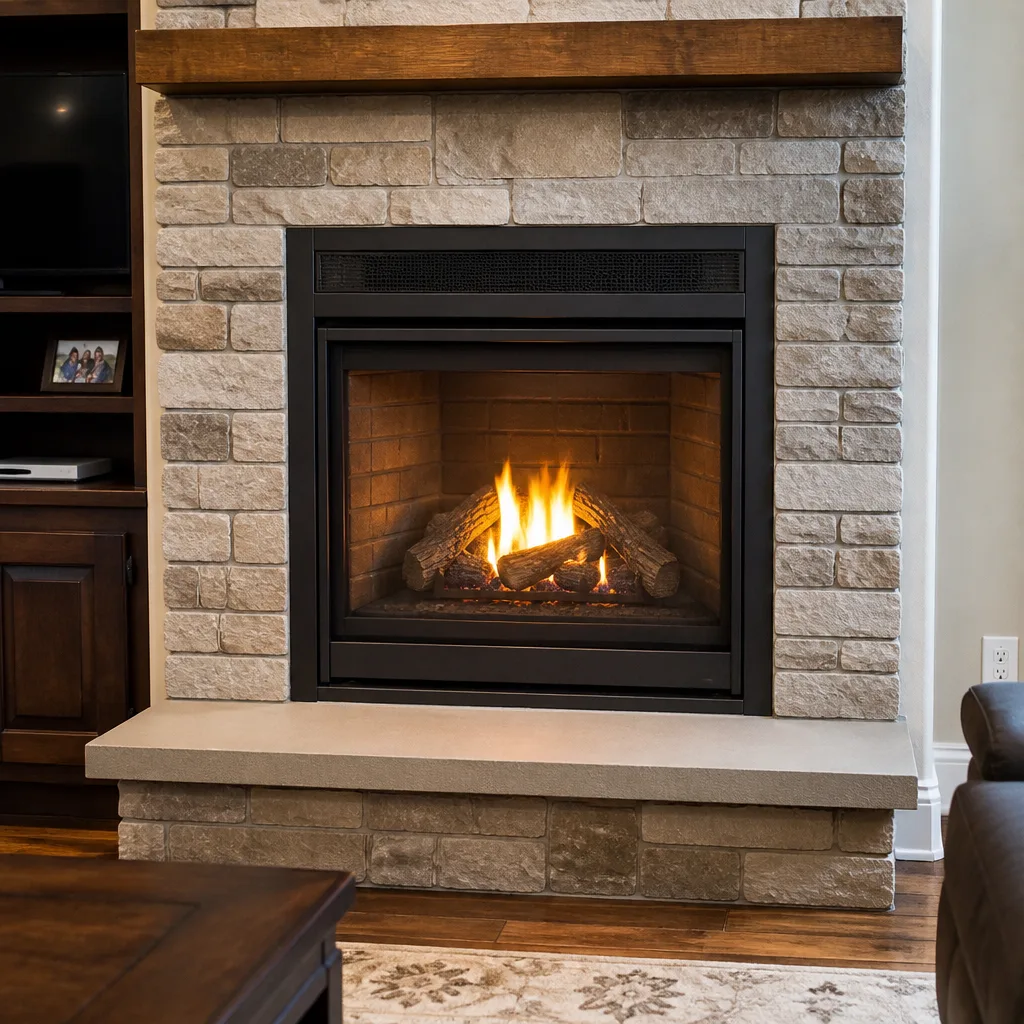
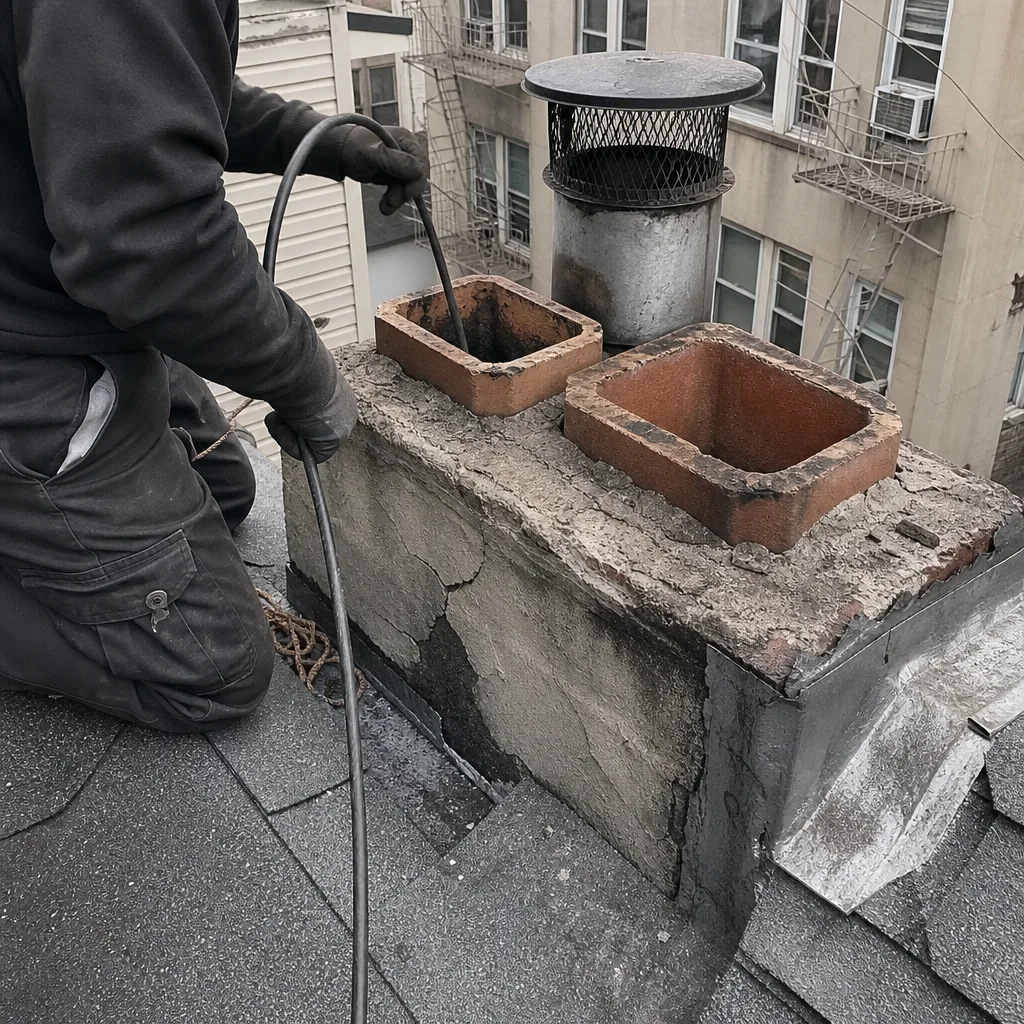 Before
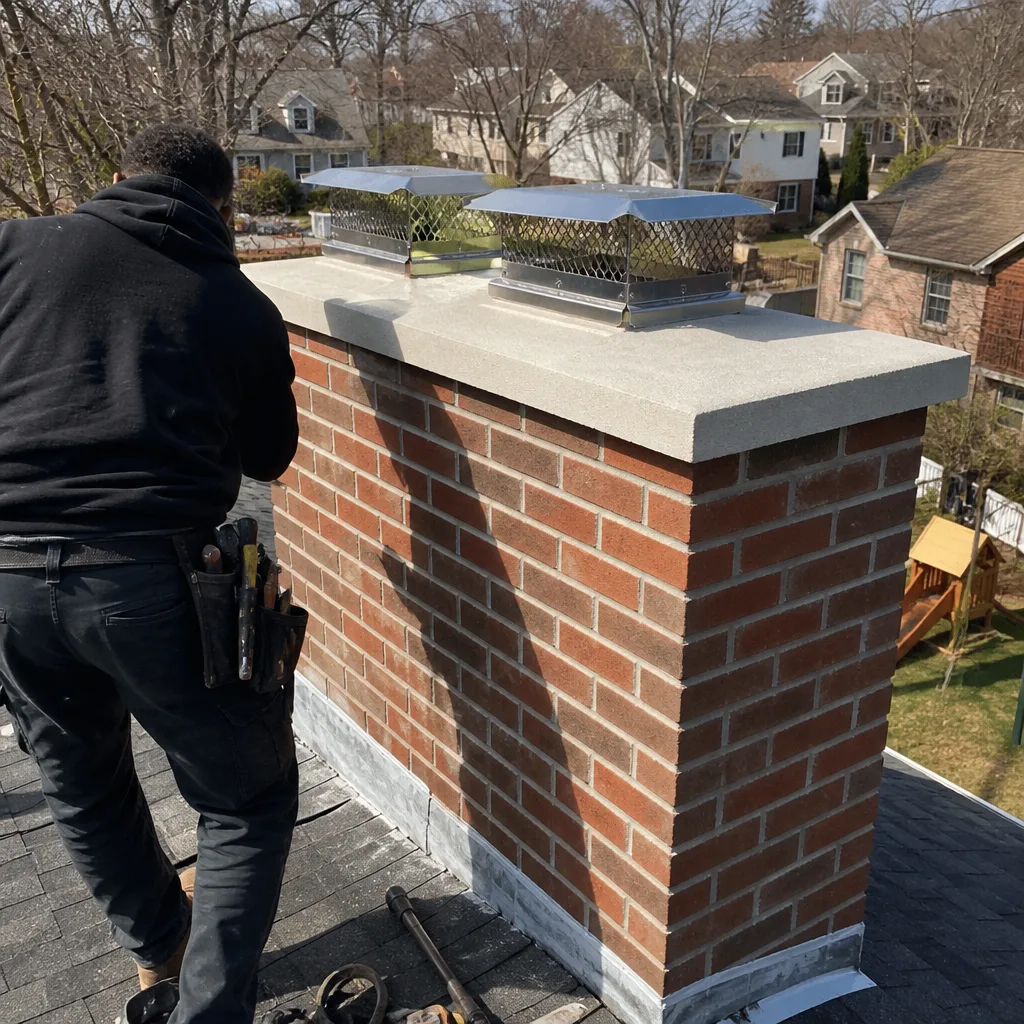 After
After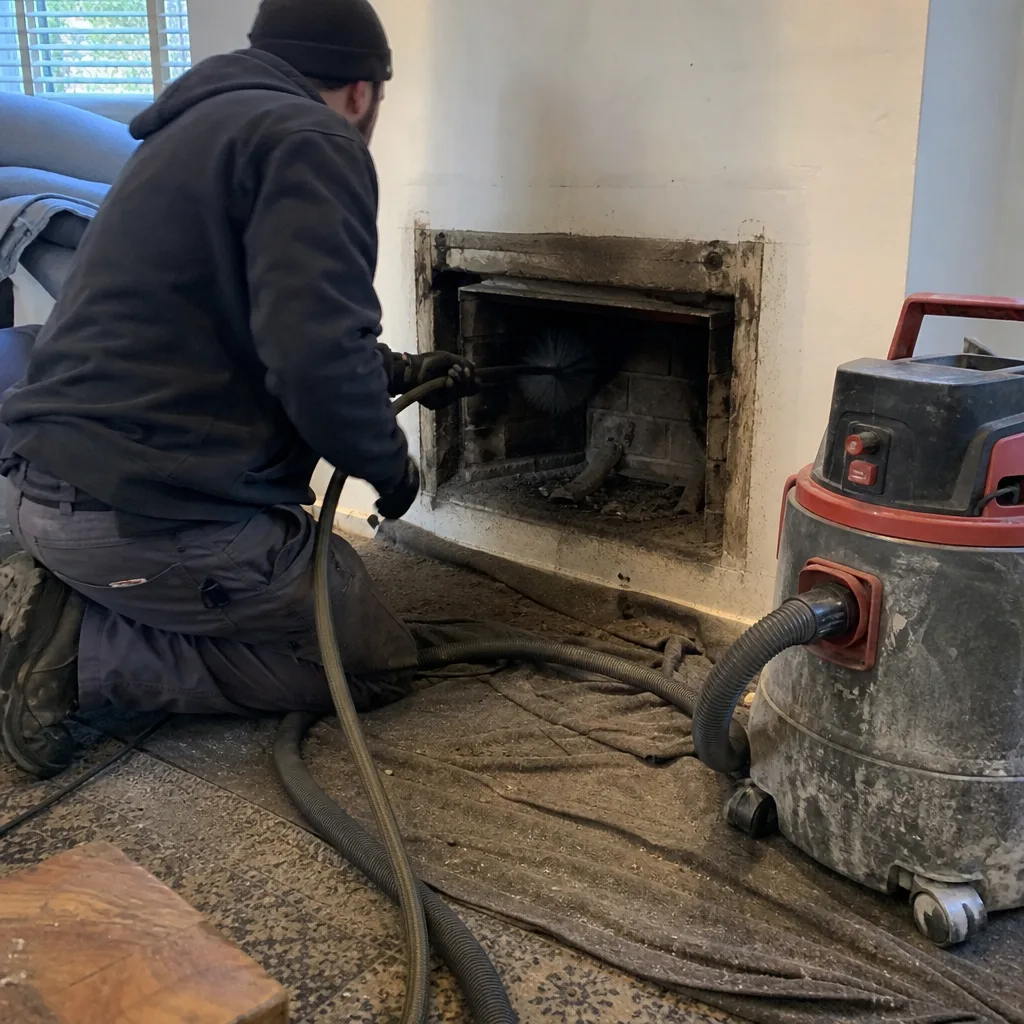 Before
 After
After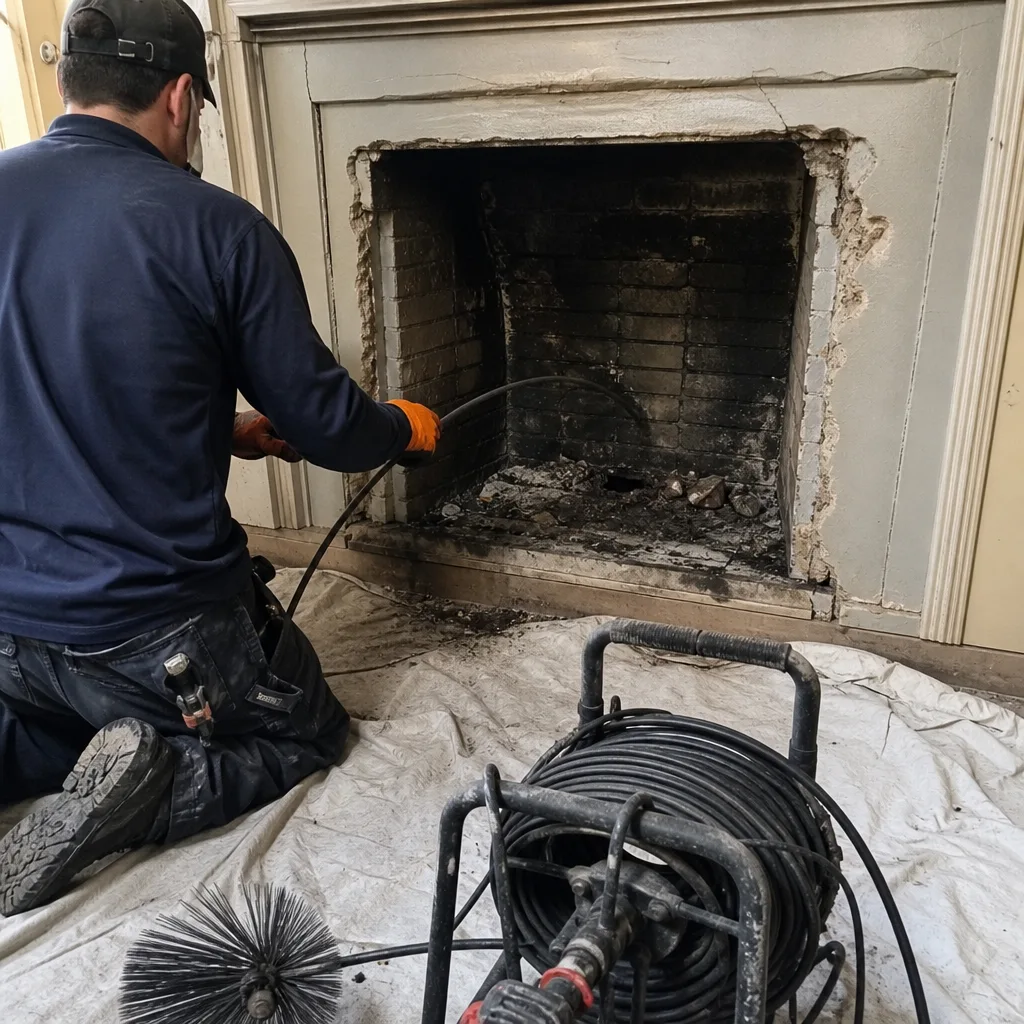 Before
 After
AfterCopperfield Flue Liner Replacement: The Financial District Owner’s Guide
If you have a Copperfield chimney system and the flue liner has failed, we stock Copperfield-compatible liners and install them throughout the Financial District, including the converted loft buildings around Wall Street, Battery Park City, and the older masonry stacks near South Street Seaport. A typical Copperfield flue liner replacement in the Financial District runs $2,400 to $4,800 installed, depending on liner diameter, flue height, roof access, and whether the old liner needs to be broken out rather than pulled. Most owners discover the problem one of two ways: a Level 2 camera inspection shows cracking, separation, or corrosion, or the chimney stops drafting correctly and the fireplace or boiler starts pushing exhaust back into the living space. Neither one is a condition that improves with time.
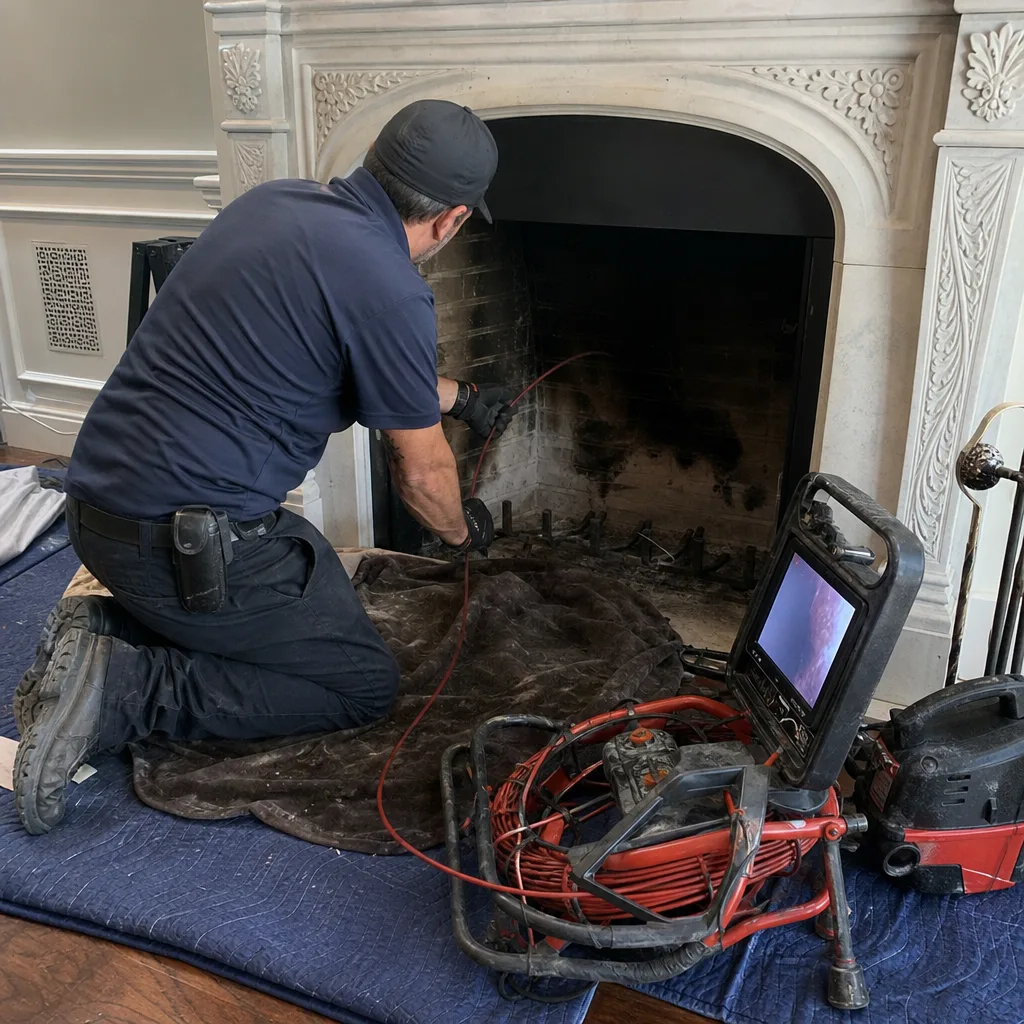
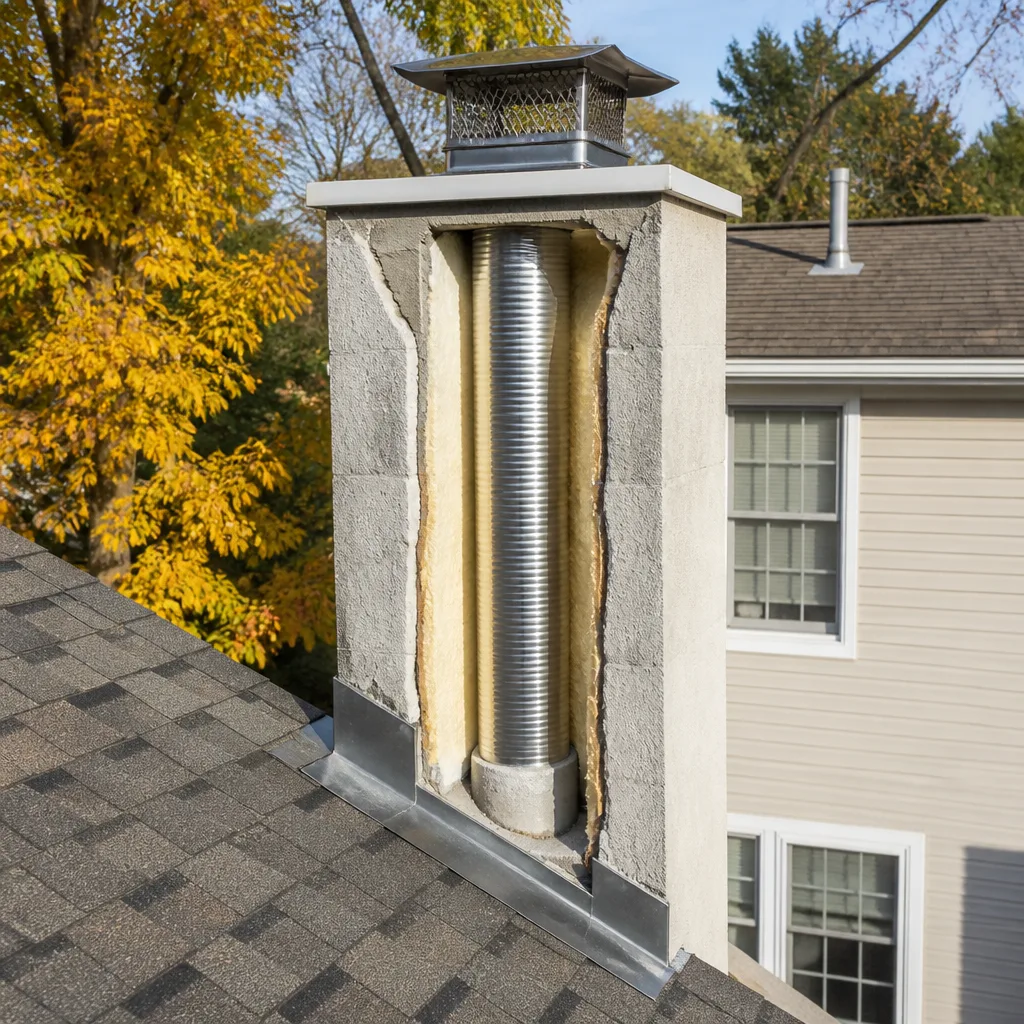
Here’s what you need to know before anyone touches the chimney: Copperfield flue liners are stainless steel, and the failure point is almost always at the seams or the lower eight feet above the appliance, where heat cycling and condensation do the most damage. We carry the full Copperfield diameter range on the truck, and we give you a written price before work starts. This page covers the models, the symptoms, the honest cost, and what we actually do when we swap one of these liners out in the Financial District.
Which Copperfield Models This Applies To
Copperfield manufactures stainless steel chimney liners under several product families, and the model name matters less than the diameter and the alloy grade. The two series we see most in Financial District buildings are the Copperfield 304L series, the standard economy liner rated for wood and gas appliances, and the Copperfield 316L series, the higher-grade alloy specified for oil-fired systems and for any flue carrying higher-moisture exhaust. If you’re unsure which one your chimney has, there’s a stamped tag at the liner’s top termination, usually just below the crown or inside the chase. The tag will carry an alphanumeric code that identifies the alloy and the diameter.
Here’s the compatibility gotcha: Copperfield liners are sized by interior diameter in quarter-inch increments, and a liner that’s off by a quarter inch will not seat correctly at the appliance collar or at the top plate. We’ve seen DIY replacements fail at the adapter because someone ordered a 5.5-inch liner into a 6-inch system and filled the gap with a collar band that loosened within a season. The right fix is matching the liner diameter exactly to what the tag says, not what the old liner measures after corrosion ate away its wall thickness.
We specify Copperfield as an OEM-equivalent, meaning the liner we install is manufactured to the same ID/OD tolerances, the same alloy composition, and the same UL listing as what your system came with. We also carry DuraFlex, HeatShield, and Gelco equivalents, and we’ll tell you when an aftermarket option makes sense and when it doesn’t. Level Two Chimney Financial District is an independent service provider and we’re not affiliated with Copperfield; we’re just matching the specification because that’s what the installation manual calls for, and because getting it wrong creates a chimney that does not draft.
Signs Your Copperfield Flue Liner Replacement Is Failing
- Exhaust smell in the room when the fire is burning or the boiler is running. A liner that has separated at a seam or rusted through at the lower elbow is allowing flue gas to leak into the chase cavity or the wall void instead of exiting at the termination. The smell is combustion byproducts, and it means the liner is not doing its job.
- White or brown staining on the exterior wall or chase near the flue. This reads as moisture wicking through masonry, but on Copperfield systems it’s often liner condensation seeping outward at a failed seam. In Financial District buildings with interior chases, that moisture shows up as peeling paint or efflorescence inside the house.
- Soot flakes falling into the firebox when the flue isn’t in use. That soot is collecting somewhere it should not be, typically at a horizontal offset or at a liner joint that’s opened slightly. When the chimney cools, the flake releases and drops. A functioning liner has no shelf for soot to collect on.
- Difficulty starting or maintaining a draft, especially on warmer days. Cold-air stacking is what makes a chimney draw. A liner with gaps or internal corrosion disrupts that stack effect, and you’ll notice the fireplace becomes temperamental in spring and fall when the temperature differential is lower than midwinter.
- The boiler or furnace is short-cycling or the CO detector trips during the heating season. Oil-fired and gas-fired systems in older Financial District buildings rely on the original chimney to carry exhaust. When the Copperfield liner is compromised, those appliances sense backpressure and shut down, or worse, push carbon monoxide into the basement or mechanical room.
BeforeAfterReplacement Cost & What’s Included
Most Copperfield flue liner replacements in the Financial District land between $2,400 and $4,800 installed. The low end covers a straight-run 6-inch liner under 35 feet with roof access from a standard ladder. The high end covers taller flues, multi-story access with a lift where the roof is over 40 feet, oil-conversion systems needing 316L alloy, or a job where the old liner is so heavily damaged it has to be broken out in sections rather than pulled intact. The Copperfield-specific line item is the liner itself, which runs $18 to $26 per foot for 304L and $26 to $38 per foot for 316L depending on diameter, plus the top plate, rain cap, and appliance connector.
Every quote we give is written, itemized, and handed to you before we start. It shows the liner cost per foot, the labor line, the access line, the disposal line, and the warranty term. That’s the way Corrine Halstead has insisted on running this company since the beginning: the camera goes down the flue, the findings are printed, the price is written, and then the work happens.
| Cost Component | Typical Range (Financial District) |
|---|---|
| Copperfield 304L liner, 6-inch | $18-$26 per foot |
| Copperfield 316L liner, 6-inch | $26-$38 per foot |
| Top plate, rain cap, and connector | $180-$340 total |
| Labor including old liner removal | $1,200-$2,200 |
| Roof access (ladder vs. lift) | $0-$600 |
The installed price includes the liner, the fittings, the old liner removal, the camera re-scan after installation, a printed photo record of the completed liner before and after, and a written warranty covering materials and workmanship. If we’re on a roof in the Financial District that requires a building-approved lift rather than a ladder, that access line is stated separately in writing before we start.
DIY or Call Us?
What you can safely check yourself: the liner tag at the top of the chimney or inside the appliance connection. Note the series and diameter. The camera doesn’t guess, and neither do we, so if you can read the tag and tell us the alloy and the interior diameter, that speeds up the quote process. You can also look at the firebox for soot flakes and note any odor patterns.
What you should not attempt: dropping a liner down a flue from a Financial District rooftop. This is not a one-person job, and the failure mode is not cosmetic. A liner that kinks during installation, a top plate that isn’t sealed correctly against the crown, or a connector that’s not tightened to torque will either draft poorly and push carbon monoxide back into the living space, or it will slip and damage the flue tile below. We do this work with two techs minimum, a rope and pulley system for the liner drop, and a camera verification pass when the liner is seated. Call (551) 213-4778, and we’ll give you a written quote for the whole job.
FAQs
In a New York City climate with salt air off the harbor, rain exposure, and the temperature swings we get between January and August, a stainless Copperfield liner typically lasts 15 to 25 years. Condensation from gas appliances shortens lifespan faster than wood-burning use, because the acidic condensate attacks the seams from the inside. That’s the reality we see in Battery Park City and South Street Seaport buildings: coastal moisture plus gas heat equals replacement closer to the 15-year mark, while a wood-burning fireplace liner in the same neighborhood might go 25 years with regular sweeping. If your liner is past the 20-year mark and the camera shows pitting at the seams, replacement is cheaper than waiting for it to fail during a heating season. Call (551) 213-4778 for an exact quote. Estimates are free.
No, not safely. The liner is a continuous stainless steel tube that runs the full height of the flue. A tear, a separated seam, or corrosion pitting means the liner has lost its integrity, and patching is not a repair method that survives a chimney fire or a CO exposure event. The exception is a Copperfield system where only the top plate or the appliance connector has failed; those are components, not the liner itself, and they can be swapped individually for a few hundred dollars rather than replacing the full run. The camera scan determines what’s actually failed, and we’ll show you the photos before we recommend anything.
Most Financial District installs are complete in one day, arriving at 8 a.m. and wrapping by 4 p.m. The old liner comes out first, usually in sections, then the new liner gets dropped from the roof, connected at the appliance, and camera-scanned to confirm it’s seated correctly. You’ll have heat or fire use back by that evening, and we leave behind a printed photo record of the liner before the job, during the drop, and after the final scan.
Yes, we carry the full range of Copperfield 304L and 316L liners from 4-inch up to 8-inch interior diameter on the truck, along with Copperfield top plates, connectors, and caps. We also stock DuraFlex, HeatShield, and Gelco equivalents for odd diameters or specific appliance requirements. If your chimney needs a size outside that range, we’ll order it and have it in hand within two business days, and we’ll give you the written price before we order anything.
The practical outcome depends on what the liner is venting. On a wood-burning fireplace, a failed liner can allow chimney fire temperatures to reach combustible framing, which is the actual mechanism behind most house fires that start in the chimney. On a gas or oil appliance, the more immediate risk is carbon monoxide entering the living space, especially during the heating months when the boiler runs all day and windows are closed. We always tell Financial District owners plainly: if the camera shows the liner has failed, the responsible move is to stop using the appliance until the liner is replaced. Call (551) 213-4778 and we’ll get the written quote to you same day.
Get a Written Quote for Copperfield Flue Liner Replacement
If your Copperfield liner has failed or you’re seeing any of the warning signs above, call us at (551) 213-4778. A live person answers, 24 hours a day, and we’ll schedule a camera-scan inspection to document exactly what’s happening inside the flue. You’ll get a printed photo record of the liner condition, a written itemized price to replace it, and the scope of work in writing before anything gets touched. That’s what we’ve done on every job in the Financial District since 2009, and we back every installation with the 365-Day Done Right Promise. Bring a competitor’s written estimate and we’ll give you a free second opinion on it.
Written by Corrine Halstead, Owner, Level Two Chimney Financial District at Level Two Chimney Financial District, serving Financial District and nearby areas.