
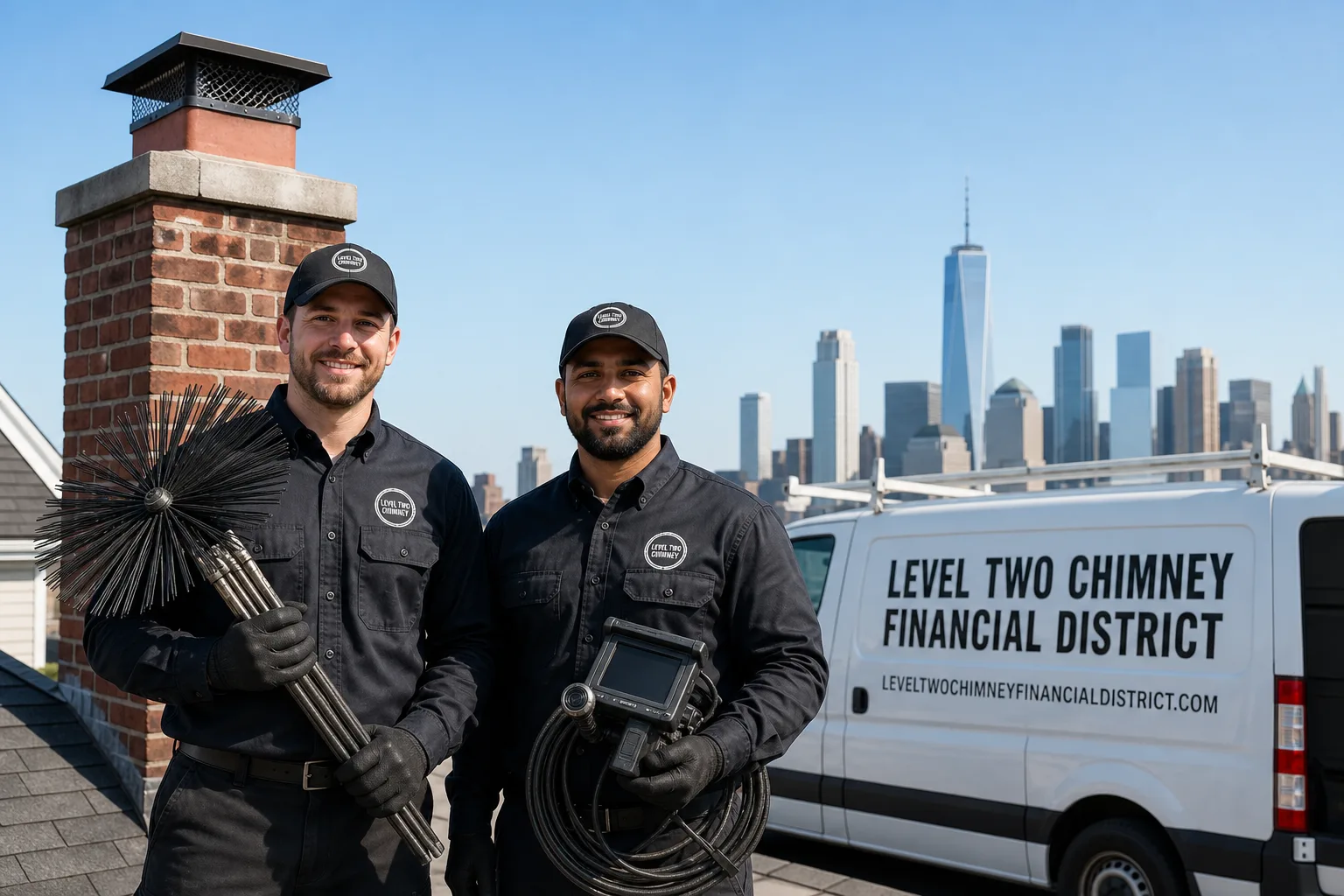
Level 1 sweep and inspection to the NFPA 211 annual standard - flue, crown, cap, and flashing checked and photographed
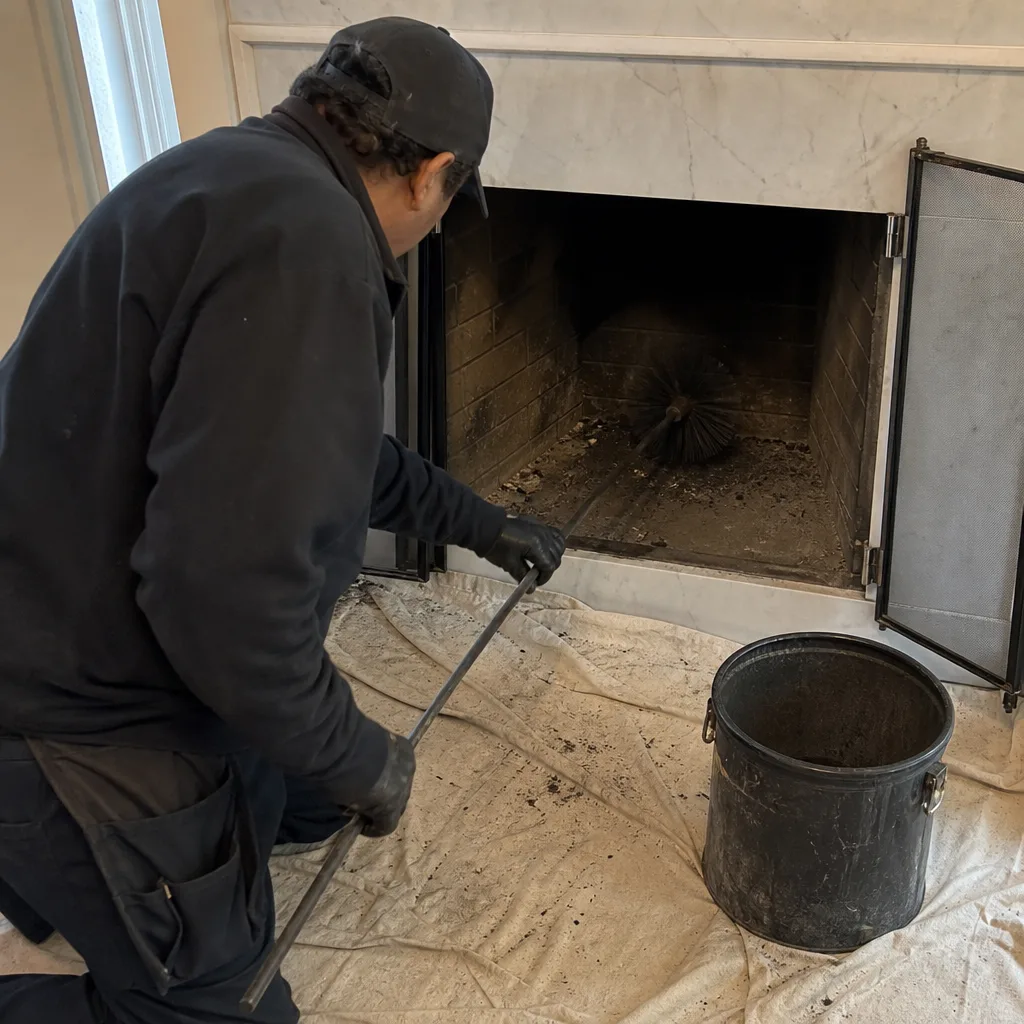
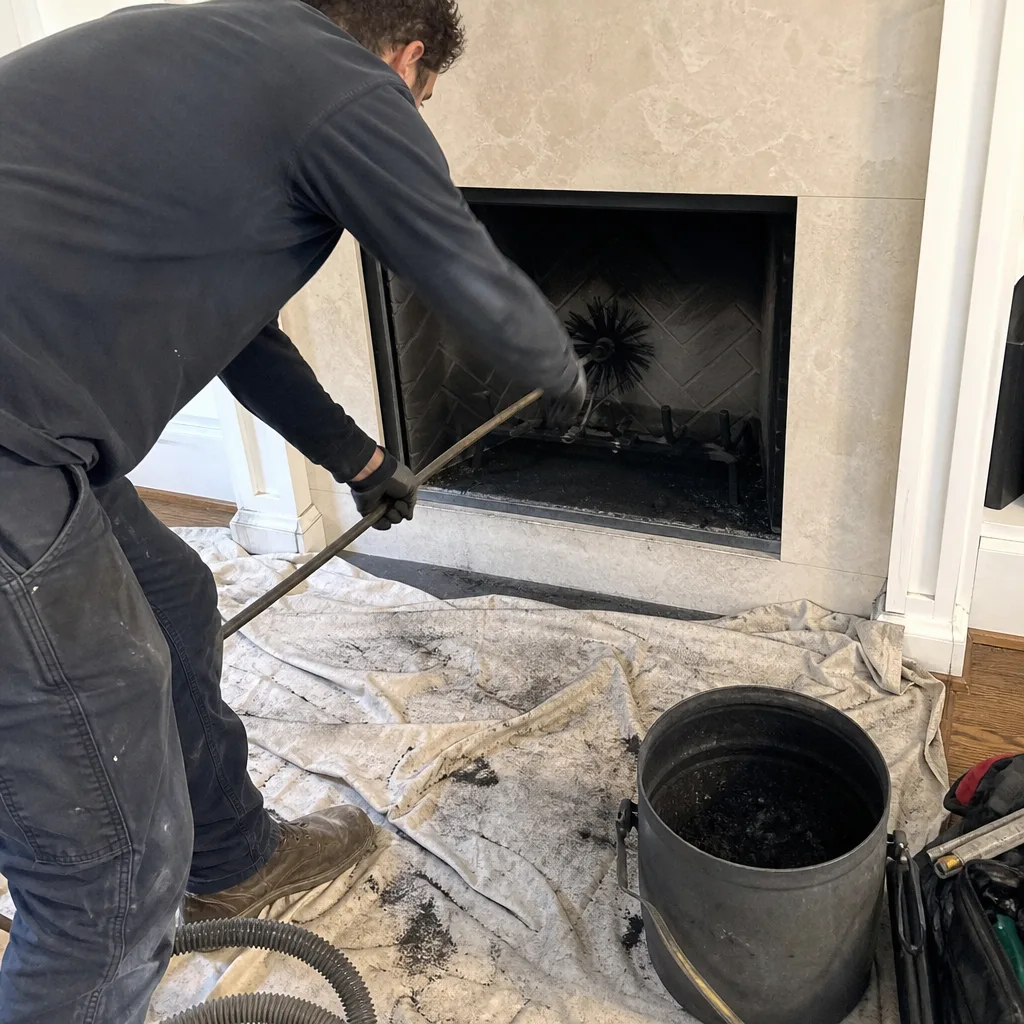
Chimney sweep logs do not sweep chimneys. They loosen some creosote - which then falls where a brush and vacuum still have to collect it.
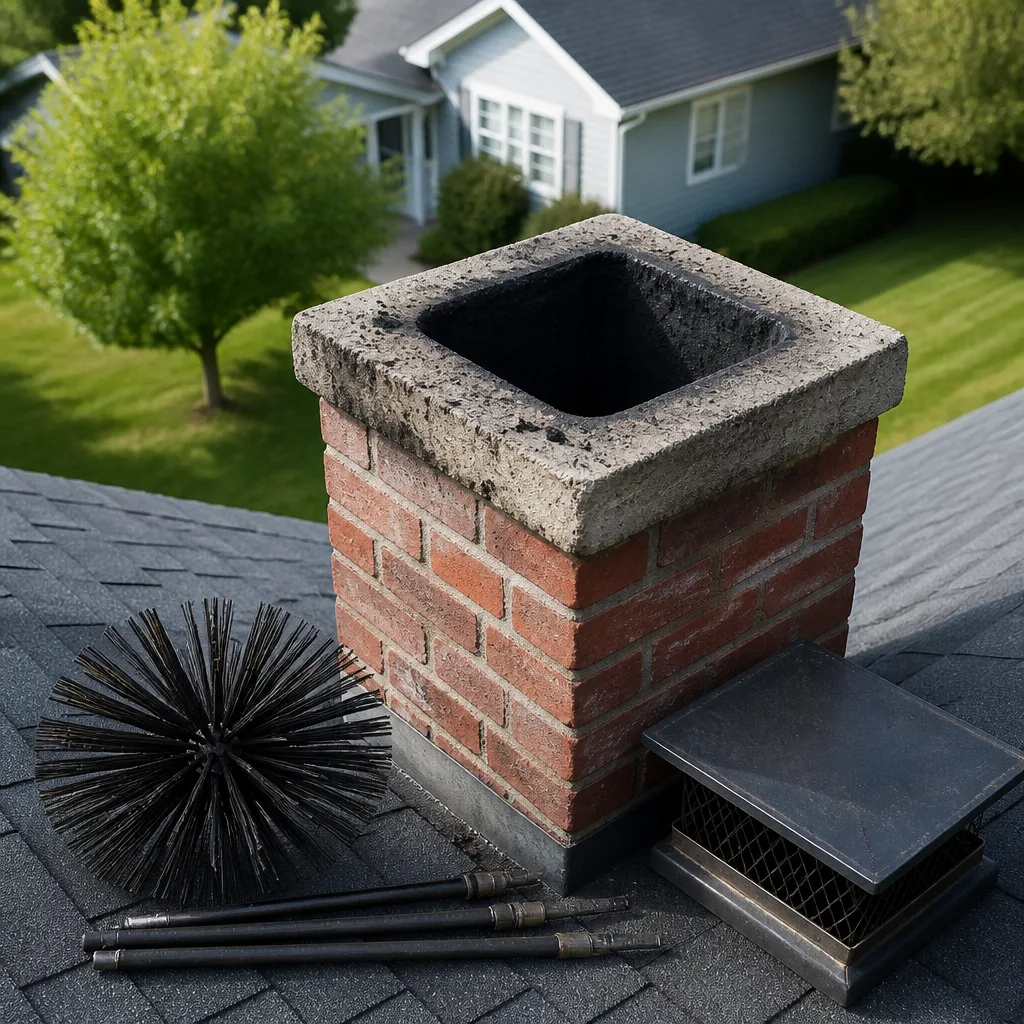
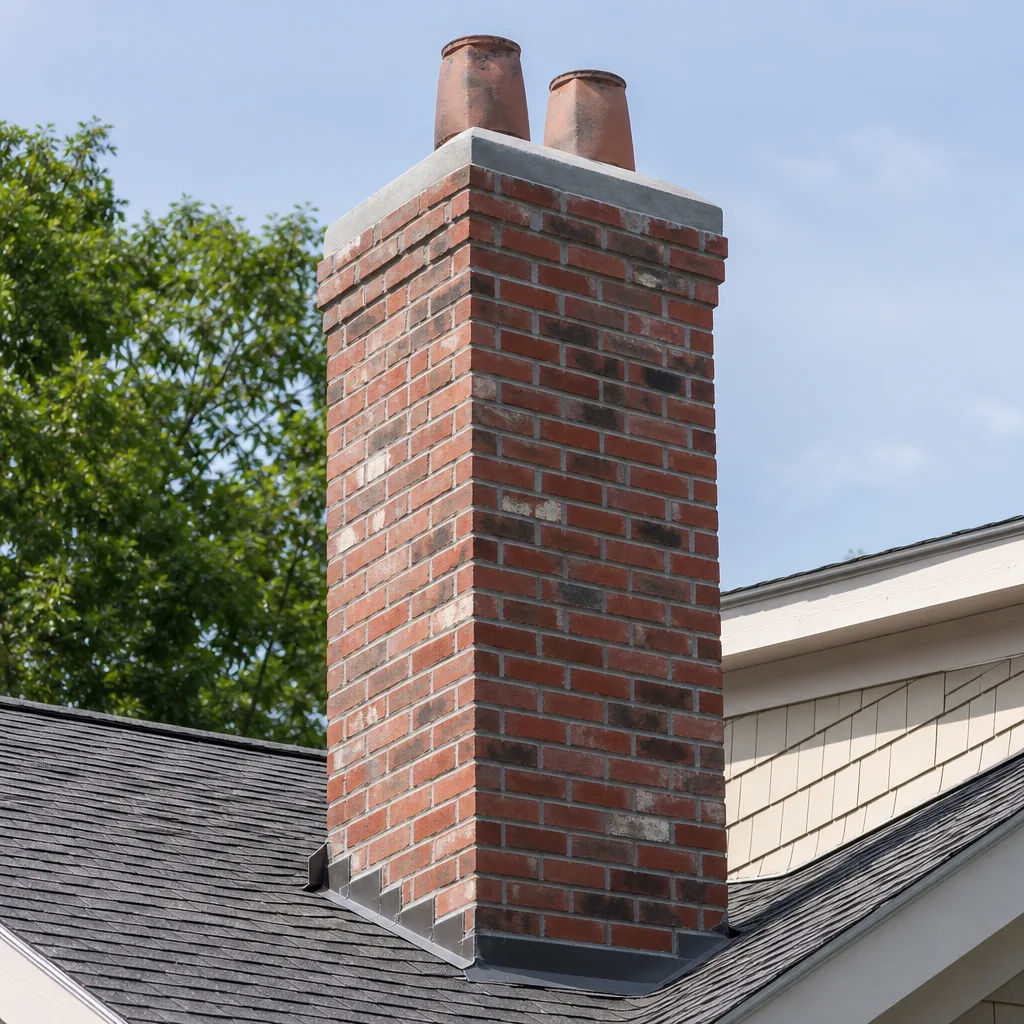
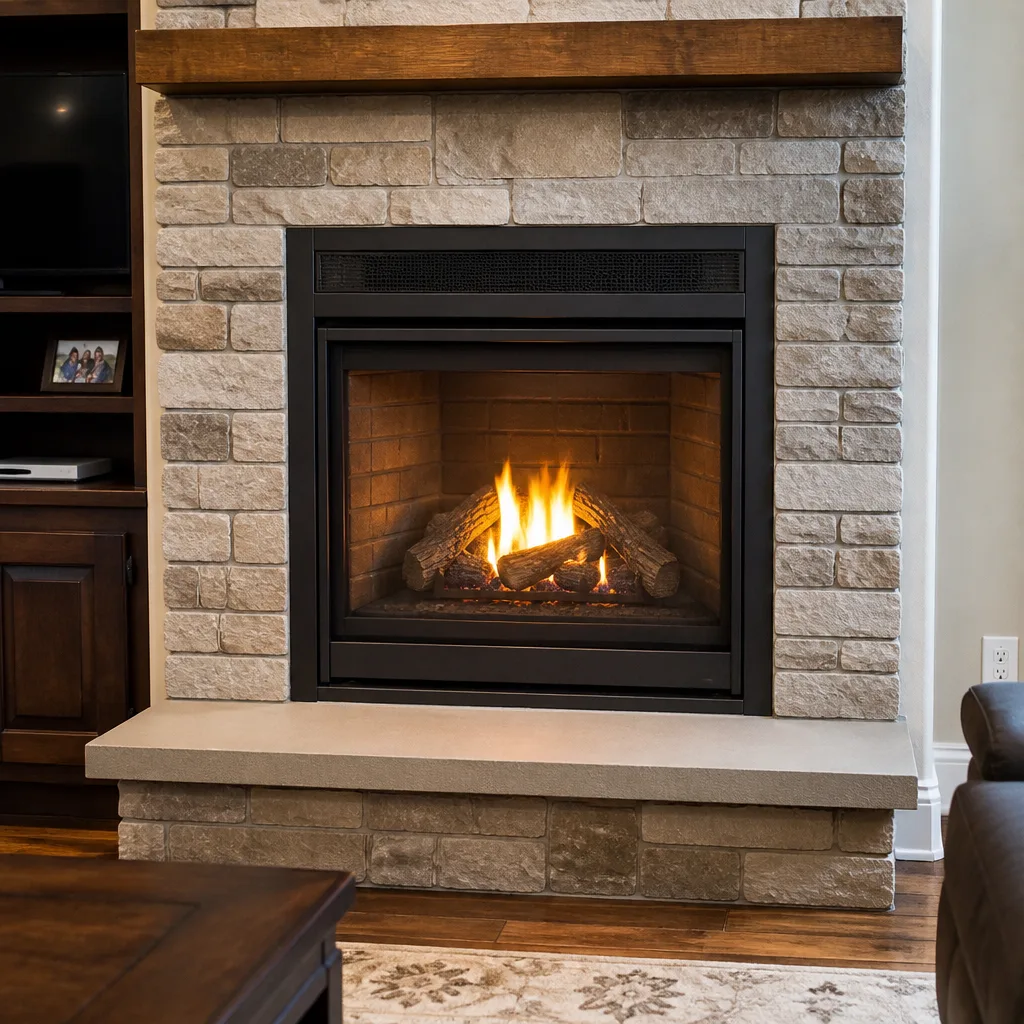
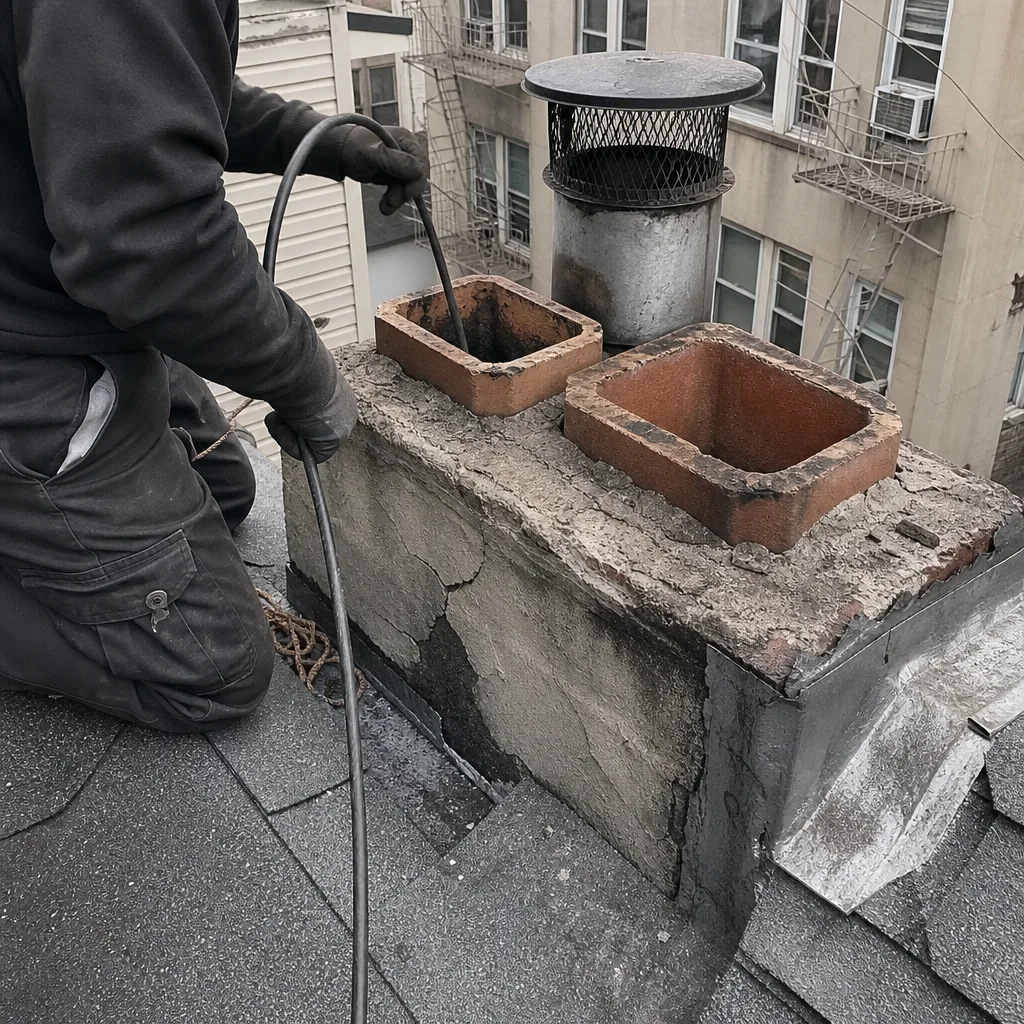 Before
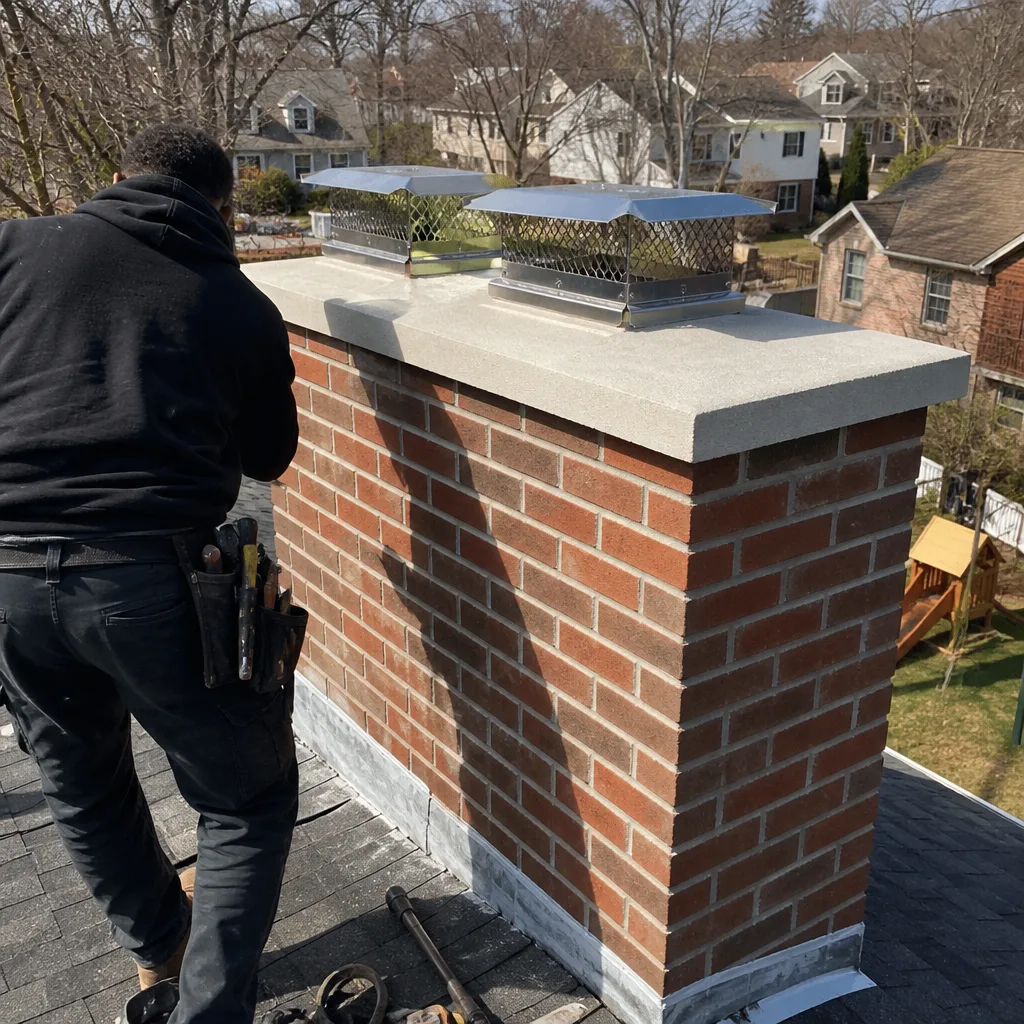 After
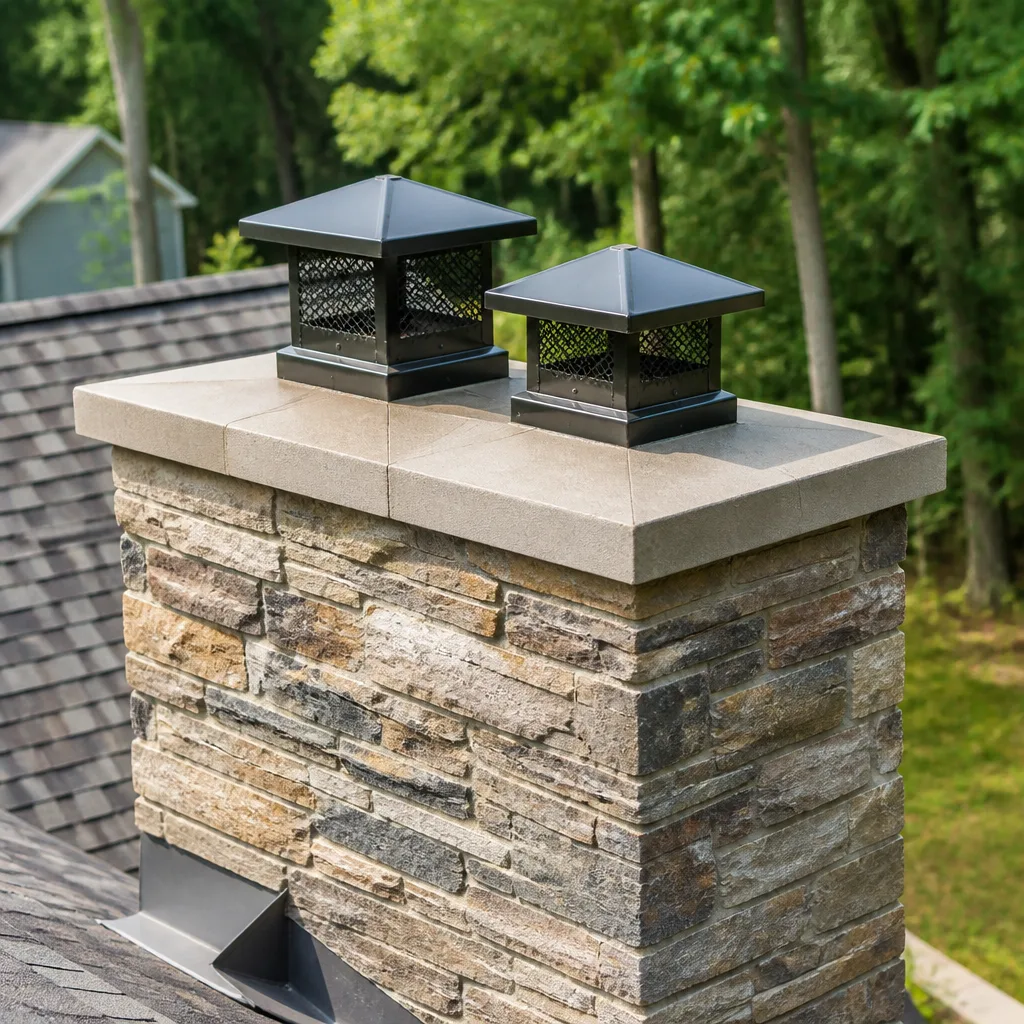
After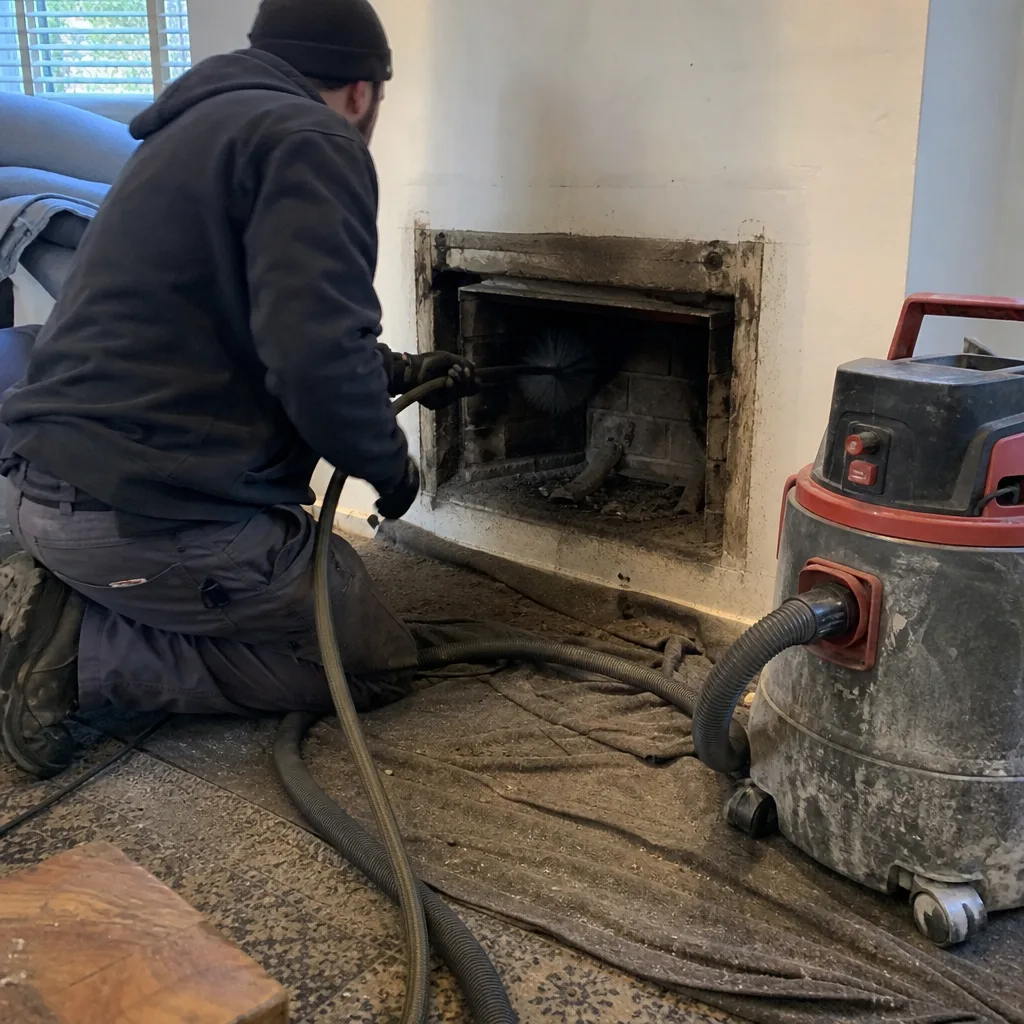 Before
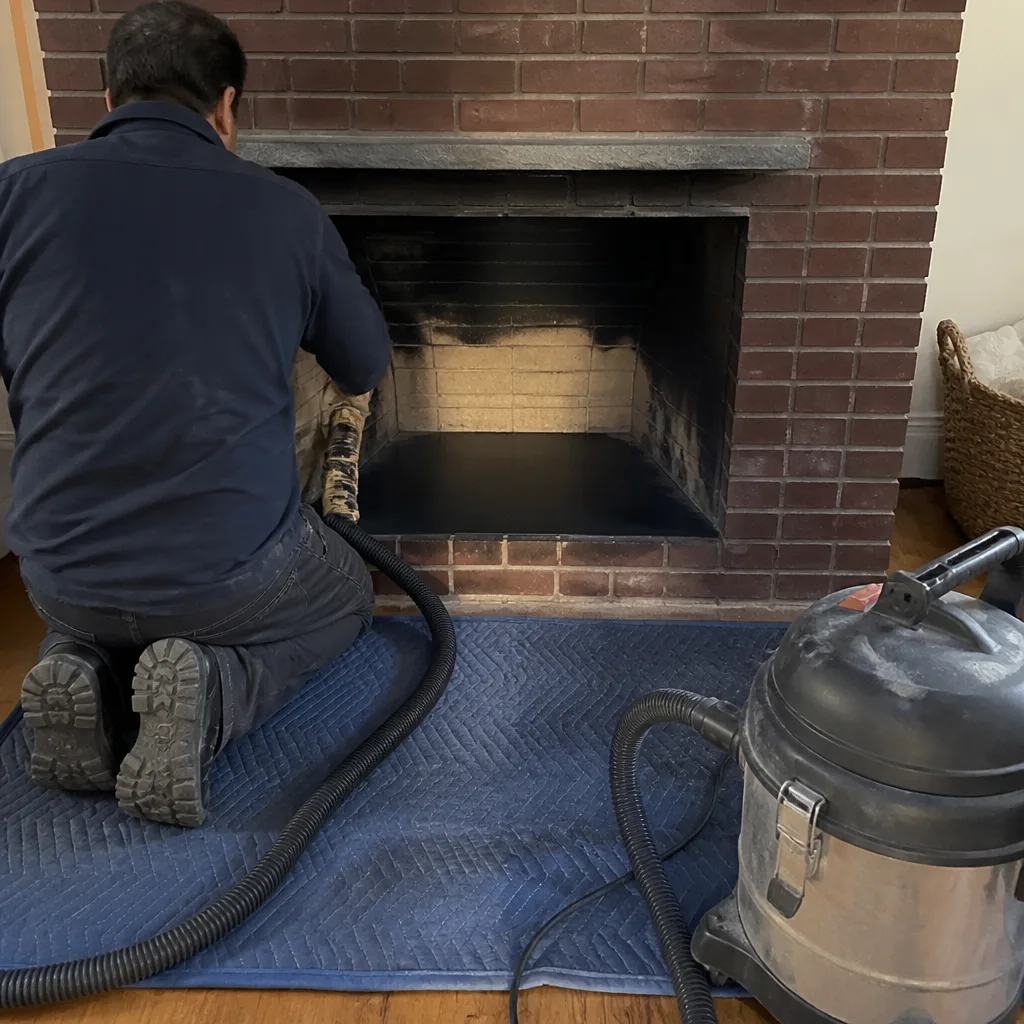 After
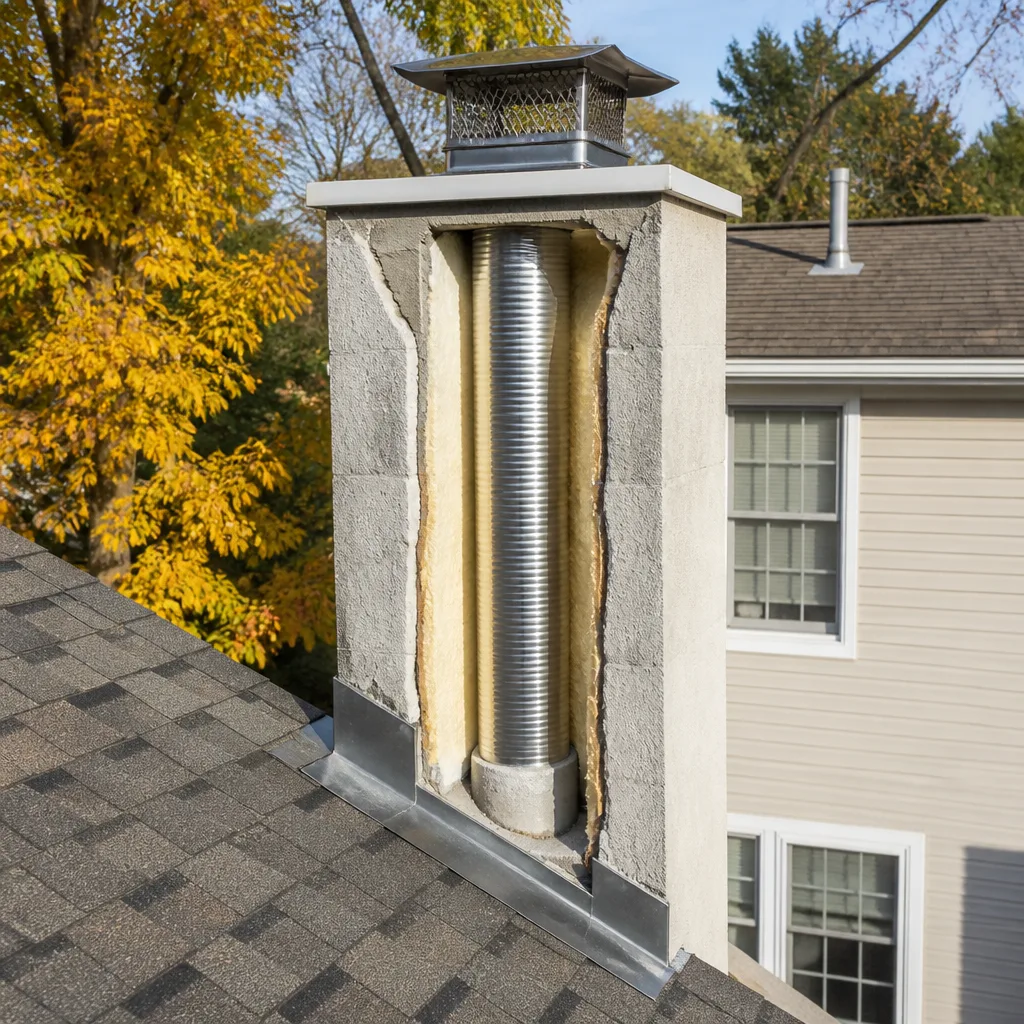
After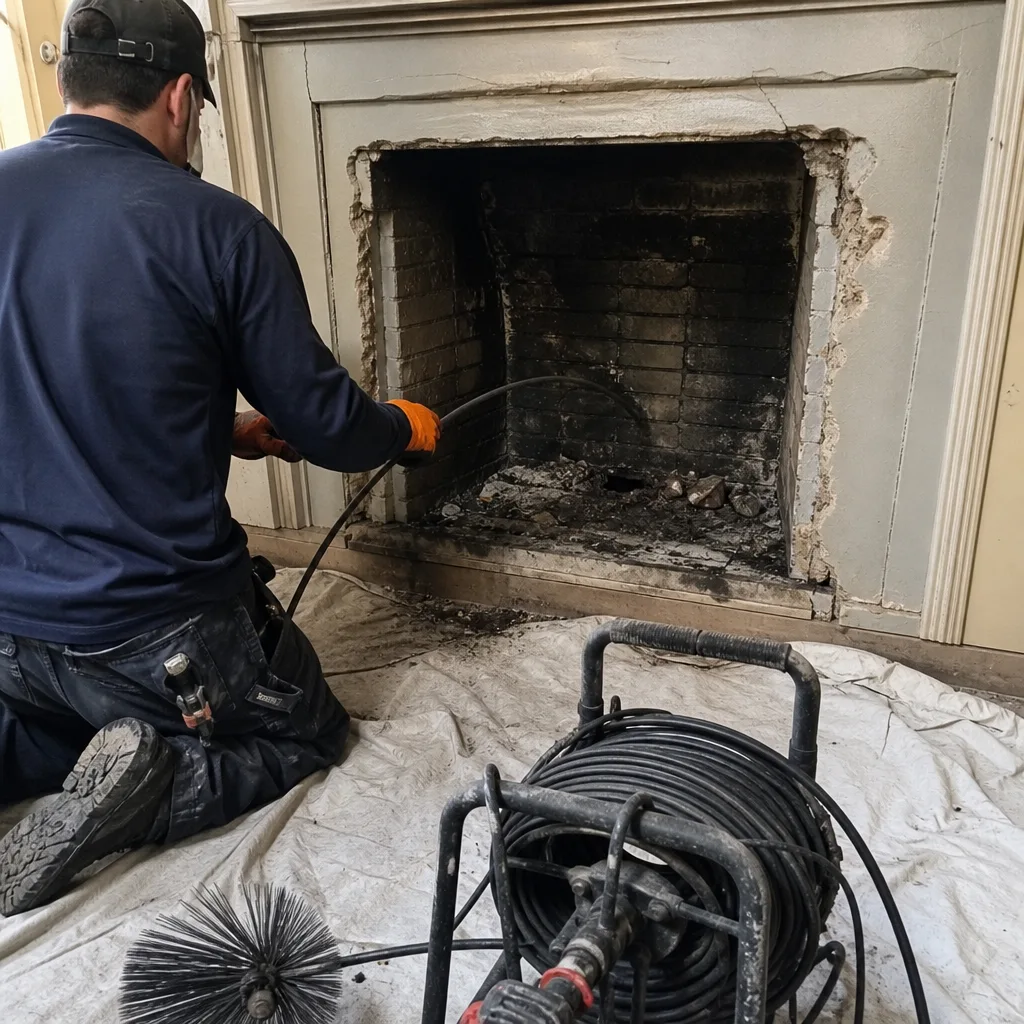 Before
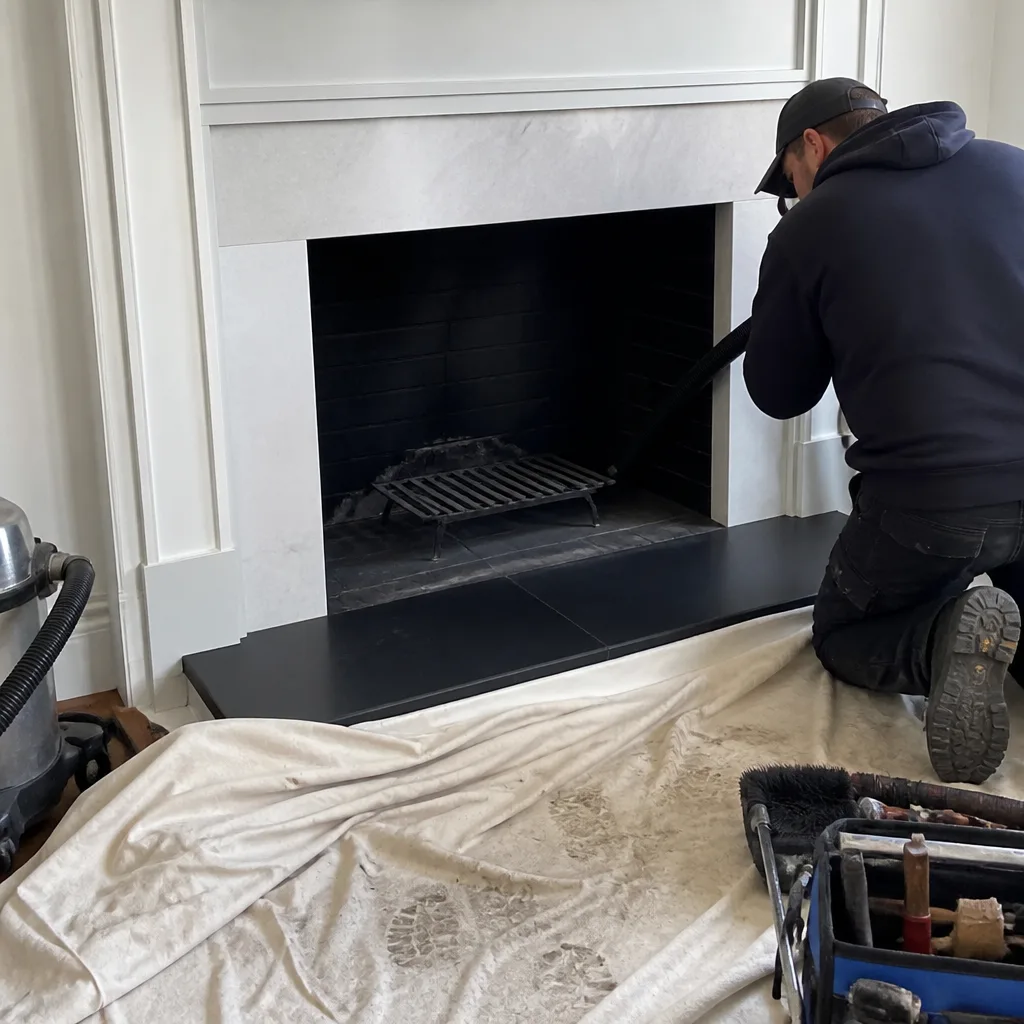 After
AfterFast, Reliable Chimney Cleaning & Sweep Across Long Island City
A chimney sweep in Long Island City typically runs $189-$329 for a standard cleaning with a Level 1 inspection, and most jobs are completed in under two hours. If you’re in Hunters Point, Court Square, or Dutch Kills, our crews know exactly what they’re walking into before they ring the bell. Call (551) 213-4778 for a written price before anyone sets foot in your home.
Long Island City’s chimneys are not like the ones in Astoria or Elmhurst. The housing stock here spans 1880s rowhouses, pre-war tenements, converted factory lofts, and glass towers built after 2015. Each one vents differently. Each one fails differently. Our Chimney Cleaning & Sweep team has worked on all of them, and we bring a camera down every flue before we recommend a single dollar of work. Corrine Halstead, who runs our Long Island City operations, insists on that. No camera evidence, no recommendation. That’s how it works.
Why Level Two Chimney Financial District Is Long Island City’s Preferred Chimney Cleaning & Sweep Company
Long Island City homeowners tend to research before they call. They want the price on the page, they want to see what the technician saw, and they don’t want a sales pitch disguised as an inspection. That’s who we’re built for. Every visit includes a documented photo record from the camera scan, delivered to you along with the written scope and written warranty before work begins. It’s not an upsell. It’s Clause 4 of the Haven Standard, and we’ve run every job under it since 2009.
We answer the phone. Twenty-four hours a day, seven days a week, a live person picks up. Not a voicemail. Not a web form. When you call about a chimney in Long Island City, you get someone who can speak to the specific issues in your building stock: party-wall flues in Hunters Point, oversized commercial stacks in converted lofts near Jackson Avenue, freeze-thaw spalling on East River-facing rooftops along Center Boulevard. We assign a named, background-checked technician to every job, and you get a text when they’re on their way.
Our 365-Day Done Right Promise applies in Long Island City exactly as it does everywhere else we work. If it’s not done right, we make it right. That’s stamped on every job, in writing, under the Haven Standard. Not a verbal promise. A written one.
Our Chimney Cleaning & Sweep Services in Long Island City
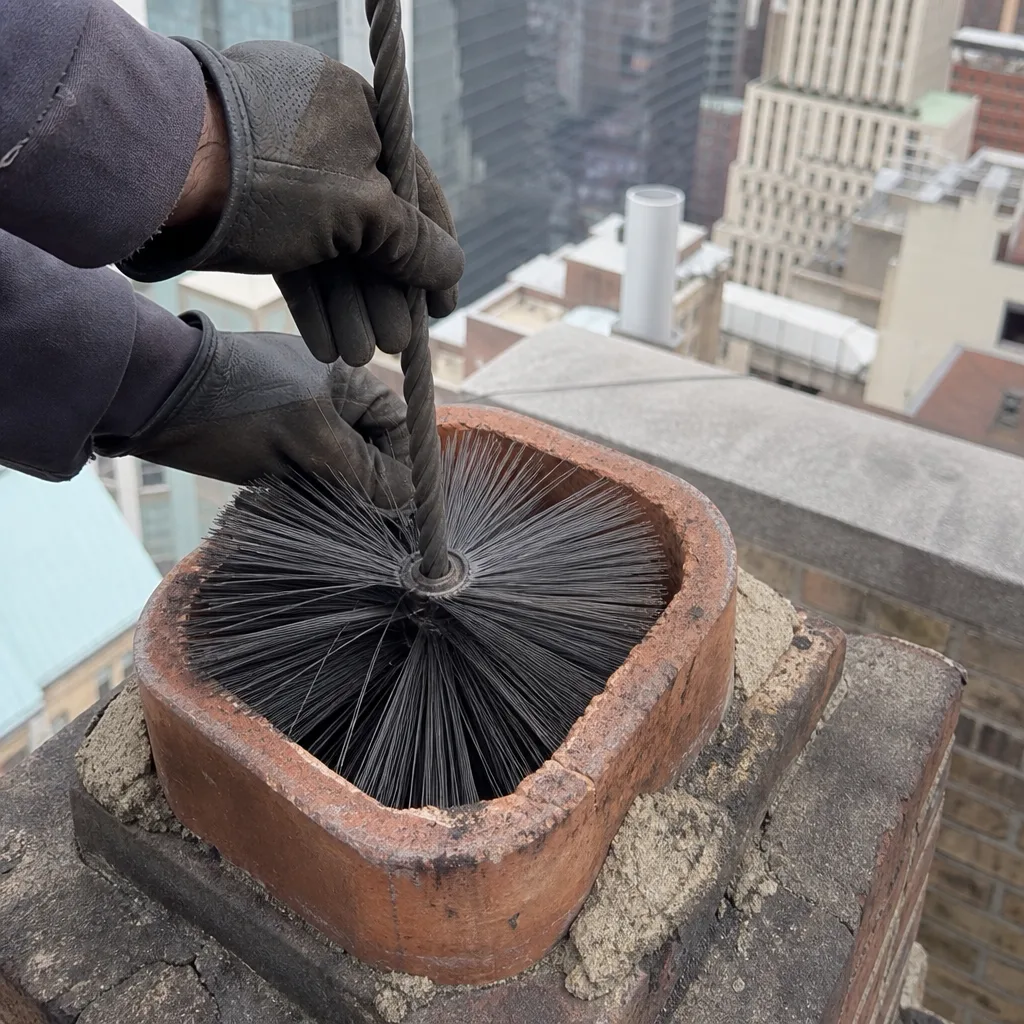
Level 1 Inspection
A Level 1 inspection is the baseline check we run on every sweep. In Long Island City, that means checking the readily accessible portions of the flue, the firebox, the damper, and the exterior chimney where visible from the roof or the street. It’s the right call when your chimney is used the same way it was last year and nothing has changed. For most LIC homeowners with annual usage, a Level 1 with a cleaning is sufficient.
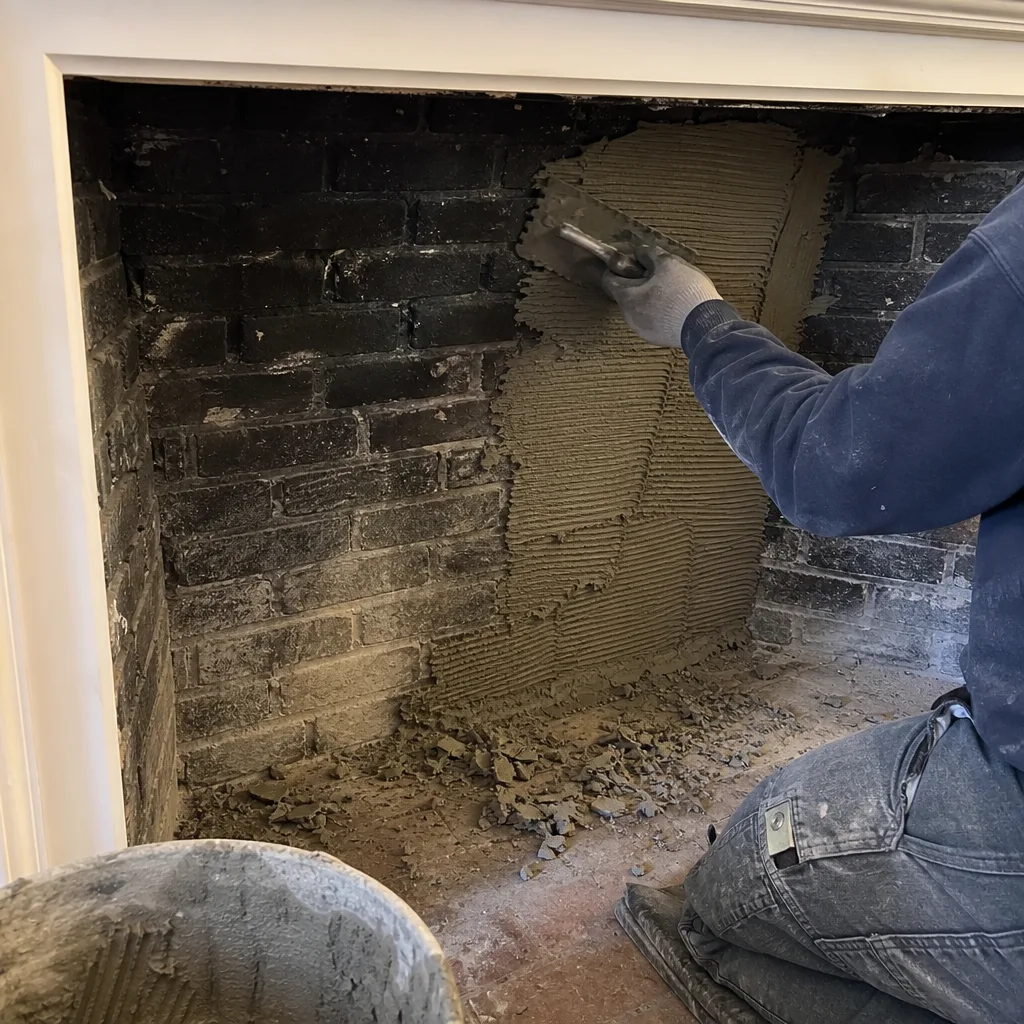
Level 2 Inspection
A Level 2 inspection is a camera scan of the entire flue interior, plus the accessible attic, crawlspace, and exterior. We push for this in Long Island City more than almost anywhere else. Here’s why: the Hunters Point Historic District’s attached rowhouses often share a single party-wall chimney with stacked flues. A creosote blockage or animal nest in one unit’s flue can force carbon monoxide back-draft into a neighbor’s home, not your own. You could have a fire hazard in your wall and never see a wisp of smoke. A brush-only sweep misses this. The camera doesn’t. If you live in a Hunters Point rowhouse and haven’t had a Level 2 inspection, schedule one before your next burn.
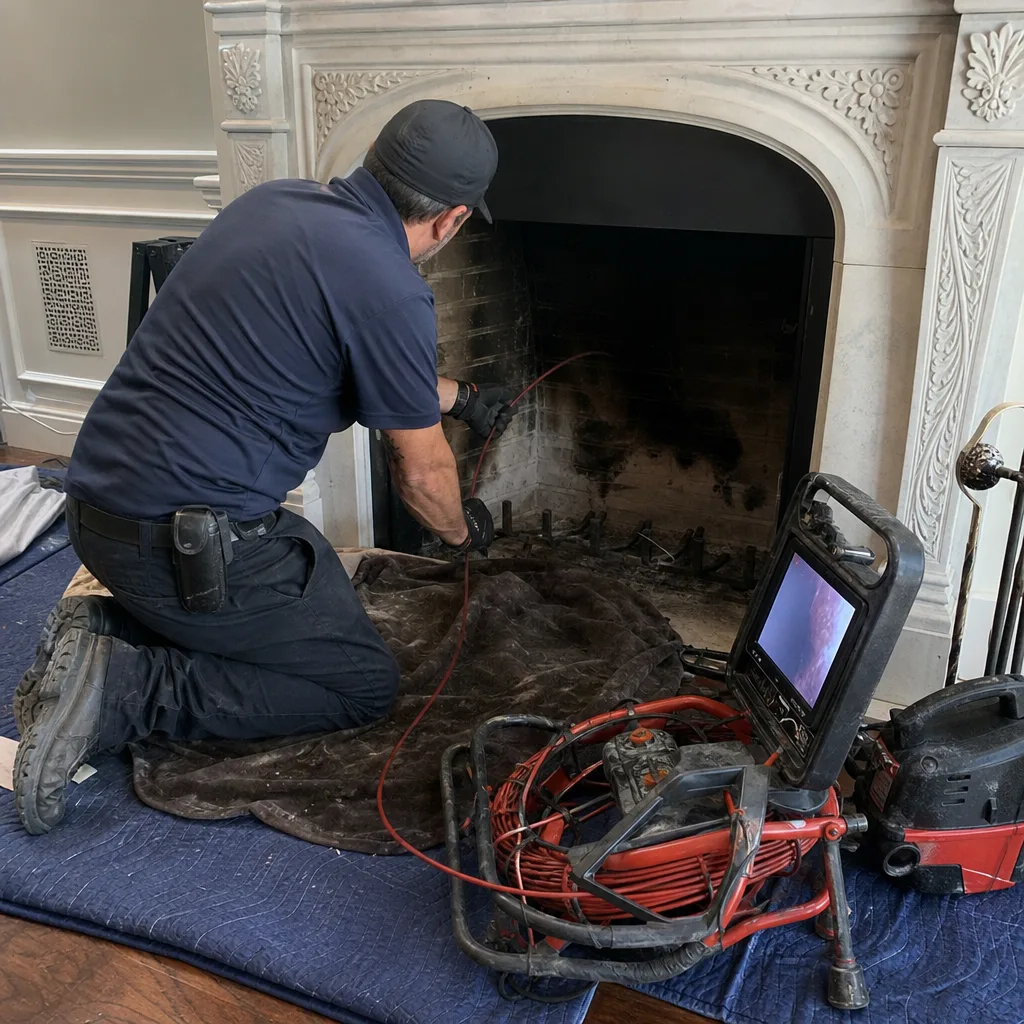
Creosote Removal
Creosote removal is the core of what a sweep does, but not all creosote is equal. First-degree creosote is a light soot that brushes away. Second-degree creosote is a flaky, tar-like buildup. Third-degree, also called Class III, is a hardened glaze that a brush will not move. In Long Island City, we regularly find second and third-degree creosote in flues that were converted from coal to oil to gas over a century, then returned to wood use by a new owner who assumed the chimney was fine. It often isn’t. We remove what can be mechanically removed, document what remains, and tell you plainly if a chemical treatment or resurfacing is warranted. You’ll see the photos before we quote a dollar.
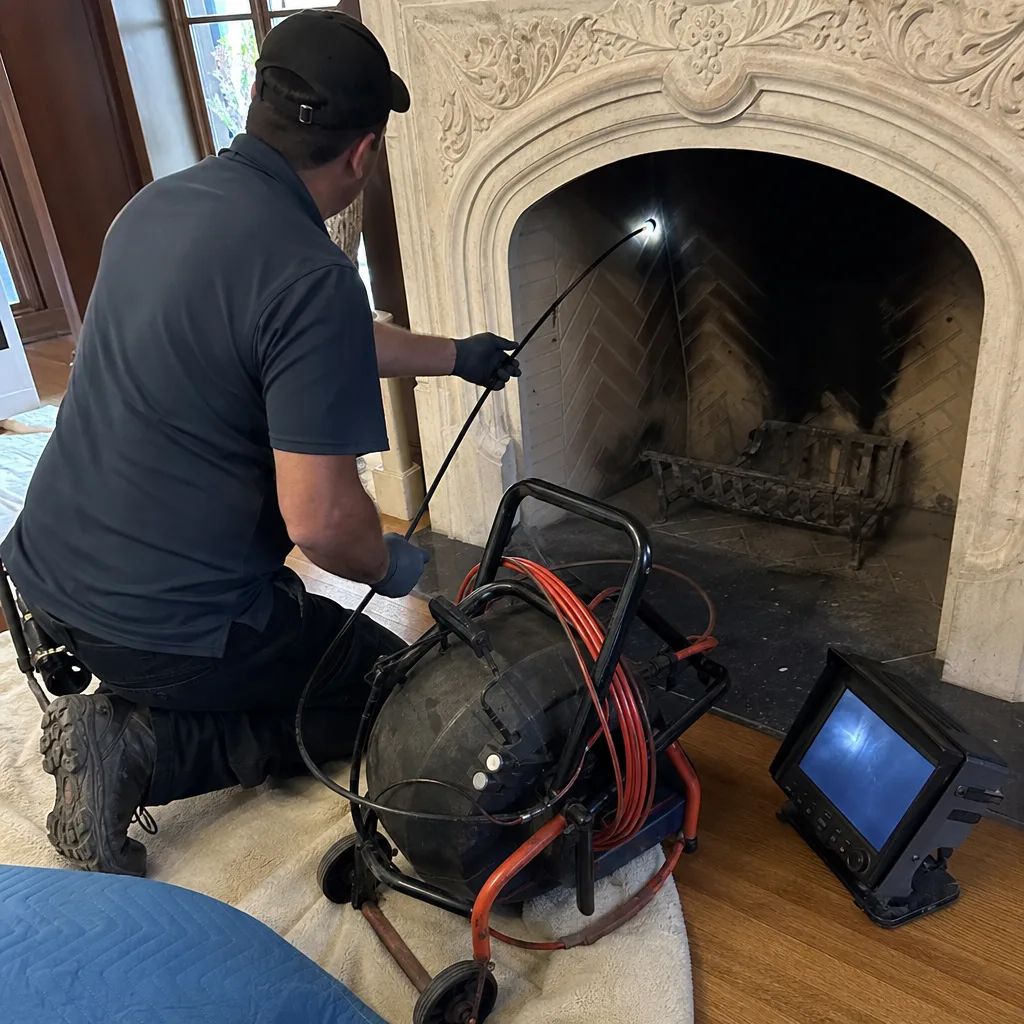
Soot Removal
Soot removal matters even if you only burn gas logs. Gas fireplaces produce less visible soot, but what they do produce is acidic and fine. Over time, it etches the flue liner and settles in the smoke chamber. In Long Island City’s converted loft buildings near the old Degnon Terminal industrial area, we see gas appliances vented into oversized commercial flues that were never designed for residential venting. The soot accumulates unevenly in those non-standard dimensions. A standard brush misses pockets of it. We adapt the equipment to the flue, not the other way around.
What happens when you call
- 1
A real person answersNo phone trees - you reach a local pro.
- 2
You get an upfront price rangeHonest numbers before anyone is dispatched.
- 3
A background-checked tech heads outLicensed & insured, dispatched right away.
- 4
You approve before work beginsNothing starts until you say go.
BeforeAfterTrusted Brands We Service in Long Island City
We install and service liners and components from DuraFlex, HeatShield, and Olympia Chimney. We stock common parts locally, which means when your Hunters Point rowhouse needs a crown repair or your Court Square condo needs a custom stainless liner, we’re not waiting a week on a distributor. DuraFlex liners handle the standard round flues you’ll find in most newer LIC buildings. HeatShield resurfacing is the solution we turn to when a clay tile liner in a century-old rowhouse has cracked but the flue is too narrow for a standard stainless insert, which happens routinely in Hunters Point party walls. We’ll tell you which product fits your flue and why, and you get the manufacturer’s warranty in writing with the quote.
Common Chimney Cleaning & Sweep Problems We See in Long Island City Homes
- Party-wall flue cross-contamination. In attached Hunters Point rowhouses, multiple units share one chimney with stacked flues. A blockage in one flue can push carbon monoxide into the unit next door. This is a Long Island City-specific hazard that catches new condo buyers off guard when they come from detached single-family homes.
- Cracked clay tile liners hidden under cosmetic patches. The 1880s and 1890s rowhouses in the Hunters Point Historic District have been through coal, oil, and gas conversions. Each fuel transition involved patchwork. We routinely find cracked clay tile liners that look fine from the top but are failing inside.
- Oversized or non-circular commercial flues in converted lofts. LIC’s industrial buildings were repurposed into residential lofts, but many kept their original boiler stacks. Those flues are often too wide or the wrong shape for standard residential liners. Generic sweep companies quote standard parts that won’t pass DOB inspection. We measure, we camera-scan, and we order what actually fits.
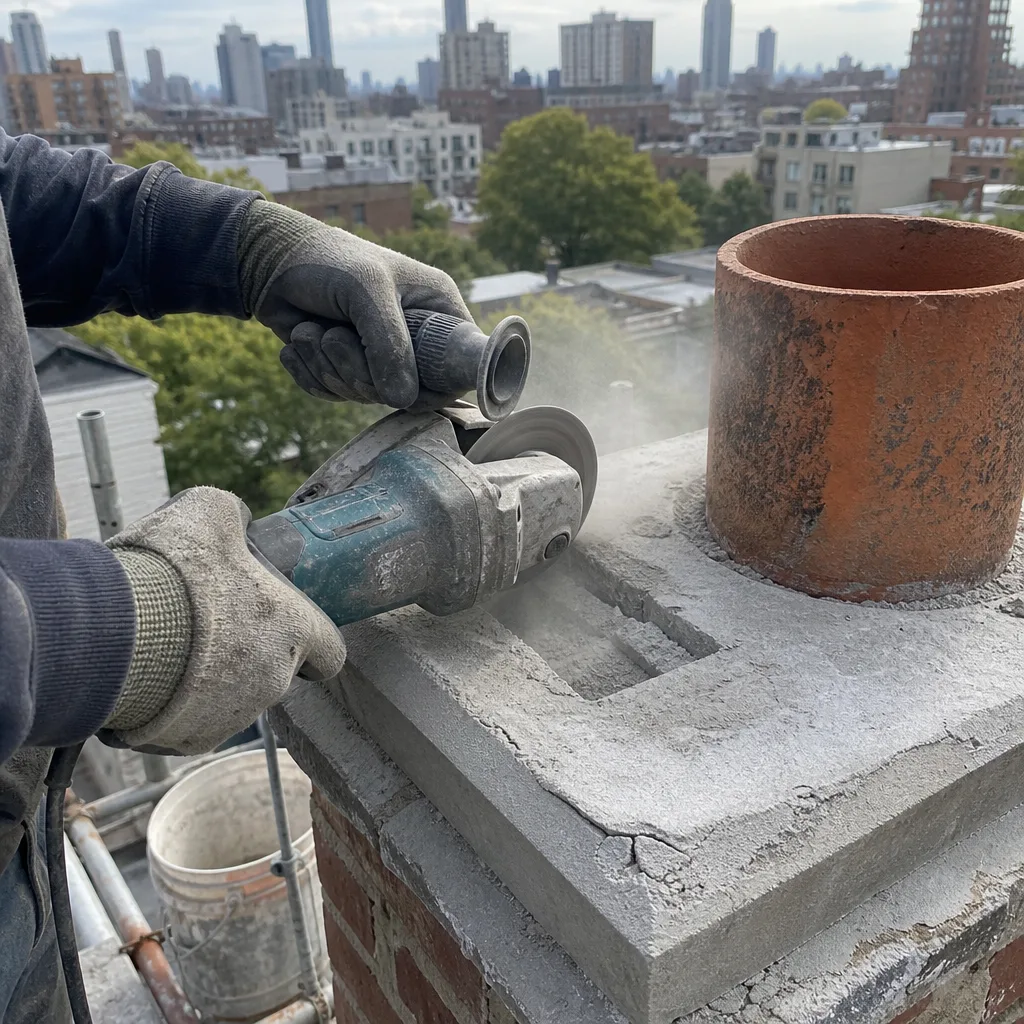
- East River moisture accelerating mortar spalling. Chimneys on the western edge of Long Island City sit close enough to the East River that trace salt air and elevated moisture wear down mortar joints and brick faces faster than comparable chimneys a mile inland in Woodside or Elmhurst. Freeze-thaw cycles each winter fracture already-weakened crowns. A sweep that doesn’t check the crown and cap is missing the most common structural failure point on LIC rooftops.
Pricing for Chimney Cleaning & Sweep in Long Island City, NY
Here’s what you can expect to pay in Long Island City right now. A standard chimney sweep with Level 1 inspection runs $189-$279 for a typical single-flue rowhouse chimney. If you have a gas fireplace that hasn’t been used in years, expect the lower end. If you burn wood regularly, the creosote is heavier and the job lands closer to $279-$329, sometimes more if we’re removing Class III glaze. A Level 2 camera inspection adds $125-$200 depending on the flue count and whether we need roof access from a parapet or a fire escape. HeatShield resurfacing for a cracked clay tile liner in a Hunters Point rowhouse typically runs $2,400-$4,800 depending on flue length and access. A custom stainless liner for an oversized converted-loft flue starts around $3,500 and goes up with height and materials. Every quote is written, itemized, and delivered before any work starts. Call (551) 213-4778 and we’ll give you a firm price, not a range that morphs after we arrive.
We Also Serve Cities Near Long Island City
Our crews work throughout Long Island City and the surrounding area. If you’re in Astoria, Elmhurst, Manhattan, or elsewhere in New York, the same written-price guarantee and camera-verified inspection process applies. The flues change. The standard doesn’t.
Serving Long Island City, NY - Our Local Coverage Area
We’re based in the Long Island City area and know this community well. Use the map below to see our service coverage - if you’re nearby, we can almost certainly help.
FAQs - Chimney Cleaning & Sweep in Long Island City
Because occasional burning is exactly when creosote builds fastest. A fire that smolders at low temperature deposits more creosote than a hot, active fire. In Long Island City’s attached rowhouses, that buildup sits inside a party-wall flue shared with your neighbor’s unit. The camera inspection confirms the flue is clear and the liner is intact. A brush-only sweep can’t see a cracked clay tile hidden behind a cosmetic patch. Call (551) 213-4778 for a quote with the camera scan included.
Yes. We adapt our equipment to the flue dimensions rather than forcing a standard round brush through a non-circular opening. Converted industrial lofts in Long Island City often have boiler stacks that are wider or rectangular. Standard equipment scrapes the brick and leaves uneven soot deposits. We use rotary tools sized to the actual flue, then run a camera to verify the walls are clean and undamaged. The photo record comes with the job.
Even an unused gas fireplace should be inspected once a year, and swept when the camera shows buildup. Gas produces acidic soot that etches liners over time, and in Long Island City, many gas appliances are vented into flues originally built for coal. Those flues were not designed for modern gas venting. An annual check catches corrosion before it becomes a liner replacement. If it’s been more than a year, call (551) 213-4778 and we’ll schedule a Level 1 inspection.
It could be creosote, but in Long Island City it’s often moisture mixing with soot inside an East River-exposed flue. High humidity and salt air make the creosote smell sharper and more persistent. It can also indicate a blockage preventing proper draft, which pushes odors back into your unit. The only way to know is a camera scan and a draft check. We’ll find the source and show it to you before recommending any fix.
Clay tile liners crack. When they do, cleaning alone doesn’t fix the problem. In Long Island City’s Hunters Point rowhouses, the original clay tile liners have been through coal, oil, and gas conversions over 120-plus years. Heat stress and freeze-thaw cycles crack those tiles. A camera inspection shows exactly which tiles are compromised. If the flue is too narrow for a stainless insert, HeatShield resurfacing is the standard fix. We’ll show you the cracked tile on camera before we quote replacement. Nothing is recommended on faith.
Written by Corrine Halstead, Owner at Level Two Chimney Financial District, serving Long Island City under the Haven Standard since 2009.