
Last updated September 20, 2026
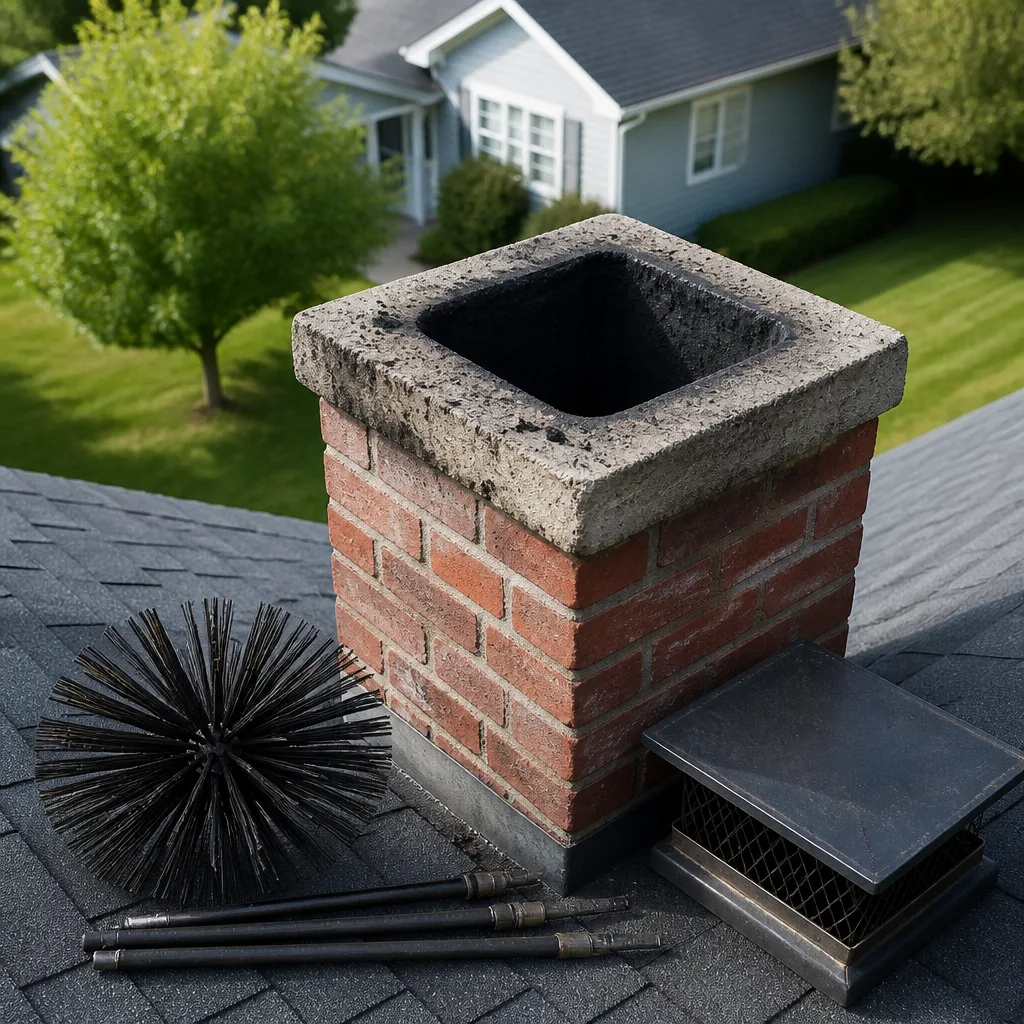
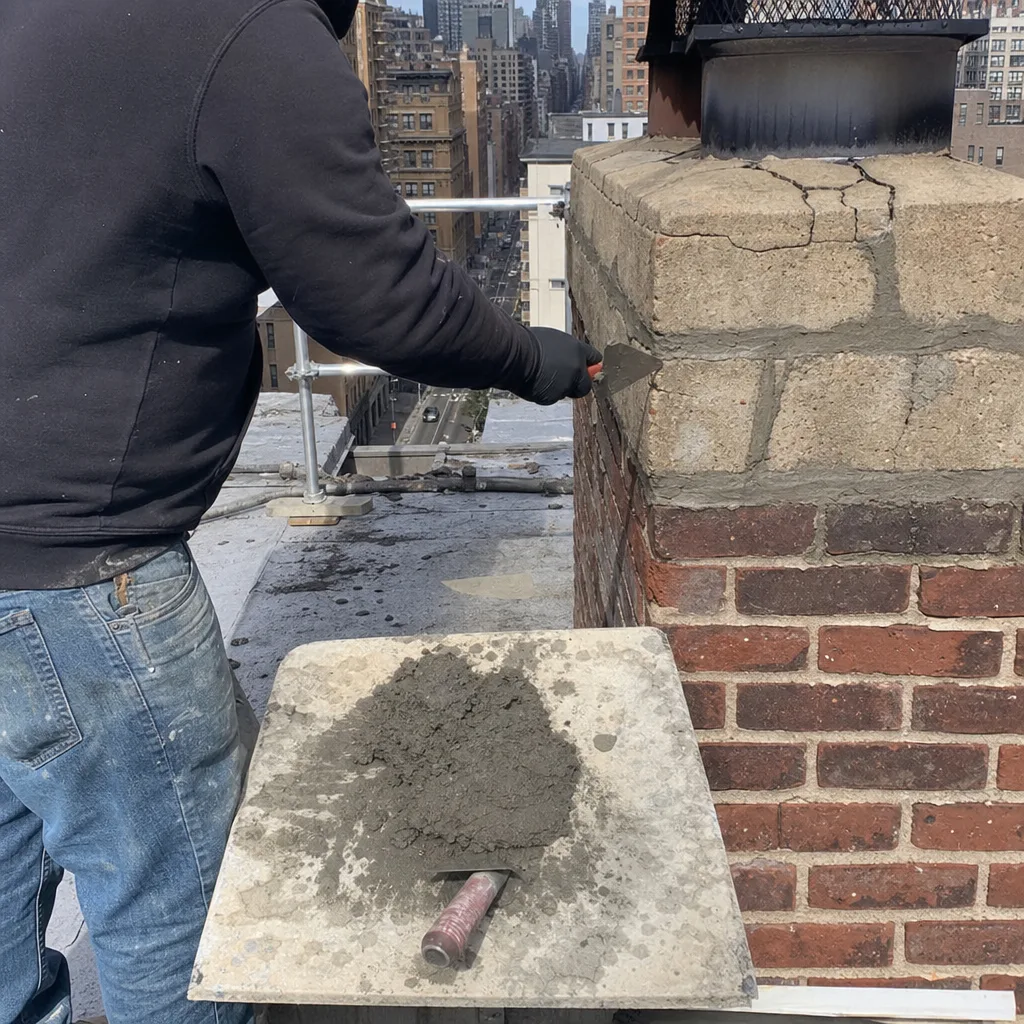
Level 1 sweep and inspection to the NFPA 211 annual standard - flue, crown, cap, and flashing checked and photographed
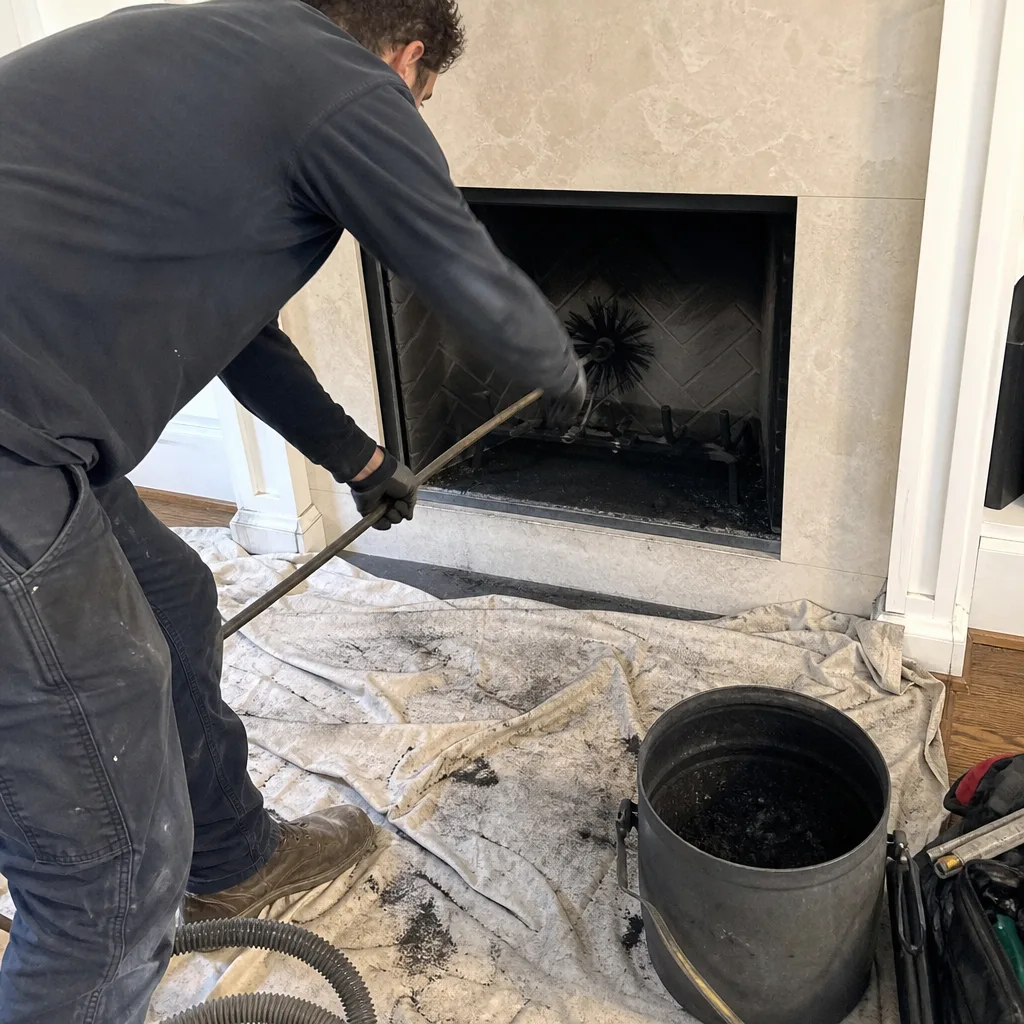
Chimney sweep logs do not sweep chimneys. They loosen some creosote - which then falls where a brush and vacuum still have to collect it.
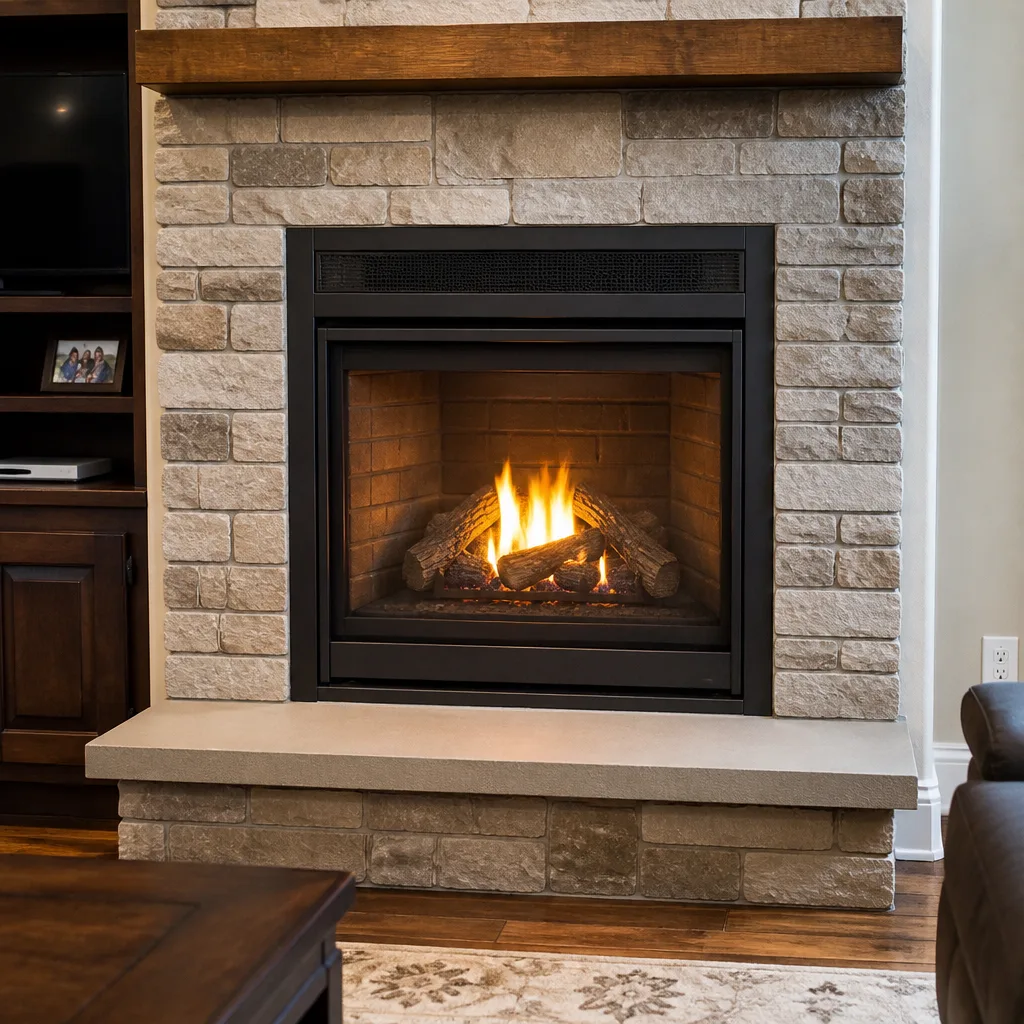
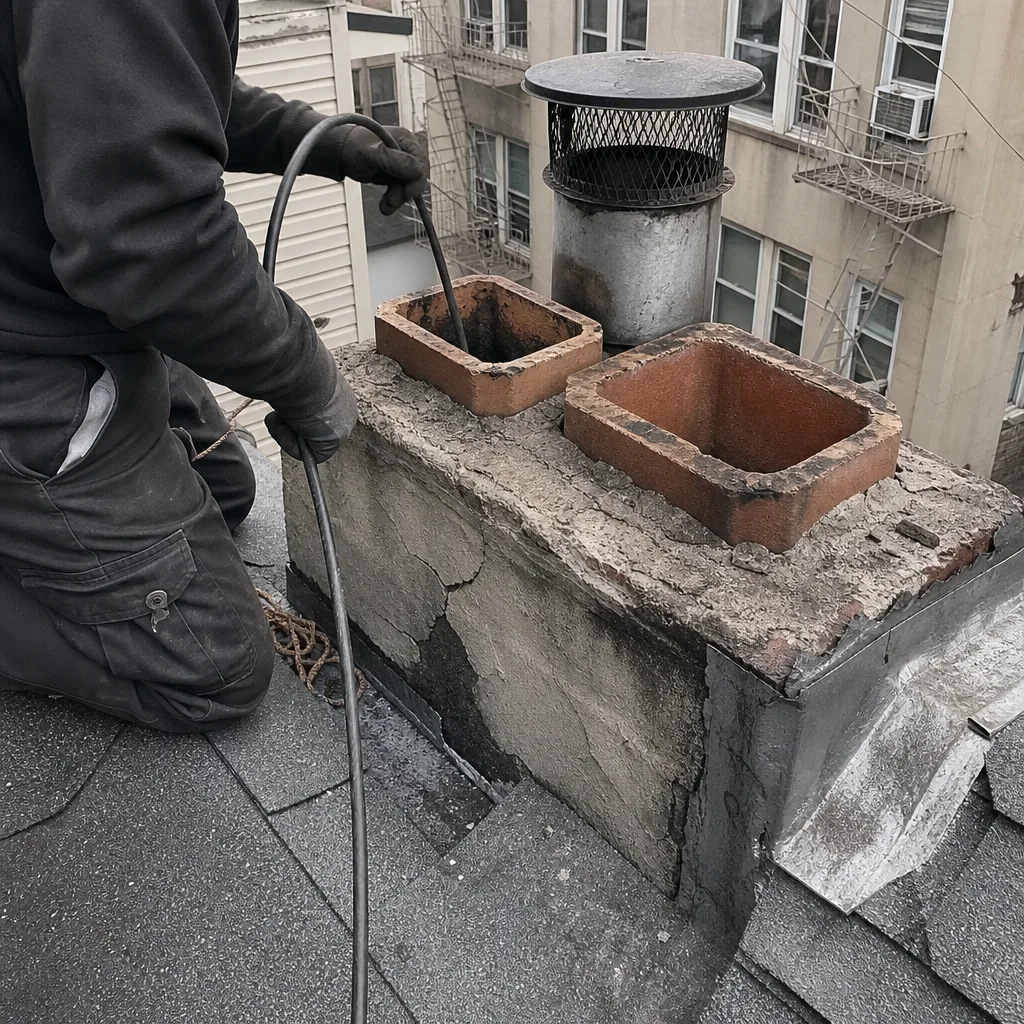 Before
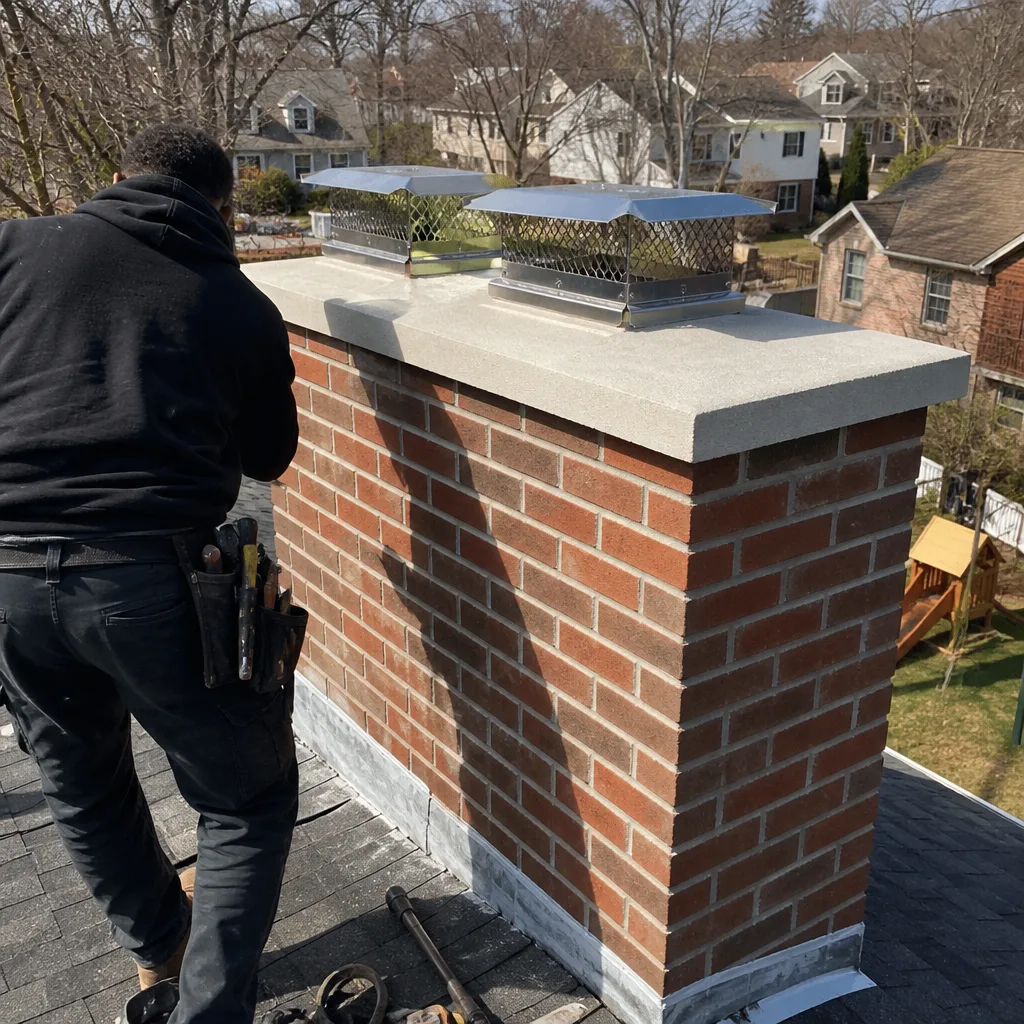 After
After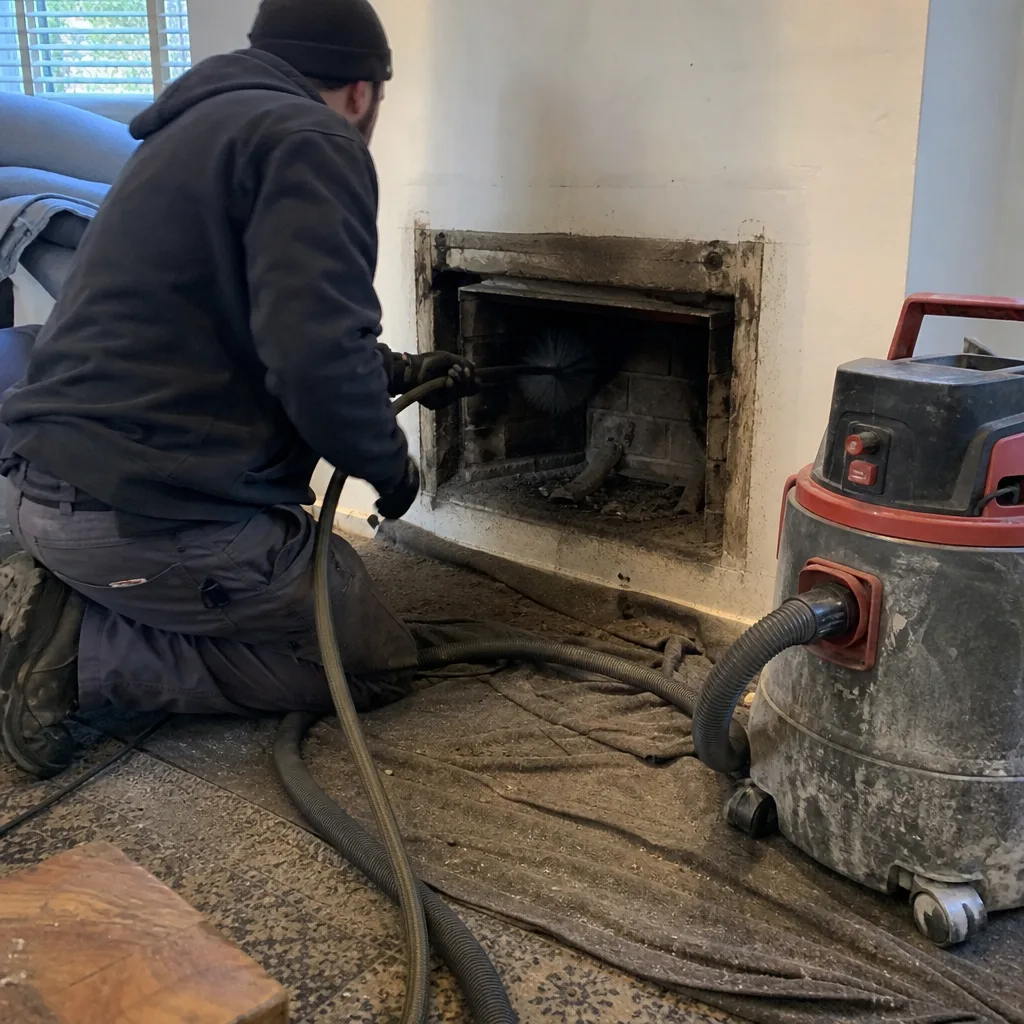 Before
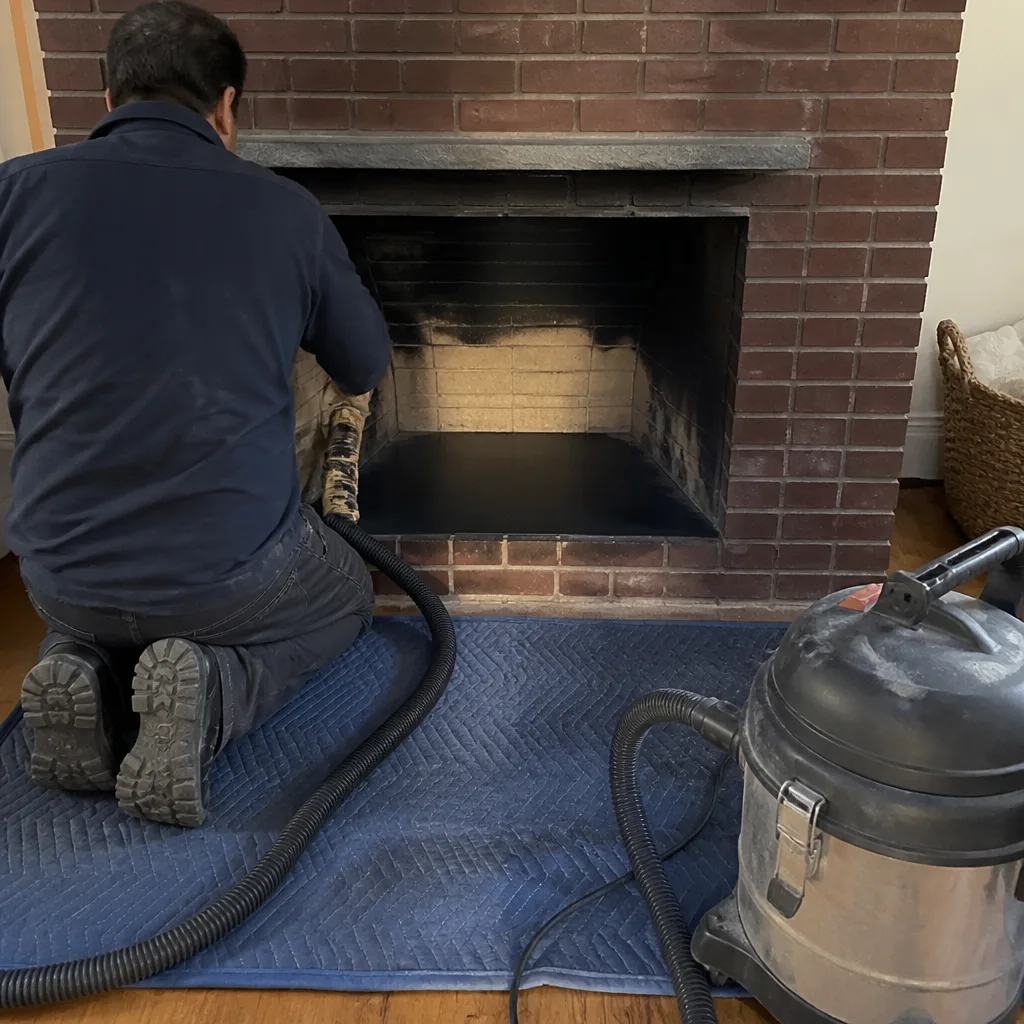 After
After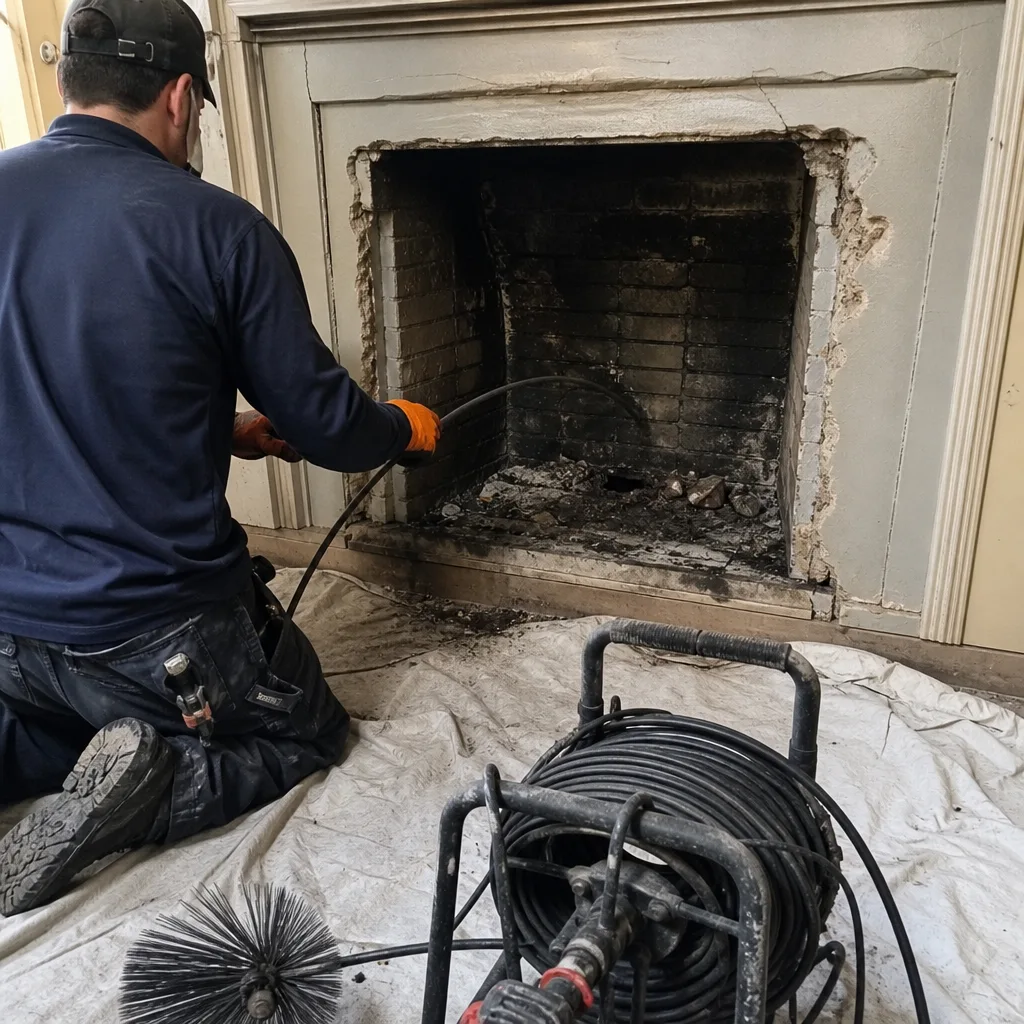 Before
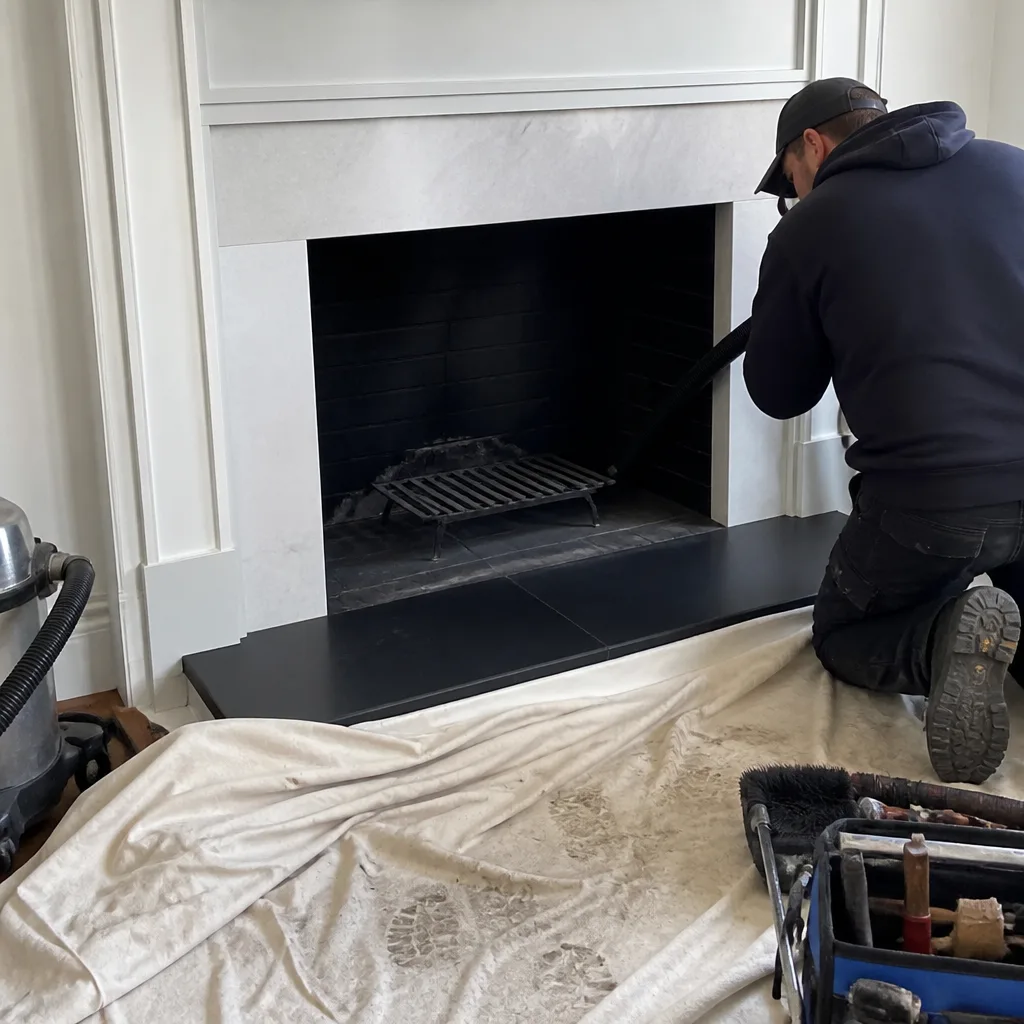 After
AfterHow to Hire a Chimney Cleaning Contractor in Financial District: A Step-by-Step Guide
A contractor who does excellent work in a Westchester colonial can create a liability problem in a Financial District co-op, because the deliverable isn’t the cleaning. It’s the written record the board accepts afterward. This guide walks through exactly what to ask for before you schedule anything, which documents matter, and how to spot the four or five red flags that show up constantly in the Financial District market. For more guides & resources on chimney care, see our blog. You’ll finish knowing the difference between a camera-scan inspection and a flashlight look, what a real warranty states, and why building type changes everything about who you should hire.
Quick Answer
To hire a chimney cleaning contractor in the Financial District, request three documents before scheduling: proof of CSIA certification, a sample inspection report from a prior job, and a written price that names the exact scope and price of work. Then confirm the contractor uses a camera-scan inspection (not a flashlight and mirror) and has experience with multi-unit buildings, shared flues, and landmarked or pre-war construction. A legitimate contractor will provide all of this without hesitation.
Table of Contents
- The Three Documents to Request Before Scheduling
- Camera-Scan vs. Flashlight-and-Mirror: Why It Matters in Multi-Unit Buildings
- Experience With Landmarked and Pre-War Buildings: Questions to Ask
- Red Flags Specific to the Financial District Market
- What the Written Warranty Should State
- What Chimney Cleaning Should Cost in Financial District
- Common Mistakes to Avoid
- When to Call a Professional
- Frequently Asked Questions
- The Bottom Line
BeforeAfterThe Three Documents to Request Before Scheduling
Hiring a chimney contractor in the Financial District starts long before anyone shows up at your door. The screening process happens on the phone and by email, and it comes down to three documents. If a contractor hesitates on any of them, that’s your answer.
Document 1: Proof of CSIA Certification
The Chimney Safety Institute of America (CSIA) is the national certifying body for chimney sweeps. A CSIA certification means the technician passed a written exam covering fire codes, clearances, liner materials, and inspection standards. It does not guarantee good work, but it establishes baseline knowledge. Ask for the certification number, not just a logo on a website. Any legitimate contractor will provide it. In the Financial District, where co-op boards and managing agents often require proof of certification before approving vendor access, this document does double duty. It satisfies the board and protects you.
What you’re looking for: a current certification, not one that lapsed three years ago. CSIA certification requires continuing education credits to maintain. Ask when their technician last completed a recertification course. If the answer is vague, move on.
Document 2: A Sample Inspection Report From a Prior Job
This is the one most homeowners never ask for, and it’s the one that separates serious contractors from the rest. A chimney inspection produces a written record. That record should name the condition of the flue liner, the creosote classification (Class I, II, or III), the state of the crown and cap, and any fire-safety findings, each described in plain terms with accompanying photos. If a contractor cannot produce a sample report, redacted for the prior customer’s privacy, they have not been documenting their work.
Ask for this before scheduling. In our practice, every visit produces a documented photo record under Clause 4 of the Haven Standard, a practice we’ve maintained since 2009 and which now runs more than 38,000 inspections deep. A contractor who works this way will have no problem showing you what their reports look like. A contractor who shows you nothing has nothing worth showing.
Document 3: A Written Price, Not a ‘Starting At’ Estimate
Any quote delivered over the phone without first asking about building type, liner material, and last inspection date is an estimate in the loosest sense. A real written price requires some information first. For a Financial District co-op or condo, that means knowing whether the flue serves a single unit or multiple units, what the liner is made of (clay tile, stainless steel, or something older), and whether the building falls under landmark preservation rules.
Once those facts are known, you should receive a written price that stays the price. Not a range. Not a “starting at.” A number, a scope, and a warranty in writing. Under the Haven Standard’s Clause 1, we deliver a written price, written scope, and written warranty before anyone starts work on any job. If a contractor won’t put a number in writing before booking, that number will change after they arrive.
Chimney cleaning and sweeping in the Financial District should always come with a written price before the appointment is confirmed.
Camera-Scan vs. Flashlight-and-Mirror: Why It Matters in Multi-Unit Buildings
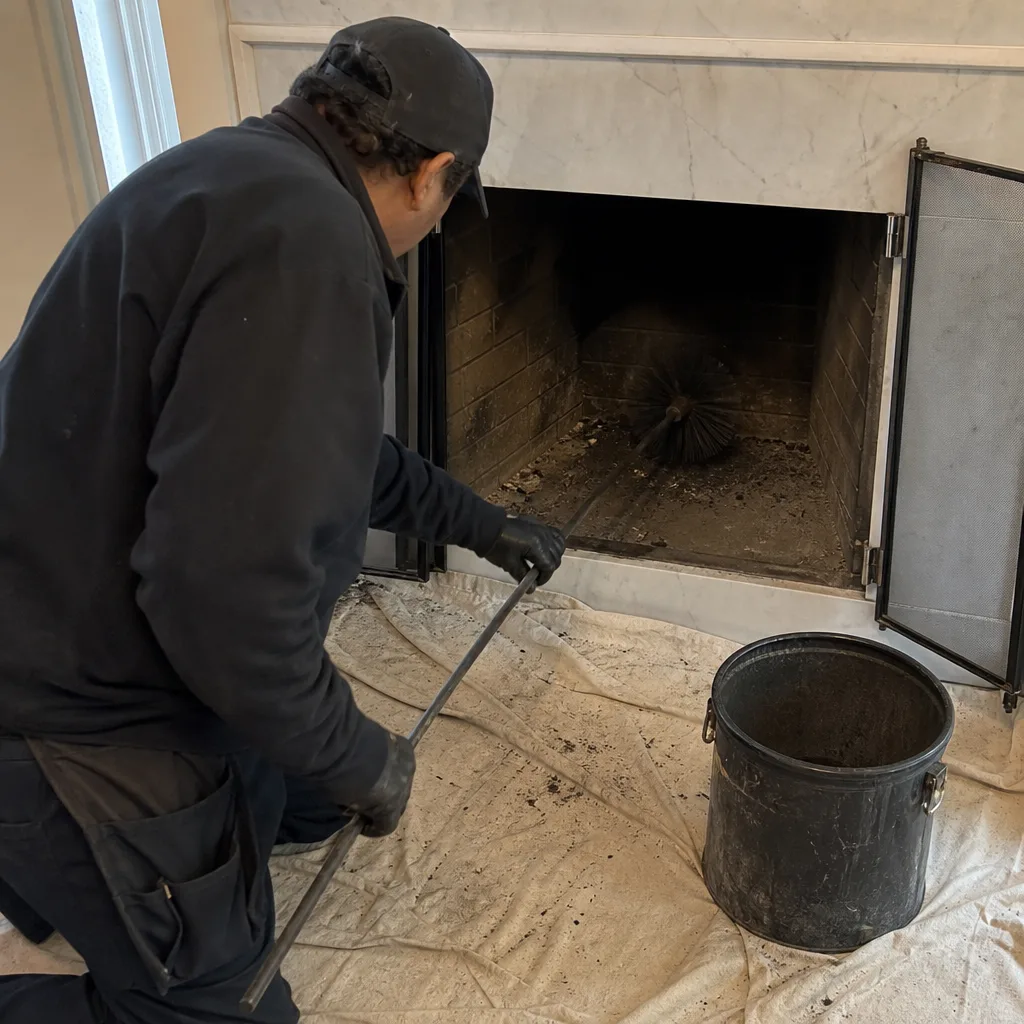
The single most important technical question to ask any chimney contractor is how they inspect the flue. There are two methods, and they produce wildly different results.
A flashlight-and-mirror inspection is exactly what it sounds like. The technician shines a light up the flue from the firebox and angles a mirror to see what the light reveals. This works, sort of, on short, straight flues in single-family homes. It reveals perhaps the lower third of the flue, and it reveals nothing about the middle and upper sections where creosote accumulation, cracked tiles, and liner separation most often develop.
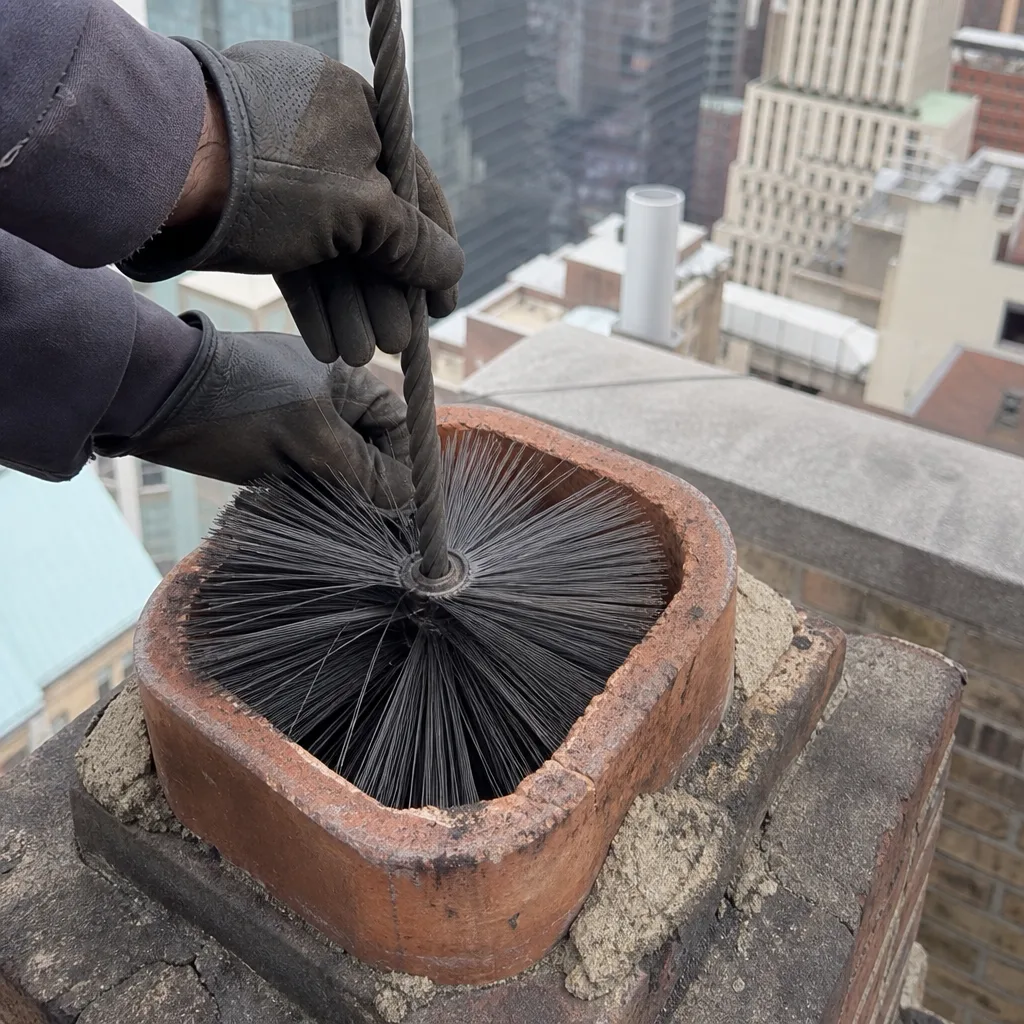
A camera-scan inspection feeds a small camera down the flue from the top, recording the entire length in real time. The technician sees everything: hairline cracks in clay tiles, gaps at the joints, water staining, animal nesting, and the exact thickness and class of creosote deposits. In a Financial District building with a shared flue serving multiple units, a camera scan is not a luxury. It’s the only way to document the condition of a flue that passes through floors and walls you cannot see.
Why does the distinction matter so much in multi-unit buildings? Because a shared flue means shared liability. A chimney fire that begins in a flue serving three units is a building problem, not an apartment problem. The co-op board, the managing agent, and the insurance carrier will ask for documentation. What they will accept is a photo record. What they will not accept is a technician’s verbal assurance that everything “looked fine.”
Ask the question directly: “Do you run a camera down the flue on every visit, and do I receive the photos?” The answer should be yes on both counts. Camera-scan documentation has been our default since 2009, and it is now written into Clause 4 of the Haven Standard. Every visit produces a recorded visual record you can hold onto.
Experience With Landmarked and Pre-War Buildings: Questions to Ask
The Financial District contains some of the oldest building stock in New York City. Many of the residential conversions here are pre-war, and a significant number fall under the Landmarks Preservation Commission’s jurisdiction. This is not a minor detail for chimney work. It changes who needs to be involved, what documentation is required, and what the contractor is allowed to do without additional approvals. For details on regulatory requirements, see Chimney Cleaning Permits, Codes & Inspections in NY: What You Need to Know.
A contractor who has never worked on a landmarked building may not know that exterior chimney work can require LPC approval. A contractor who works regularly in the Financial District will know, and will tell you before you ask.
Here are the questions to ask, in order:
- Have you worked in this building or on this block before? Not a dealbreaker if the answer is no, but follow up with the next questions.
- How many pre-war or landmarked buildings in the Financial District have you serviced? The number matters less than the willingness to answer. A contractor with relevant experience will have a number.
- Who pulls permits if the work requires them? A real contractor knows the answer. For interior cleaning and inspection, permits are rarely required. For liner replacement, crown rebuilding, or structural work, they may be. In a landmarked building, exterior modifications require LPC review regardless of what the city requires.
- Can you provide a sample of documentation you’ve produced for a co-op board? This ties back to the sample inspection report. Boards require a particular format. A contractor who has never produced board-ready documentation will struggle to do it on the first try.
- Have you dealt with the managing agent for this building? Many Financial District buildings route contractor access through a managing agent. A contractor who routinely works here will understand the access process, the insurance requirements, and the COI (certificate of insurance) the board will request.
These questions serve a dual purpose. They screen for competence, yes, but they also reveal whether the contractor treats this as a Manhattan job with Manhattan requirements, or as overflow work from an outer-borough route. A technician who shows up surprised that a Financial District co-op requires written documentation was never the right hire.
We specialize in chimney repair in the Financial District, and our technicians know what pre-war flues look like because they’ve seen thousands of them.
Red Flags Specific to the Financial District Market
The Financial District market attracts a particular kind of chimney contractor: the outer-borough sweep who treats Manhattan as bonus work between jobs in the suburbs. These contractors are not necessarily bad at cleaning chimneys. They are often bad at the documentation, access procedures, and building-type awareness that Manhattan work requires. Here are the red flags that show up repeatedly.
1. They quote over the phone without asking about building type, liner material, or last inspection date. A contractor who can quote a chimney cleaning without knowing whether the flue serves one unit or six is quoting a price for a different job than the one you have. In the Financial District, flue configuration varies enormously from building to building. A brownstone conversion on Pine Street has a different flue system than a pre-war tower on William Street. If they don’t ask, they don’t know.
2. They cannot produce a sample inspection report. We covered this in the documents section, but it bears repeating here as a red flag. A contractor who has never written a proper inspection report will not suddenly learn how in your building. The report you need for your own records and the report a co-op board will demand are the same document. If they can’t show you one, they don’t produce one.
3. They ask you to describe the chimney. A technician should be able to look up your building, understand its construction era, and know what chimney conditions to expect. If they’re asking you to describe the flue, they’re using you as a substitute for site knowledge they don’t have.
4. They use a flashlight and mirror and call it an inspection. In a multi-unit building, this is an incomplete inspection, and it produces no documentation. If the price quoted includes “inspection,” ask what that inspection method is. If the answer is a light and a mirror, that inspection is worth less than nothing because it gives false assurance.
5. Their insurance certificate is for a landscaping company or an unrelated trade. It happens. Verify the COI names the company you’re actually hiring and that workers’ compensation is current. In the Financial District, your building’s managing agent will reject an invalid COI before you even get to the question of whether the work is good.
6. They won’t put the warranty in writing. A verbal warranty is not a warranty. The written warranty should state its duration, what it covers, and what voids it. If a contractor tells you “don’t worry, we guarantee our work” but won’t put it in writing, worry.
What the Written Warranty Should State
Every contractor offers a warranty. Most of them are verbal, and most verbal warranties are worth exactly the air they use. A legitimate chimney cleaning warranty is a written document with specific terms. Here is what it should state.
Duration. How long does the warranty apply? For a chimney cleaning, a one-year warranty is standard. Some contractors offer longer. Whatever the duration, it should be named in days or years, not left open-ended.
What it covers. Does the warranty cover the cleaning only, or does it also cover recommended repairs performed by the same contractor? If a contractor cleans the chimney and identifies a problem they recommend repairing, does the warranty on the repair extend to the cleaning? These are distinct things and the written warranty should be clear about both.
What voids it. Every warranty has exclusions, and a legitimate contractor will name them. Common voiding conditions include: using the fireplace with fuel types the system wasn’t designed for, failing to have the chimney re-inspected after a chimney fire, or making unauthorized modifications to the flue. If the warranty doesn’t state what voids it, you should assume the scope is narrower than the contractor is letting on.
Whether it covers both the cleaning and any recommended repairs. This is the one most homeowners miss. A contractor cleans your chimney, finds a crack in the flue liner, recommends repair, and you hire them for the repair. Is the cleaning warrantied separately? Is the repair warrantied on its own terms? The written warranty should state this explicitly. Under the 365-Day Done Right Promise, if the work isn’t done right, we make it right. That applies to the cleaning and to any repair we recommend and perform.
What the documentation includes. The warranty should reference the inspection report and photo record. These documents are the evidence the warranty is bound to. Without them, a warranty dispute becomes one person’s word against another’s. With them, the condition of the chimney at the time of service is a matter of record.
What Chimney Cleaning Should Cost in Financial District
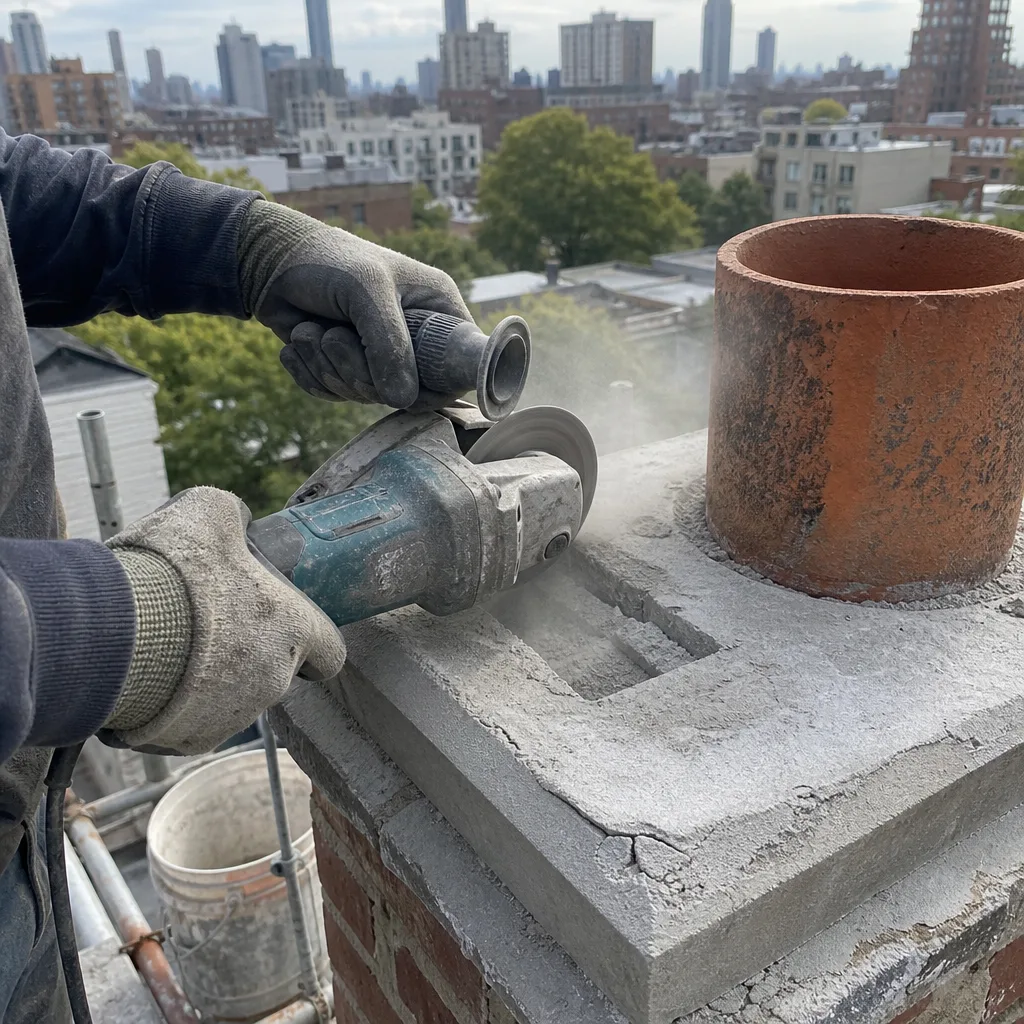
Chimney cleaning pricing in the Financial District runs higher than in the outer boroughs and Westchester for one simple reason: the buildings are more complex and the documentation requirements are heavier. See our Chimney Cleaning Cost Breakdown: The Financial District Homeowner’s Reference for 2026 for detailed pricing factors. A straightforward single-flue cleaning in a single-family home might run $180 to $300. In a Financial District co-op or condo, expect to pay more.
Here is a realistic breakdown for this market:
- Standard cleaning and inspection, single flue, straightforward access: $250 to $400. This assumes a roof-accessible flue cap and no unusual building requirements.
- Multi-flue or shared-flue systems requiring multiple access points: $400 to $700. A shared flue serving several units requires more time, more documentation, and often more coordination with building staff.
- Level 2 camera-scan inspection as an add-on: $100 to $250. If the cleaning contractor is not already including camera-scan documentation, this is the line item that adds it. Be aware that some contractors advertise artificially low cleaning prices and then upcharge for the camera scan. Ask whether the camera scan is included in the cleaning price or billed separately.
- Landmarked building coordination, managing agent communication, and board-ready documentation: $50 to $150. Legitimate contractors build this into the price. Cheaper contractors don’t do it at all and then bill you in aggravation.
- Liner repair or replacement, if recommended after cleaning: $1,800 to $6,500 depending on material and flue length. HeatShield resurfacing runs lower; a full stainless steel liner replacement with insulation runs higher. Materials from HeatShield, Gelco, and Olympia Chimney are common in this market.
These are ranges, not quotes. A written price requires a site assessment. If a contractor gives you a fixed price before asking about your building, that price is for a different chimney than the one you have.
For fireplace services in the Financial District, the same pricing logic applies: the building determines the price, not a generic rate card.
A Step-by-Step Process for Hiring in Financial District
Here is the entire process, condensed into numbered steps you can follow in order.
- 1
Verify CSIA certification. Ask for the certification number and confirm it’s current. A lapsed certification is a red flag.
- 2
Request a sample inspection report. A documented photo record is not optional in this market. If they can’t produce a sample, they don’t produce reports.
- 3
Ask about camera-scan capability. Specifically: “Do you run a camera down the flue on every visit, and do I receive the photos?” Accept nothing less than yes on both.
- 4
Ask about Financial District experience. Pre-war buildings, landmarked buildings, shared flues, managing agents, co-op boards. If they don’t know what these words mean in this context, they’re not the right hire.
- 5
Get a written price. After they’ve asked about your building type, liner material, and last inspection date, the price should be in writing, with scope and warranty attached.
- 6
Review the written warranty. Duration, coverage, voiding conditions, and whether it covers both cleaning and repairs. If any of these are missing, ask for them in writing.
- 7
Confirm the COI. Certificate of insurance naming the actual company you’re hiring, with current workers’ compensation coverage.
- 8
Book it. Schedule the visit. Confirm the access requirements with your building’s managing agent if applicable.
That’s the process. It takes about an hour of phone calls and emails. It is worth every minute.
Common Mistakes to Avoid
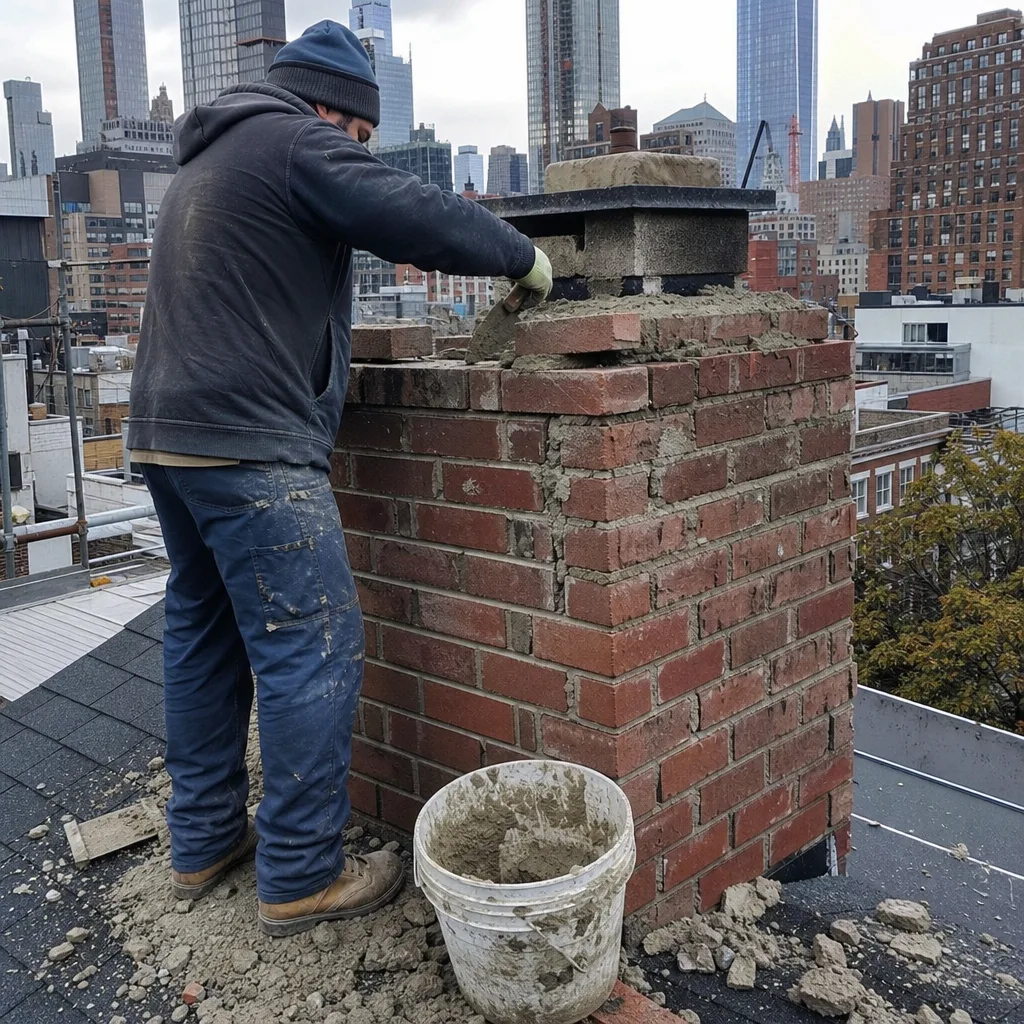
- Choosing the cheapest quote without comparing documentation practices. A $199 cleaning that produces no written report will end up costing more when your co-op board rejects it and you pay for a second visit. The price on the page matters, but the documentation is the product.
- Assuming all chimney cleanings are the same. A single-family flue in a suburban house and a shared flue in a Financial District pre-war co-op are different jobs. Different access, different liability, different documentation requirements.
- Skipping the sample report request. This is the single most predictive screening question in the entire process. A contractor who can produce a sample inspection report is organized. One who can’t is not, and disorganization in documentation is the last thing you want in a landmarked building.
- Accepting a verbal warranty. If it’s not in writing, it doesn’t exist. Ask for the warranty terms in the written quote.
- Ignoring the building’s vendor requirements. Many Financial District buildings require specific insurance limits, named additional insureds, and board approval before any vendor sets foot on the property. If you skip this step, you’ll get a visit scheduled and then have to cancel it.
- Paying before the work is done. A legitimate contractor will not ask for full payment upfront for a chimney cleaning. A deposit may be appropriate for larger repair jobs, but a cleaning is paid when the work is complete and the documentation is in your hand.
When to Call a Professional
Chimney cleaning is not a DIY project, and the safety stakes are higher than most homeowners realize. Creosote, the byproduct of wood combustion, builds up on flue walls over time. Class III creosote is a hardened, tar-like glaze that is highly flammable. It cannot be removed with a brush you buy at a hardware store. It requires professional removal, often with chemical treatment followed by mechanical cleaning. If you have a gas fireplace, you still need inspection: the flue may run through your unit to serve another unit above or below, and its condition matters even if you never light a fire. A blocked or deteriorated flue in any fuel system is a carbon monoxide risk, not just a fire risk.
If it has been more than 12 months since the last inspection, or if you’ve recently bought a unit in the Financial District and don’t have a record of when the chimney was last looked at, now is the time. Level Two Chimney Financial District offers free estimates in Financial District. Call (551) 213-4778 to schedule one. The estimate is written, the scope is written, and the price does not change.
We’re the home for Level Two Chimney in the Financial District, and we’ve been documenting chimney conditions in this neighborhood since 2009.
Frequently Asked Questions
A chimney cleaning in the Financial District typically costs $250 to $400 for a standard single-flue cleaning with inspection, and $400 to $700 for multi-flue or shared-flue systems common in co-ops and condos. The exact price depends on building type, liner material, and access requirements. Call (551) 213-4778 for a written quote specific to your building. Estimates are free and the price is set before work begins.
The National Fire Protection Association recommends annual inspection for all chimneys, with cleaning frequency determined by use and buildup. If you burn wood regularly, annual cleaning is standard. If your fireplace is decorative or rarely used, an annual camera-scan inspection is still worthwhile, because conditions in a shared Financial District flue can change due to your neighbors’ use even if you never light a fire. Our Seasonal Chimney Cleaning Care for Financial District: Year-Round Homeowner’s Guide explains how to time maintenance through the year. Call (551) 213-4778 to schedule an inspection, and we’ll tell you whether cleaning is needed based on what the camera shows.
A Level 2 chimney inspection, as defined by NFPA 211, includes all the checks in a Level 1 inspection plus a video scan of the entire flue using a camera, typically from the top down. It is required whenever there’s been a change to the system, a change in fuel type, a chimney fire, or a property transfer. In Financial District co-ops and condos, a Level 2 camera-scan inspection is the documentation standard that boards and insurers expect. Level Two Chimney Financial District includes a camera-scan Level 2 inspection as standard on every visit.
Not necessarily, and this is exactly why you want camera evidence before agreeing to any repair. A cracked clay tile liner has a different fix than a fully deteriorated one. Some liners can be resurfaced with a HeatShield ceramic coating. Some require a full stainless steel replacement. The correct answer depends on what the camera shows, and you should see the photos yourself before deciding. We never recommend liner work without showing you the camera footage that justifies it, and we’re happy to provide a free second opinion on any written estimate you’ve received from another contractor.
The risk is creosote accumulation and deteriorating liner conditions that go undocumented until they become expensive problems. In a multi-unit Financial District building, a chimney fire in a shared flue can involve your neighbors’ units and trigger building-wide insurance complications. A blocked flue can also cause carbon monoxide backup, which is silent and dangerous. Annual inspection is cheap insurance against both. Call (551) 213-4778 to book one; the inspection and cleaning come with a documented photo record.
Typically yes, and the approval process varies from building to building. Most co-op boards require a certificate of insurance from the contractor, and many require board review of any repair work beyond routine cleaning. Landmarked buildings may also require Landmarks Preservation Commission approval for exterior work such as crown repair or cap replacement. A contractor with local Financial District experience will know how to navigate these requirements. Ask about this in the first phone call, not after you’ve scheduled a visit.
The Bottom Line
Hiring a chimney cleaning contractor in the Financial District is not about finding the cheapest price or the nearest truck. It’s about finding a contractor who produces documented evidence of what they found and charges a written price that doesn’t shift once they’re on your roof. Request the three documents before scheduling: proof of CSIA certification, a sample inspection report, and a written price with scope and warranty attached. Ask about camera-scan capability and Financial District building experience. Review the warranty in writing. Follow those steps and you’ll avoid the expensive, under-documented work that plagues this market. You’ll also walk away with something a flashlight and mirror can never produce: a record you can show your co-op board, your insurer, and yourself.
Written by Corrine Halstead, Owner at Level Two Chimney Financial District, serving Financial District since 2009.