
Last updated September 20, 2026
Level 1 sweep and inspection to the NFPA 211 annual standard - flue, crown, cap, and flashing checked and photographed
Chimney sweep logs do not sweep chimneys. They loosen some creosote - which then falls where a brush and vacuum still have to collect it.
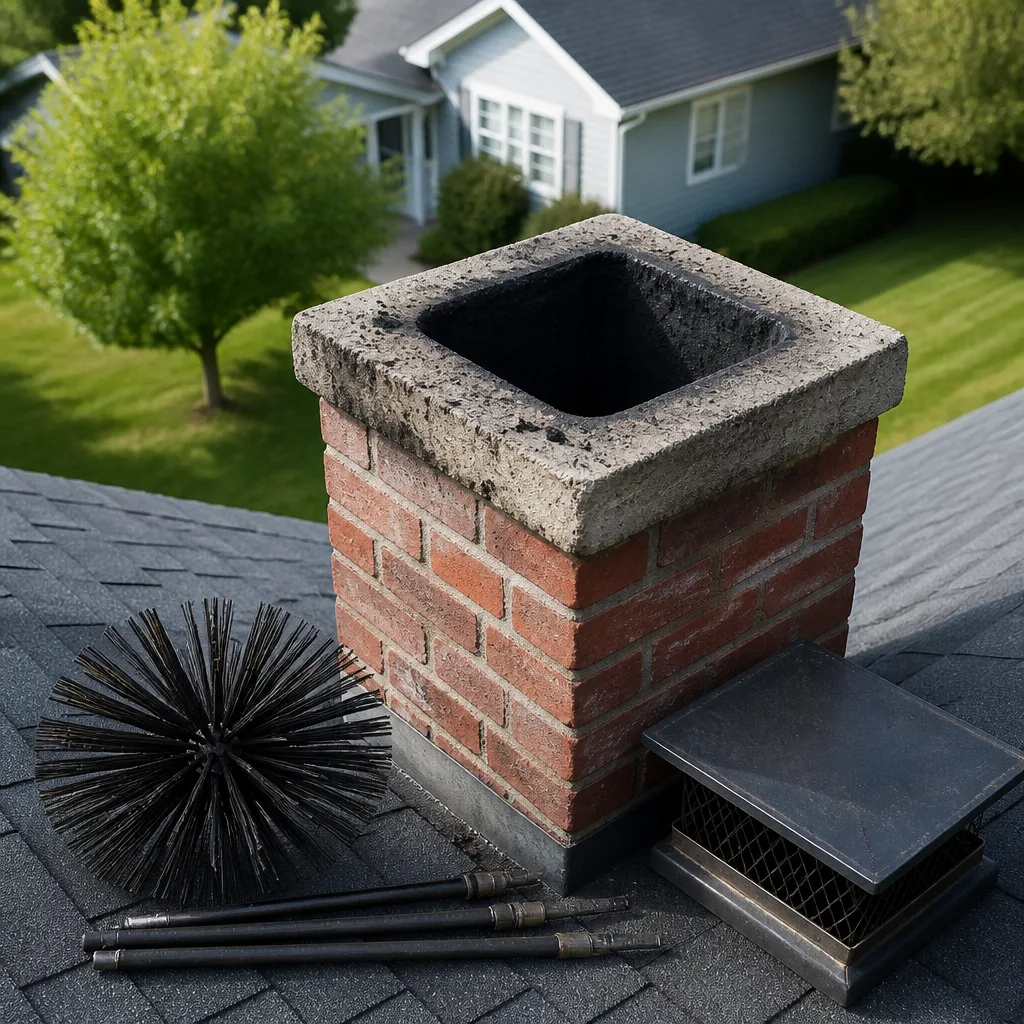
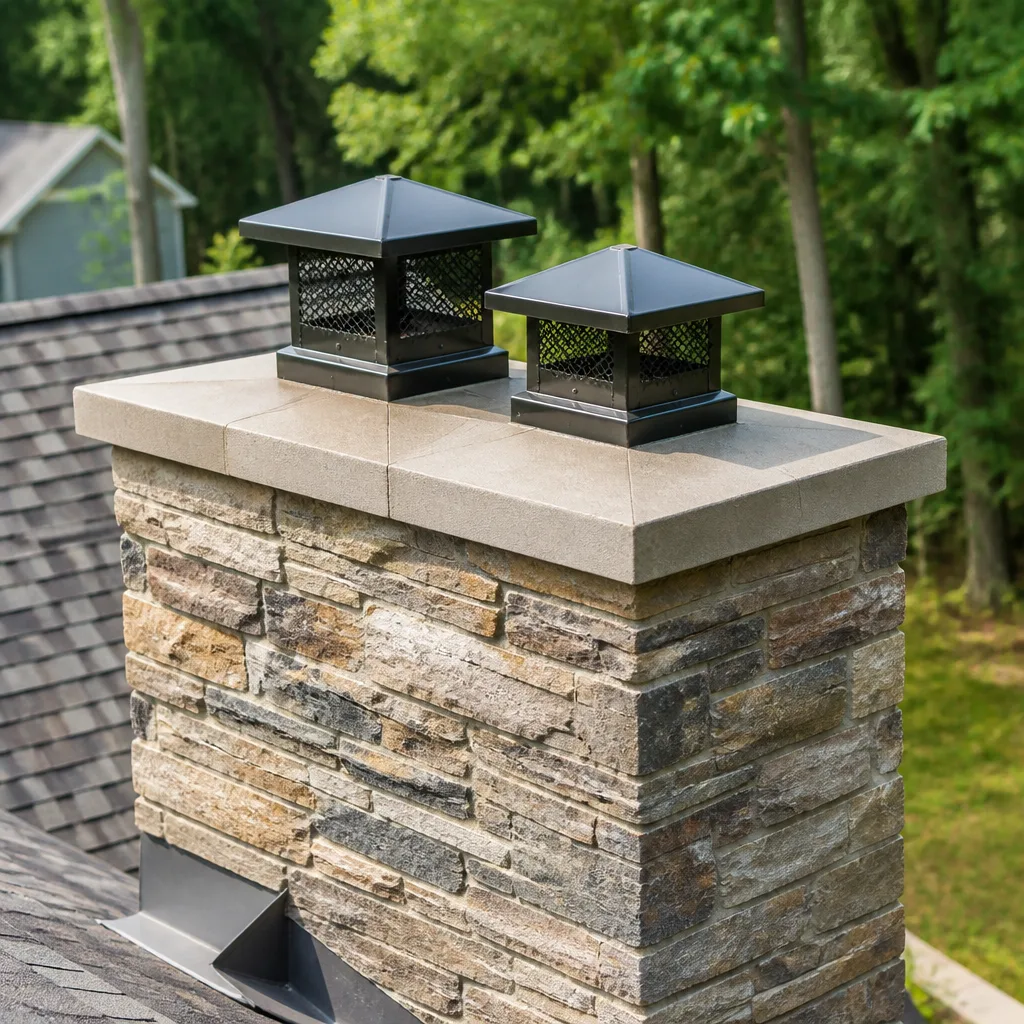
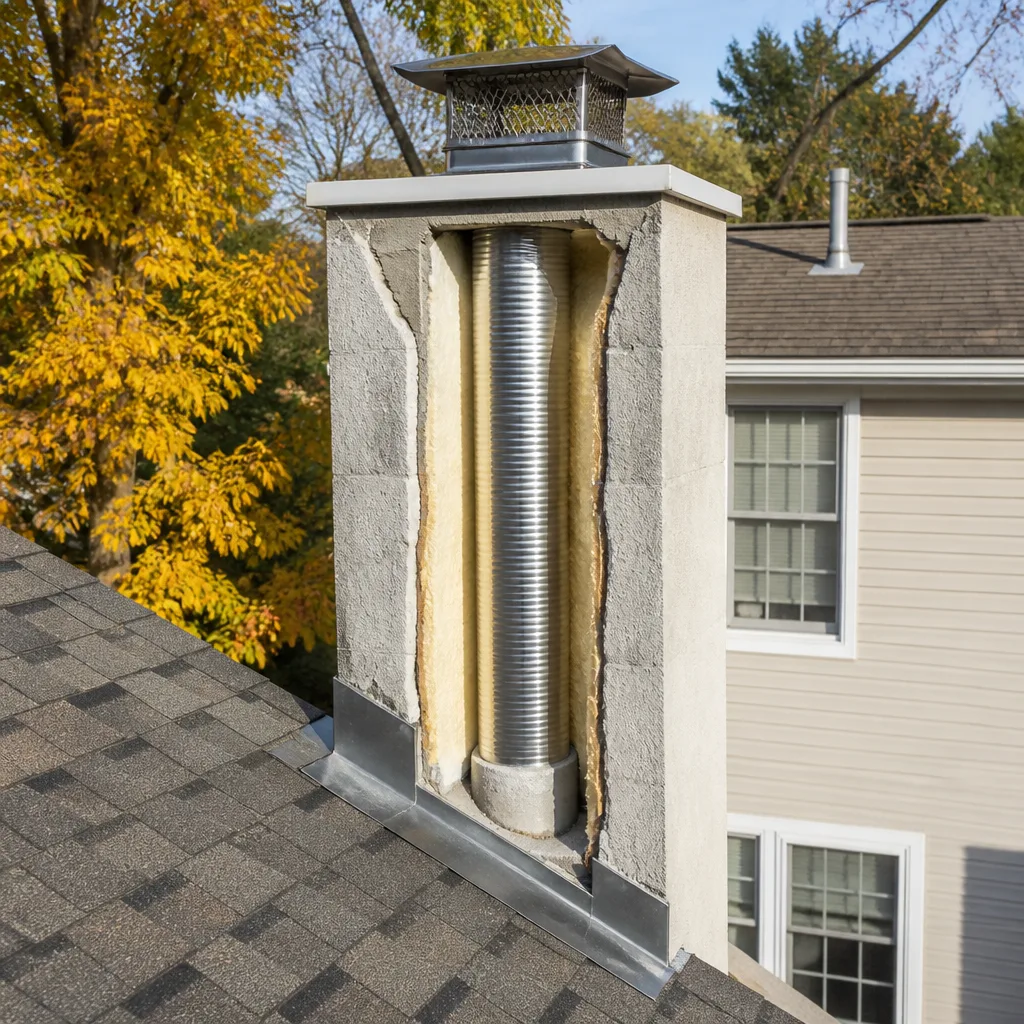
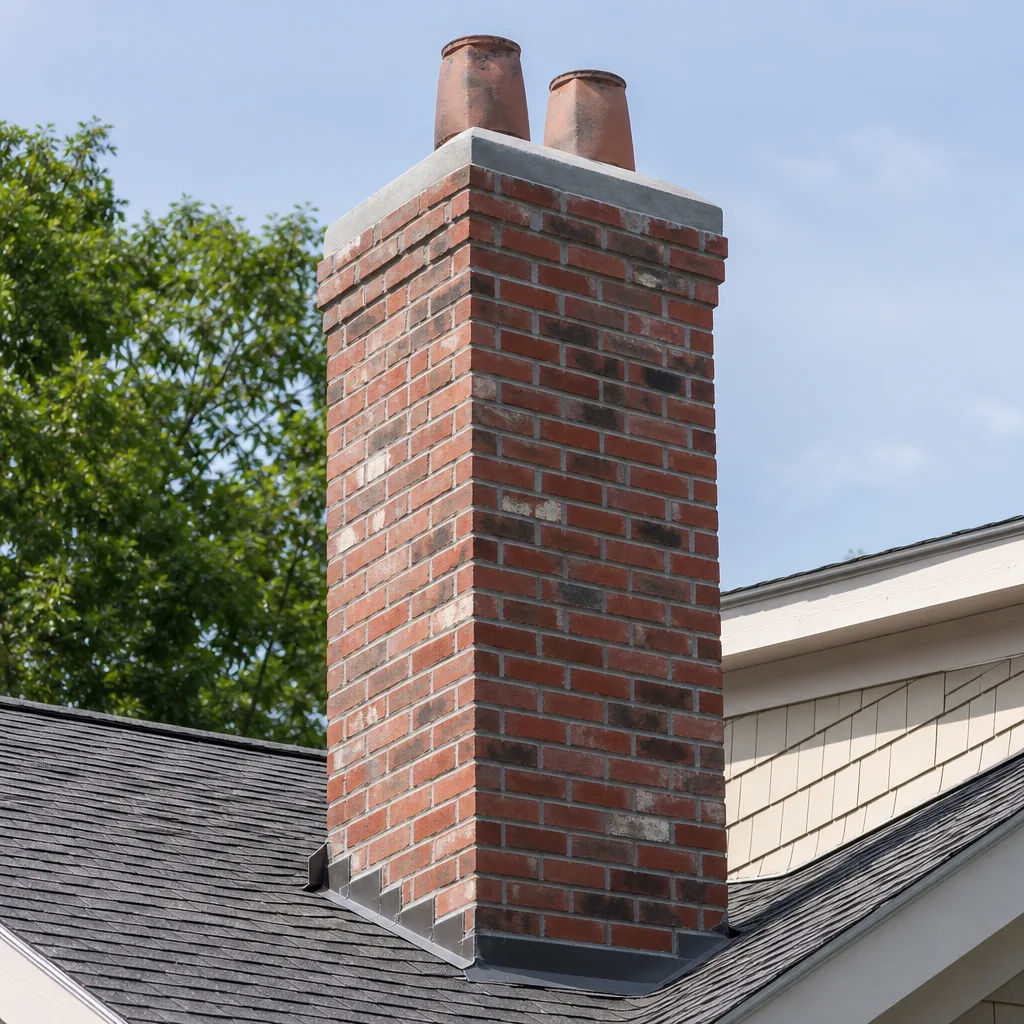
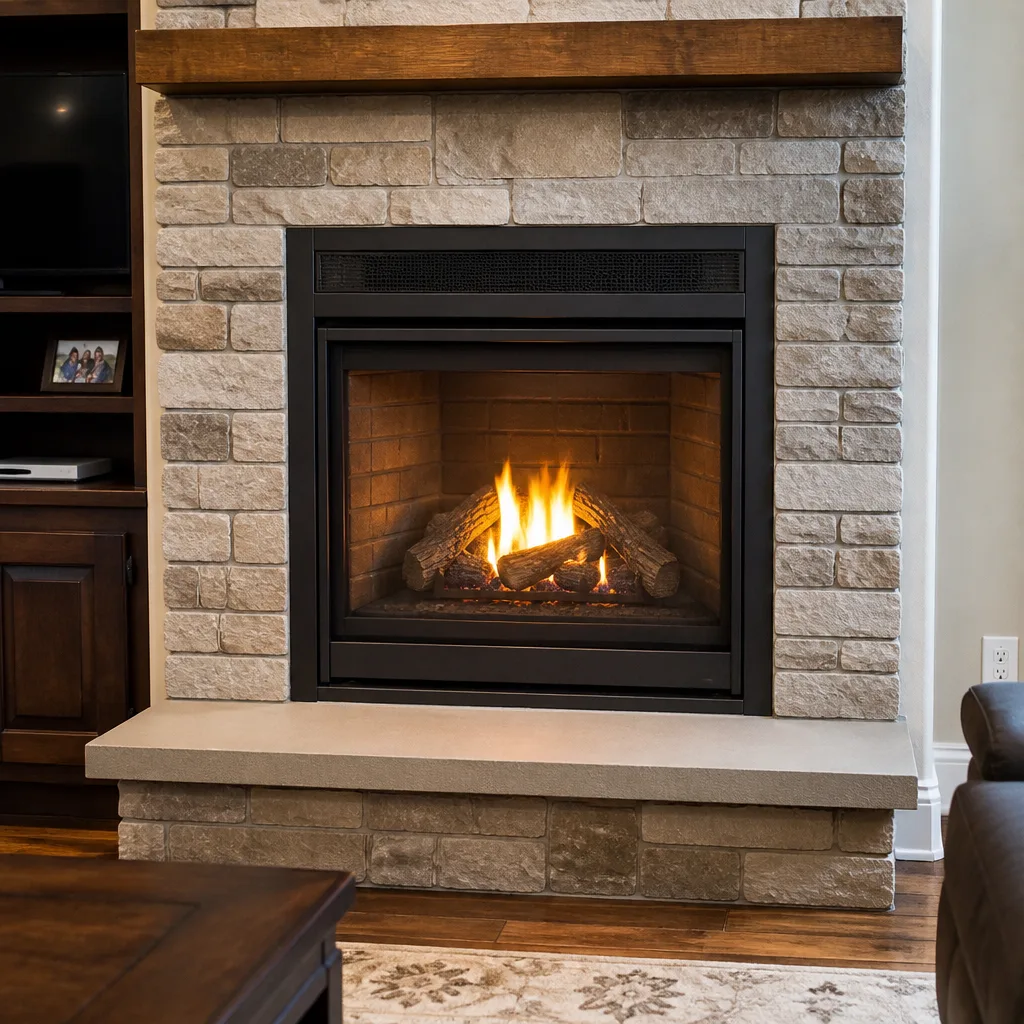
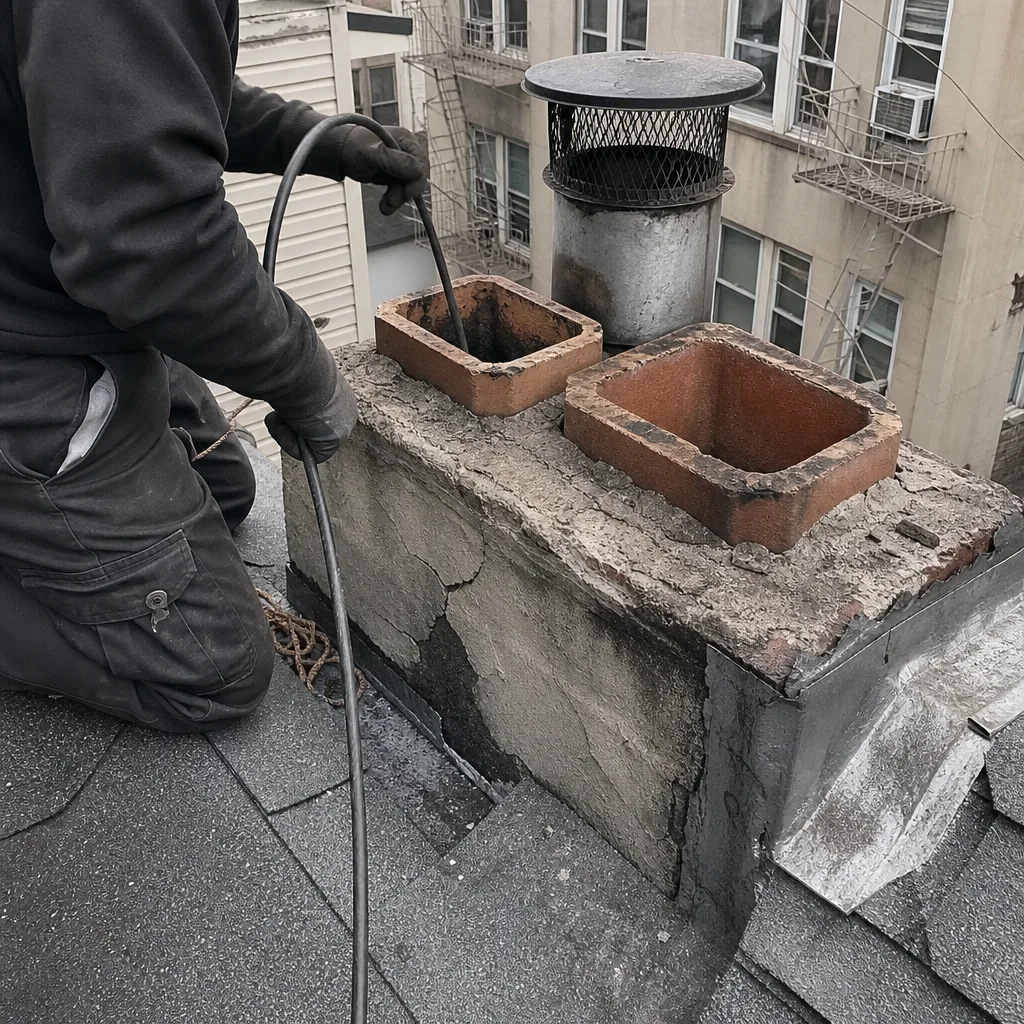 Before
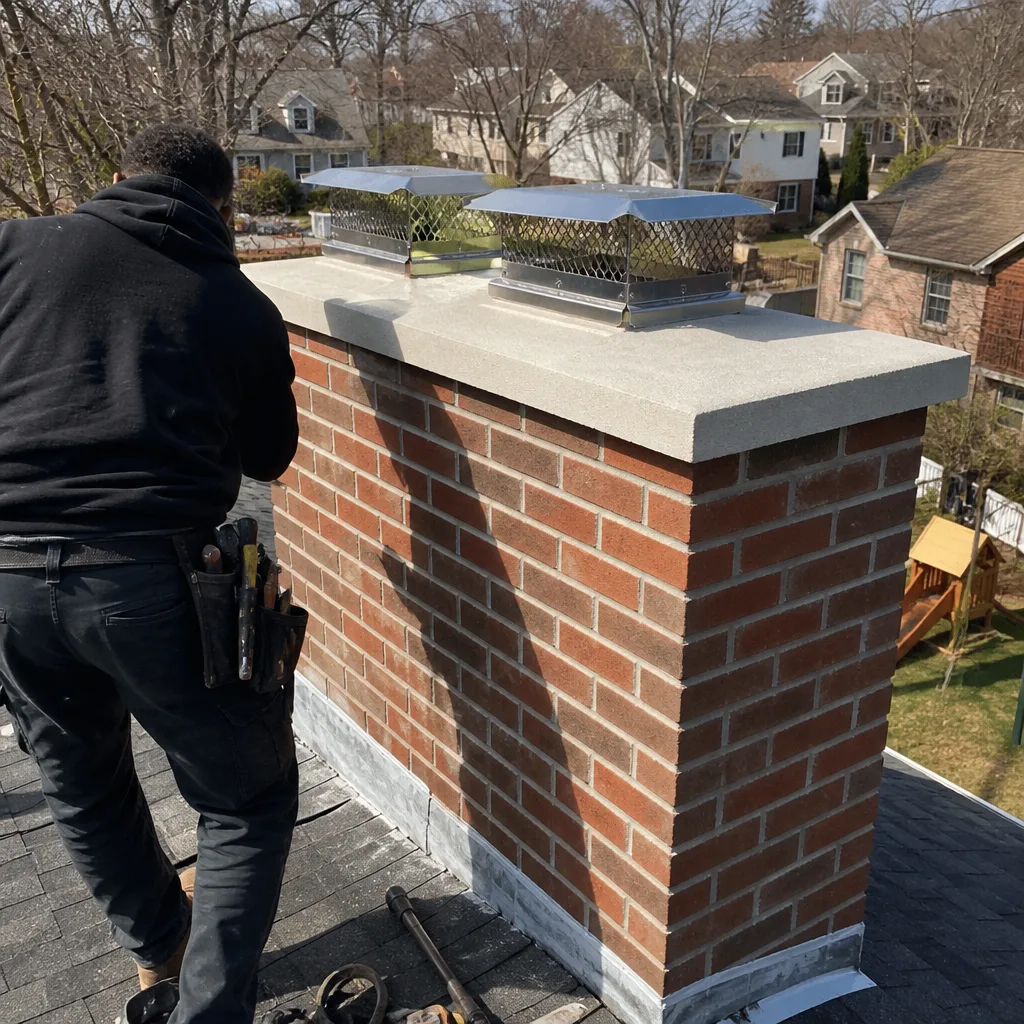 After
After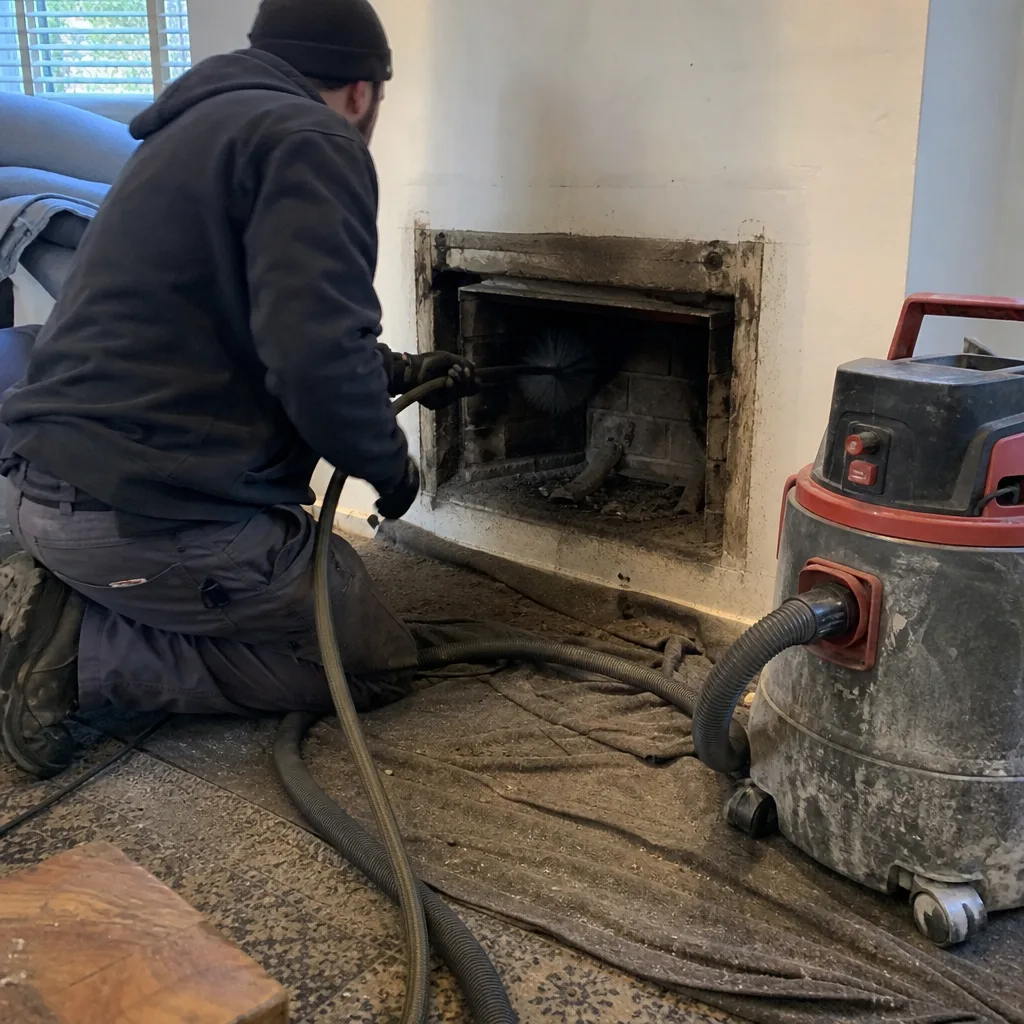 Before
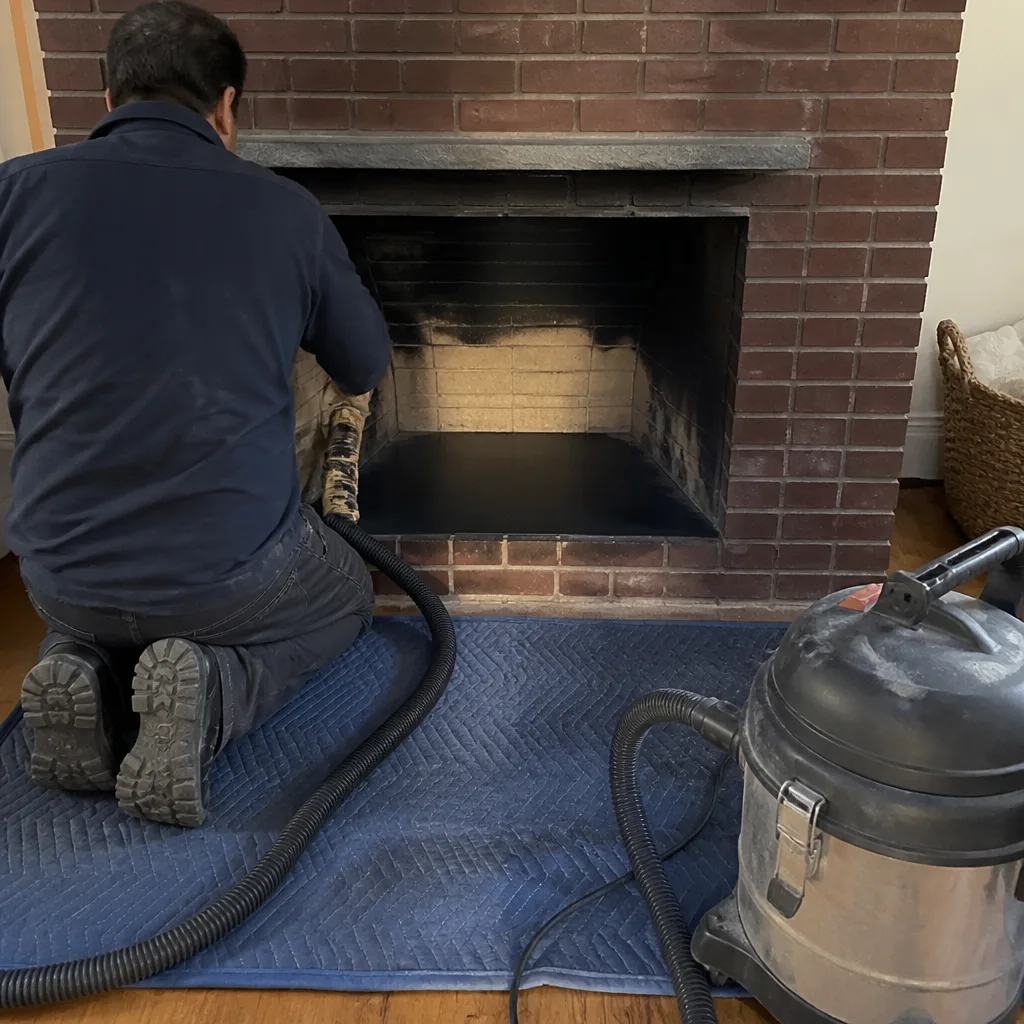 After
After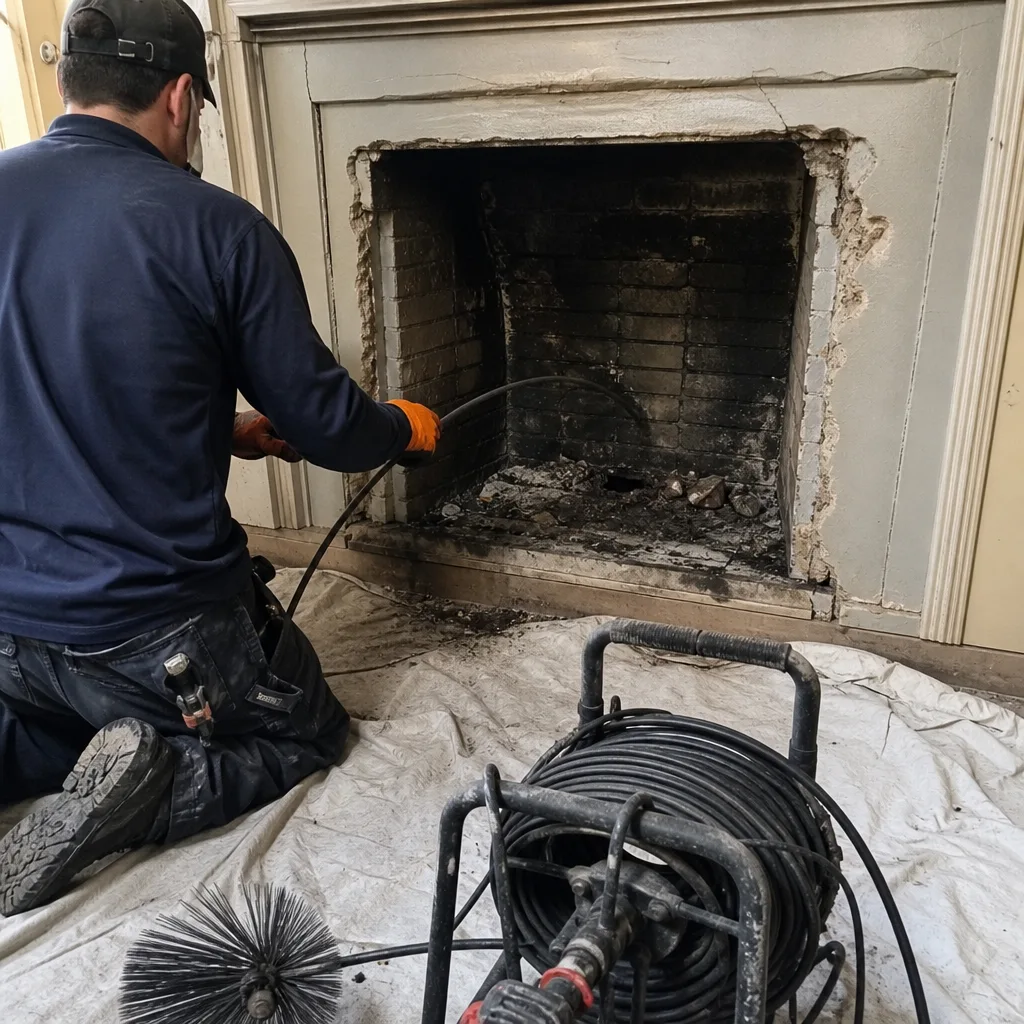 Before
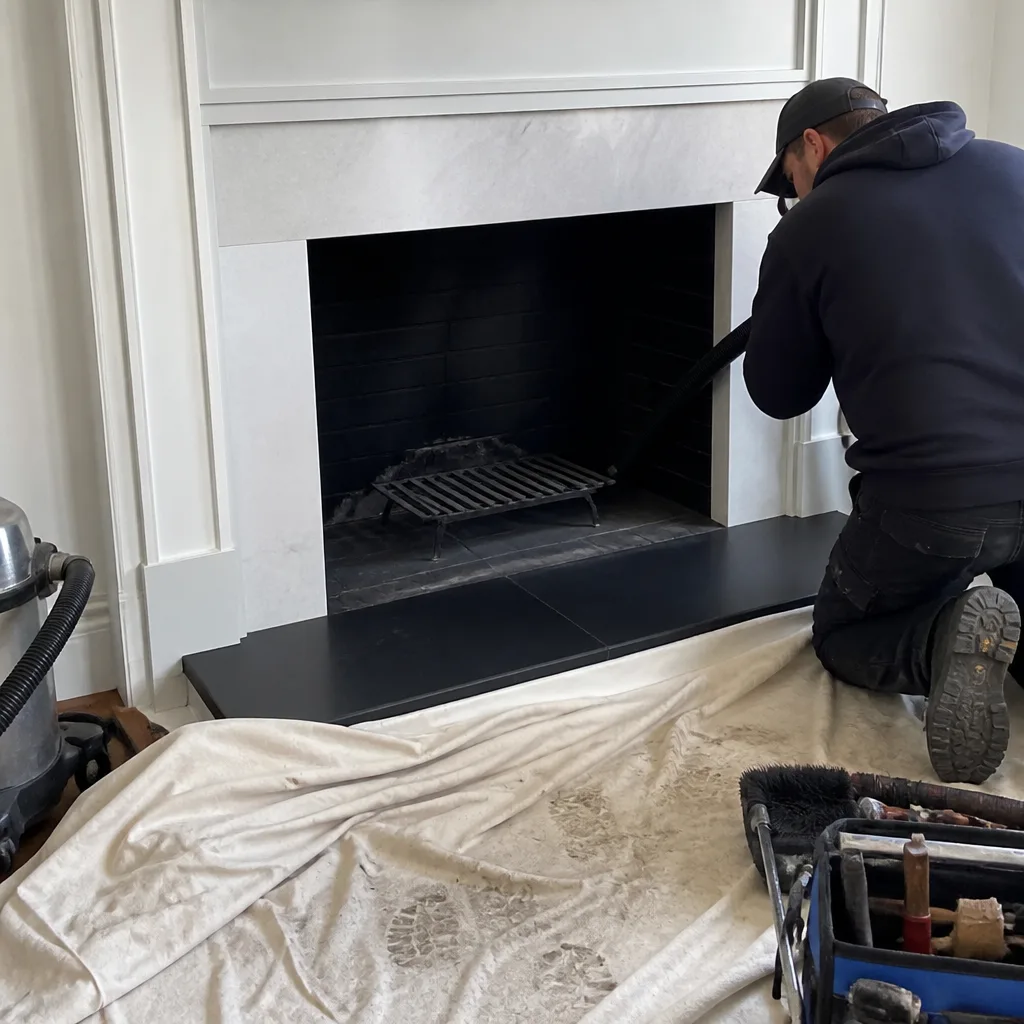 After
AfterChimney Cleaning Warning Signs: A Financial District Homeowner’s Reference Guide
A white stain on the exterior masonry above your fireplace isn’t a weathering issue. It’s efflorescence, which means water is moving through your flue, and in a shared-wall building, the water source may be your neighbor’s liner, not yours. Most Financial District homeowners misdiagnose chimney problems because the visible symptoms rarely match the actual cause. This guide explains what each warning sign actually indicates, why it matters in Financial District’s specific building conditions, and which signs only a camera can reveal. For a deeper dive, see The Complete Guide to Chimney Cleaning in Financial District.
Quick Answer
Chimney warning signs in Financial District homes typically fall into two categories: visible symptoms you can identify from inside the firebox or on exterior masonry, and hidden conditions that require a camera scan through the flue. A creosote smell means a cleaning issue; a sulfur odor or white staining means water infiltration or combustion byproduct leakage, which is structural. If you see efflorescence, hear debris falling, smell gas, or notice yellow pilot flames on a converted fireplace, call (551) 213-4778 for a Level 2 camera inspection before using the fireplace again.
Table of Contents
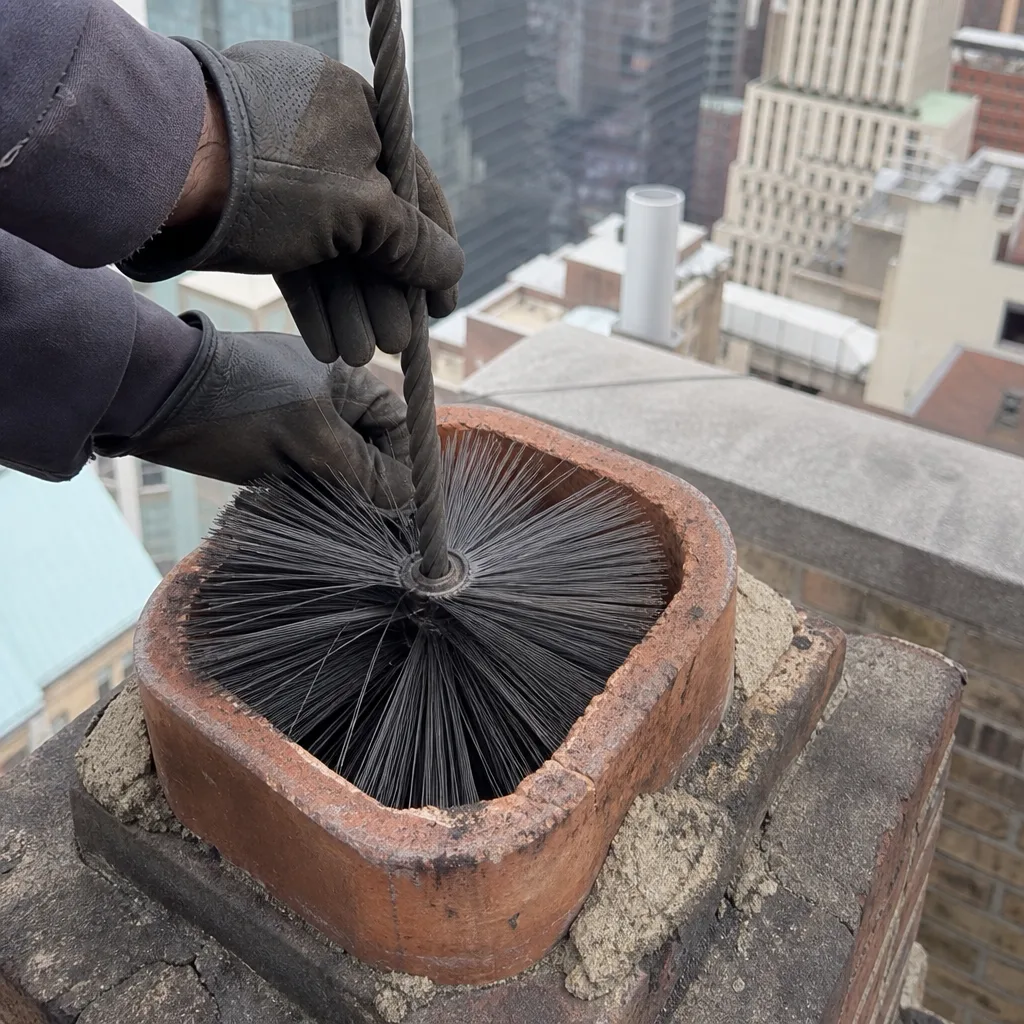
- Efflorescence and White Staining: What It Actually Means
- Smell as a Diagnostic Tool: Creosote vs. Combustion Byproducts
- Gas-Converted Fireplace Warning Signs Most Guides Miss
- Shared-Chase Architecture: When the Problem Origins Are Next Door
- Debris, Flaking, and Spalling: What the Firebox Tells You
- What a Camera Scan Reveals That a Visual Inspection Cannot
- Response Timelines: How Urgently Each Sign Needs Action
BeforeAfterEfflorescence and White Staining: What It Actually Means
Efflorescence is a crystalline salt deposit left behind when water travels through masonry and evaporates on the surface. The water carries dissolved minerals from inside the chimney structure; when it reaches the exterior and dries, the minerals remain as a chalky white or gray residue. In Financial District, this sign is more common than most homeowners realize, because our rowhouses and converted multi-unit buildings often share chimney structures, and water from one flue can migrate into adjacent masonry.
What we’re looking for when we see efflorescence is not just the stain itself but the pattern. Uniform staining across a wide area usually indicates a crown issue: the concrete cap at the top of the chimney has cracked, and rain is entering directly. Staining localized above one flue liner, especially in a shared chimney, often means that particular liner has failed, and the water is moving through that specific passage. We’ve seen Financial District buildings where one unit’s failed terra cotta liner was causing efflorescence on three separate units’ walls, because the water followed the path of least resistance through shared bricks.
Efflorescence is a warning sign, not a cosmetic concern, because the same water path that deposits salt on your wall is also doing internal damage you cannot see: eroding mortar joints, rusting steel lintels, and compromising the liner system. In a Financial District rowhouse with masonry party walls, that internal water movement can eventually show up as damp plaster in a neighbor’s unit. The correct first step is not scrubbing the stain. The correct first step is a Chimney Cleaning & Sweep in Financial District visit that includes a camera scan to locate the water’s entry point.
During our years serving Financial District homes, we have found that most efflorescence cases trace to three causes: a cracked crown, failed flashing at the roofline, or a deteriorated flue liner. Each has a different repair scope and price. A crown repair might run $400 to $900. Flashing replacement is typically in the $500 to $1,200 range depending on roof access constraints in dense street grids like ours. A full liner replacement is more significant, running $2,800 to $6,000 depending on length and material. These are the numbers we provide in writing before any work begins, under Clause 1 of the Haven Standard, because a written price is the only kind that matters.
Smell as a Diagnostic Tool: Creosote vs. Combustion Byproducts
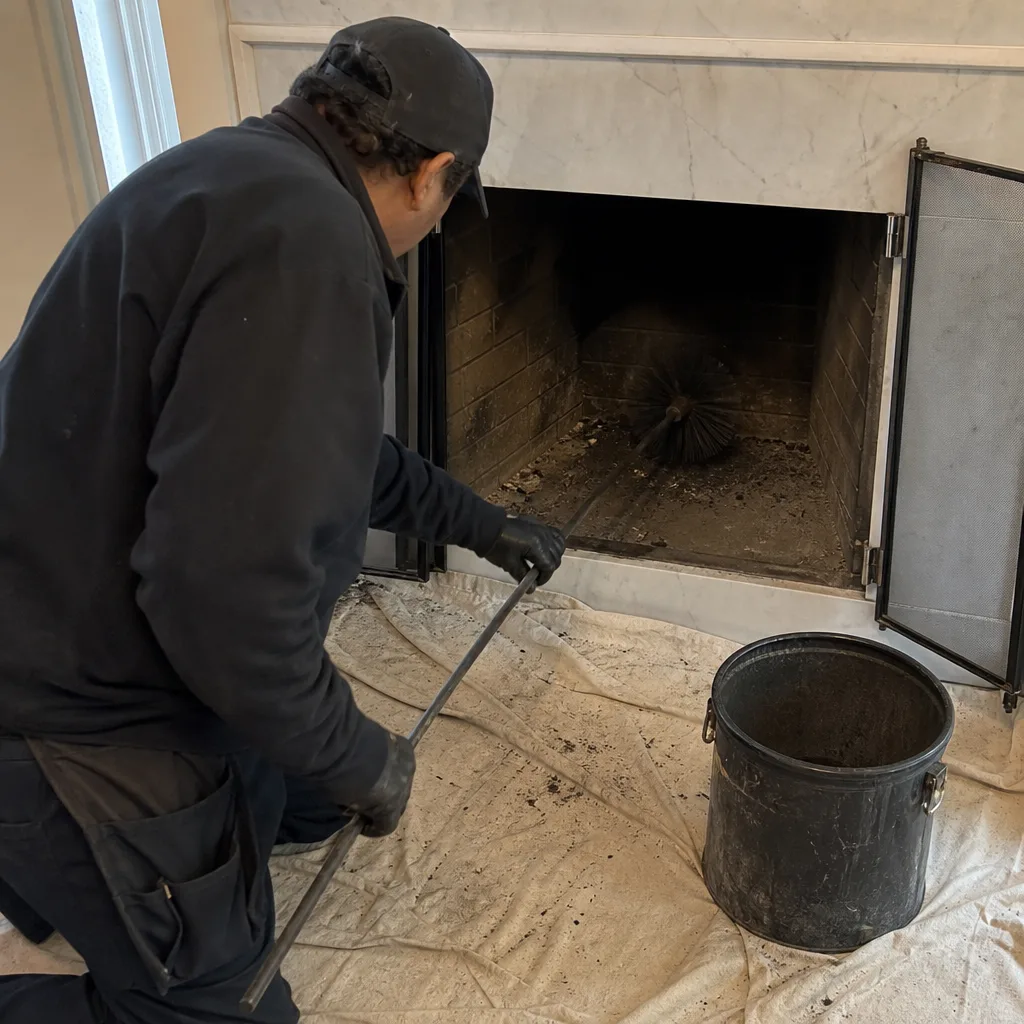
Smell is one of the most reliable chimney warning signs a Financial District homeowner has, but only if you can tell the difference between what you are smelling. Creosote has a sharp, acrid, campfire-like odor that intensifies on humid days or after rain. It indicates unburned wood particles have condensed on the flue walls, and it is a cleaning issue, not a structural one. The fix is a sweep, typically within a week or two of detection, before the creosote builds to a class that requires more aggressive removal.
Combustion byproduct infiltration smells different. It presents as a stale, sooty, or sulfur-like odor that does not smell like wood smoke but like a furnace exhaust backing up. This smell means gases that should be venting up the flue are instead entering your living space, usually because of a blockage, a deteriorated liner, or negative air pressure in the building. The response here is urgent: stop using the fireplace immediately and have a camera inspection performed before further use. The difference between these two smells, creosote and combustion byproduct, determines whether you are scheduling a cleaning or addressing a safety hazard. If you’re unsure which path applies, our DIY vs Professional Chimney Cleaning: The Financial District Homeowner’s Decision Guide can help you decide.
In Financial District’s older building stock, we also encounter a third smell category: post-rain must or mildew originating from water pooling in a damaged smoke chamber. This indicates water entry, which we address under the efflorescence framework above. The smell itself is unpleasant but not immediately dangerous; the water causing it is slowly degrading the structure. Use the smell as a diagnostic trigger, not a reason to panic. If you can describe the smell accurately when you call (551) 213-4778, we can tell you beforehand what we think we are dealing with and what the camera scan will likely show.
Our technicians at Level Two Chimney Financial District home service area see creosote smell complaints most often in the first month of burning season, when homeowners fire up fireplaces that sat unused all summer. The moisture from summer humidity in Financial District’s river-proximate air reactivates creosote, making the smell more noticeable indoors. If you smell creosote in October and you haven’t swept since last winter, budget $200 to $400 for a sweep and expect the smell to disappear within a day of cleaning.
Gas-Converted Fireplace Warning Signs Most Guides Miss
Most chimney warning sign lists are written for wood-burning fireplaces. But a significant number of Financial District fireplaces have been converted to gas inserts or gas log sets, and those conversions create warning signs that standard guides omit entirely. If your fireplace was converted from wood to gas, watch for three specific symptoms: a yellow pilot flame, condensation on the firebox glass, and a sulfur odor after rain.
A yellow or orange pilot flame in a gas fireplace indicates incomplete combustion. The pilot should be blue. When it burns yellow, the gas is not burning cleanly and is producing carbon monoxide as a byproduct. This can happen because the air shutter needs adjustment, but it can also happen because the chimney is not providing adequate draft, pulling combustion air in while exhausting combustion gases. In a converted fireplace using an unlined or partially lined flue, the same draft issue can allow carbon monoxide to enter the living space. This is a stop-using-the-fireplace situation until a professional evaluates the setup.
Condensation on the firebox glass of a gas fireplace typically means one of two things: the venting is inadequate and the water vapor produced by gas combustion is not exiting the flue, or there is an active water leak into the chimney that is hitting the hot firebox. The first is a venting and safety problem. The second is a structural problem. Both require inspection to distinguish, and a visual check will not tell you which you have. We use a camera to look at the full liner path, from firebox to termination, to determine whether the condensation source is internal combustion moisture or external water intrusion.
A sulfur odor after rain is the gas-converted fireplace equivalent of the creosote smell in wood systems, but with a different cause. Gas combustion produces acidic condensate that, over time, eats through terra cotta liners from the inside. When rain enters through a compromised crown or flashing, it mixes with this acidic residue and produces a sulfur-like, rotten-egg smell that is strongest after precipitation. The sulfur smell is a structural integrity warning, not a cleaning issue. It tells us the liner has been exposed to acidic condensate long enough to show symptoms, and the camera will likely show liner deterioration we need to address.
Shared-Chase Architecture: When the Problem Origin Is Next Door
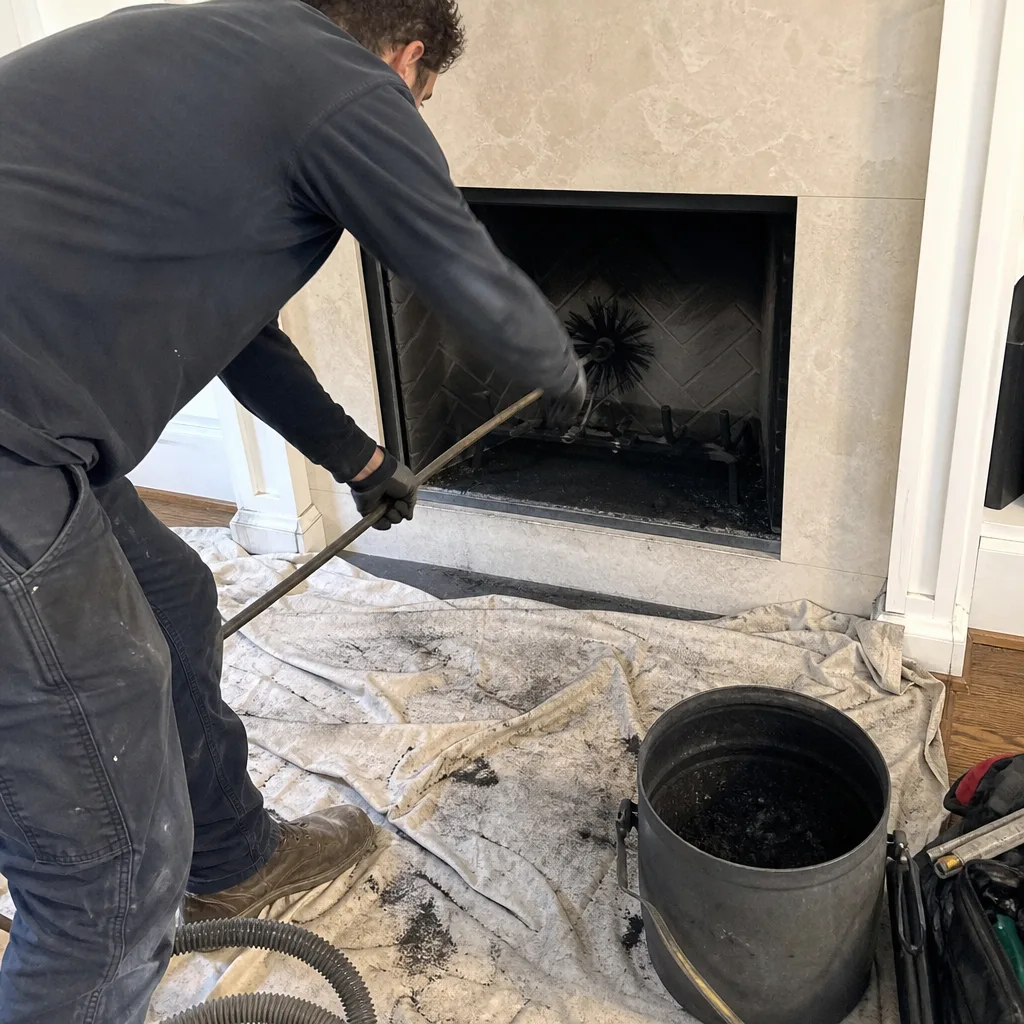
Financial District’s building stock includes a mix of old rowhouses, converted brownstones, and prewar multi-unit buildings, and most of them share chimney chases. A chimney chase is the vertical enclosure that contains one or more flue liners. When multiple units share a single masonry chimney structure, each unit has its own flue liner inside, but the masonry around those liners is common. This creates a warning sign dynamic unique to dense urban housing: a problem in one unit’s flue can present symptoms in a different unit.
The most common cross-unit warning sign we see is efflorescence appearing on a living room wall that does not correspond to that unit’s flue at all. The water is entering through a neighbor’s deteriorated liner or crown, traveling through the shared masonry, and evaporating on whichever interior wall offers the easiest exit. A Financial District homeowner who sees white staining near their fireplace and assumes it is their chimney may be receiving a warning about a structure they share with three other owners. The practical implication is that diagnosis requires a camera scan of your own flue, and potentially a conversation with building management or the neighboring owner about what the scan shows.
Another shared-chase warning sign is debris falling into a firebox that you have not used for years. Terra cotta flue liner tiles crack and spall as they age, and in a shared chimney, the cracking in one unit’s liner can displace material that falls into a different unit’s flue passage. If you open your damper and find clay shards or flaky tile pieces and you never burn wood, the debris likely originated elsewhere in the shared structure. This is a sign the entire chimney chase needs a Level 2 camera inspection, because the failure may not be in your liner at all. There are now two relevant parties: you and the owner of the failing flue.
In some Financial District buildings, shared chases also mean shared smoke chambers, a design that was common before modern code requirements and that creates distinct worry. A smoke chamber connects the firebox to the flue liner. When chambers are shared between units, smoke from one fireplace can enter another unit’s living space. We treat any report of smoke smell coming from a neighboring unit’s fireplace use as a warning sign that the smoke chamber needs inspection and likely parging, a smoothing process that restores proper smoke flow. The emergency protocol varies by building management structure, but the first phone call is the same: Fireplace Services in Financial District can dispatch a technician who will document what the camera shows and what the fix requires.
Debris, Flaking, and Spalling: What the Firebox Tells You
The firebox, the chamber where the fire actually burns, is the one part of the chimney system you can visually inspect without any tools, and it communicates more than most homeowners realize. Debris at the bottom of the firebox, flaking or pitting on the firebrick, and spalling on the exterior masonry are three distinct signals with three different implications. Learning to read them means catching problems before they become expensive or dangerous.
Debris in the firebox is the simplest sign to interpret. If you find black, crusty flakes on the firebox floor, that’s creosote that has flaked off the flue walls and fallen down, indicating the chimney needs cleaning. If you find what looks like sandy grit or small stone chips, that’s mortar or brick material falling from the smoke chamber or flue, indicating structural deterioration and a need for repair. If you find gray clay shards with a curved profile, those are pieces of terra cotta flue tile, and the liner is actively failing. The three debris types map to three response levels: clean soon, inspect and repair soon, and stop using the fireplace until inspected.
Flaking firebrick inside the firebox is normal wear over decades, but the pattern matters. Flaking concentrated on one wall, especially a side wall, often indicates that wall is taking more heat than it was designed for, which can happen when the fire is built too large or too close to that wall. Flaking across the firebox floor, combined with a musty smell, suggests water has been pooling at the base, which in Financial District’s climate, with its rain and freeze cycles, means an exterior water intrusion point that will not self-repair. If the flaking is rapid, appearing over one burning season where it was not present before, that acceleration is usually a draft issue: improper airflow is concentrating heat in one area.
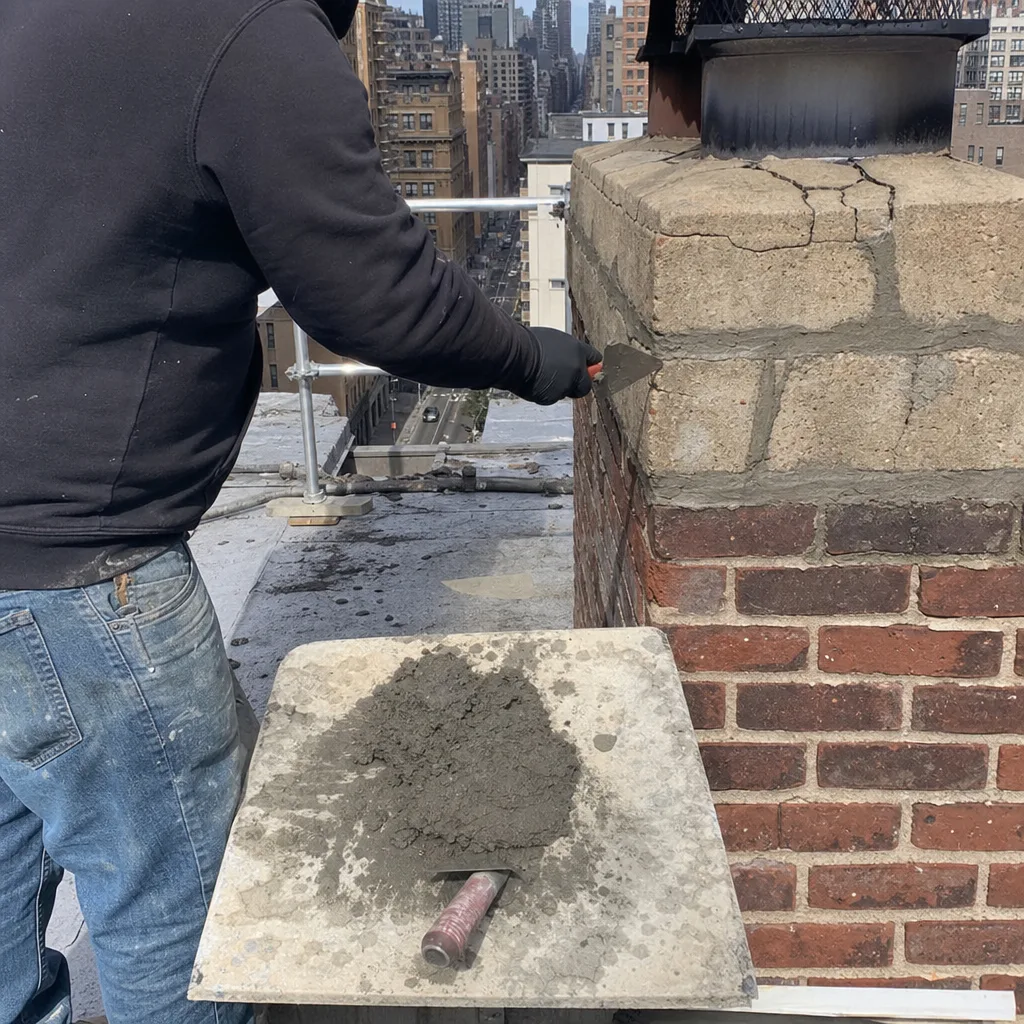
Spalling, the technical term for masonry surface pitting where the outer face of brick pops off, is the exterior equivalent. Spalled brick on the chimney’s exterior exposure, typically the side facing the prevailing wind, is a freeze-thaw cycle warning. Water enters the brick through the damaged crown or failed flashing, freezes in Financial District’s winter temperatures, expands, and pops the brick face. Continuing spalling indicates the structural integrity of the external chimney is degrading year over year, and the fix is a Chimney Repair in Financial District scope that addresses the water entry point, not just a repointing of the damaged brick. Repointing without fixing the water source means the spalling returns in five years.
What a Camera Scan Reveals That a Visual Inspection Cannot
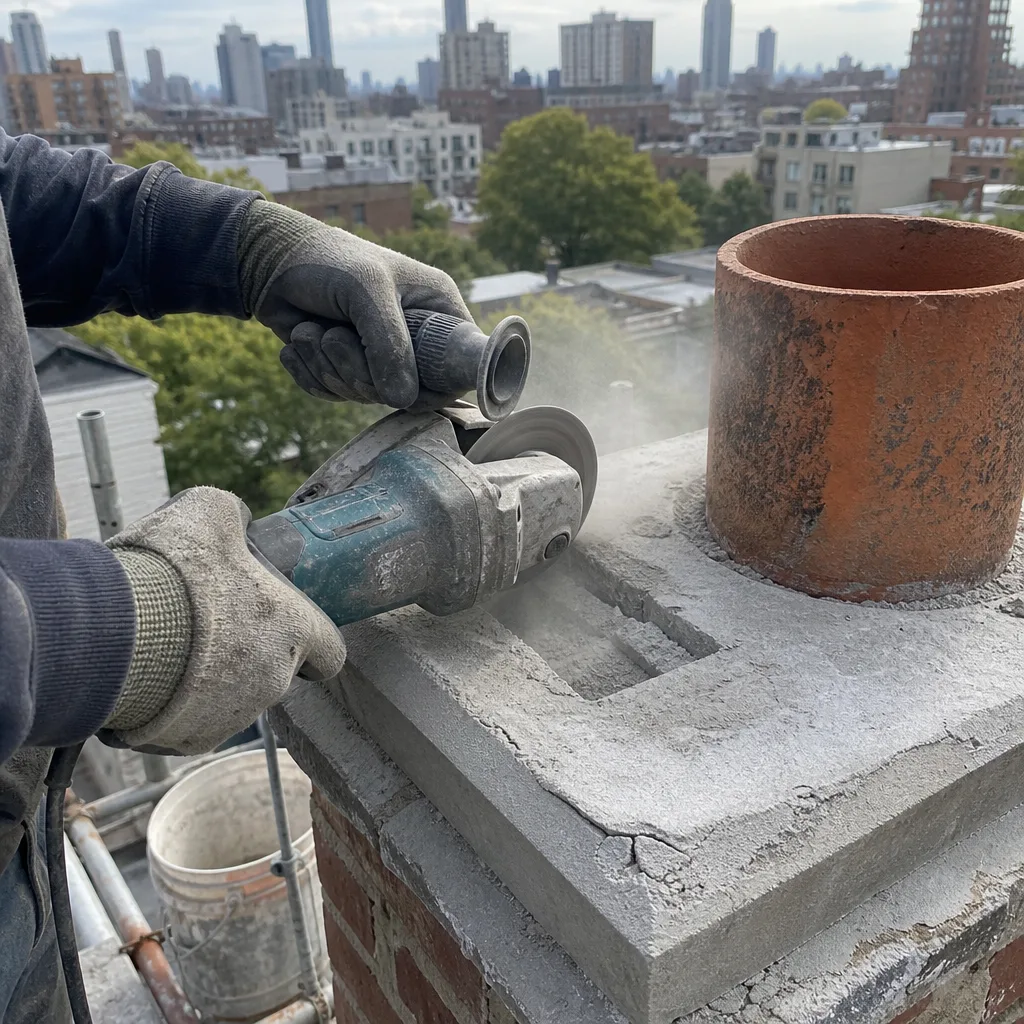
A firebox-level visual inspection can confirm obvious signs: debris, visible smoke staining, daylight through cracks if the damper is open. But the conditions that determine whether your chimney is safe to use live in the flue, the smoke chamber, and the crown, and none of those are visible from inside the house. A chimney camera scan, the core of an NFPA 211 Level 2 inspection, is the only way to see the conditions that matter most, and in our experience, the camera reveals something the homeowner was unaware of in about half of Financial District homes we inspect.
Here’s what the camera shows that no mirror-and-flashlight inspection can:
- Liner continuity. The camera shows the full length of the flue liner, revealing cracks, gaps at the tile joints, missing sections, or areas where the liner is completely absent. A cracked liner cannot be seen from the roof and rarely presents visible signs from inside.
- Creosote classification. Creosote has three recognized classes: Class I is a light soot coating, Class II is a flaky deposit, and Class III is a concentrated, tar-like glaze. The class determines the removal method and cost, and only a camera can distinguish Class II from Class III reliably.
- Smoke chamber condition. The area above the damper, often corbeled and uneven in older Financial District masonry, is a creosote and debris trap. The camera shows buildup, cracks, and whether the chamber needs parging to restore smooth smoke flow.
- Water entry points. Stains, efflorescence streaks inside the flue, and mineral deposits point to specific water entry points that can be addressed precisely rather than guessed at.
- Flue sizing and configuration. A flue liner that was never properly sized for the fireplace it serves, a common situation in converted buildings, creates chronic draft problems that repeated cleanings will not solve.
The photo record is part of what you receive. Clause 4 of the Haven Standard requires a documented photo record on every visit, a practice we began in 2009, and it means you walk away with images of what the camera saw, not a description from memory. When a technician tells you a liner needs replacement, you should be able to see the crack in the photo. That’s the standard we hold ourselves to.
Certain warning signs are only discoverable via camera. A deteriorated liner section behind a wall, a hidden offset in a flue path that has trapped debris, a breach between two flues in a shared chase: none of these produce an external sign until damage is advanced. If you are buying a Financial District home, a Level 2 camera inspection should be part of your due diligence. If you own a home here and have never had the flue camera-scanned, that absence of information is itself a warning sign, because the conditions that promote damage have been present in our building stock for decades.
Response Timelines: How Urgently Each Sign Needs Action
Not every chimney warning sign needs a same-week response, and acting on false urgency rarely produces good decisions. Understanding which signs are immediate, which are seasonal, and which can be scheduled into a maintenance plan helps you allocate attention and budget correctly. Here is how we tell Financial District homeowners to prioritize what they find.
Immediate: Stop using the fireplace, call now
- Sulfur or combustion byproduct smell indoors. This means exhaust is entering your living space. Stop using the fireplace and call (551) 213-4778 the same day.
- Yellow pilot flame on a gas fireplace. Stop using the unit. Carbon monoxide production is possible.
- Smoke entering the room when the fireplace is in use. A drafting failure can mean a blockage or structural breach.
- Visible cracks in the firebox back wall, especially if you can see light or gaps through them.
Within one to two weeks: Schedule a sweep and inspection
- Creosote smell, especially on humid days. A cleaning issue that becomes a safety issue if deferred through a burning season.
- Black flaky debris in the firebox. Creosote shedding; a sweep is due.
- Visible efflorescence developing or spreading. Water is actively moving through the system.
Within the current season: Plan to address before burning weather
- Minor flaking firebrick with no smell. Normal wear, but worth documenting before heavy burning season begins.
- First-time spalling on exterior brick. A water entry point is active, but several weeks of delay will not meaningfully change the repair scope.
- Any warning sign in a fireplace you use only occasionally. The problem will still be there in December, when technician schedules are tighter.
This framework reflects what we have learned from 38,000+ chimneys inspected and cleaned since 2009: urgency should be tied to combustion safety, not to aesthetics. A white stain can wait a month. A sulfur smell cannot wait a day. When in doubt, call. A live person answers at (551) 213-4778, around the clock, and that conversation costs you nothing.
Common Mistakes to Avoid
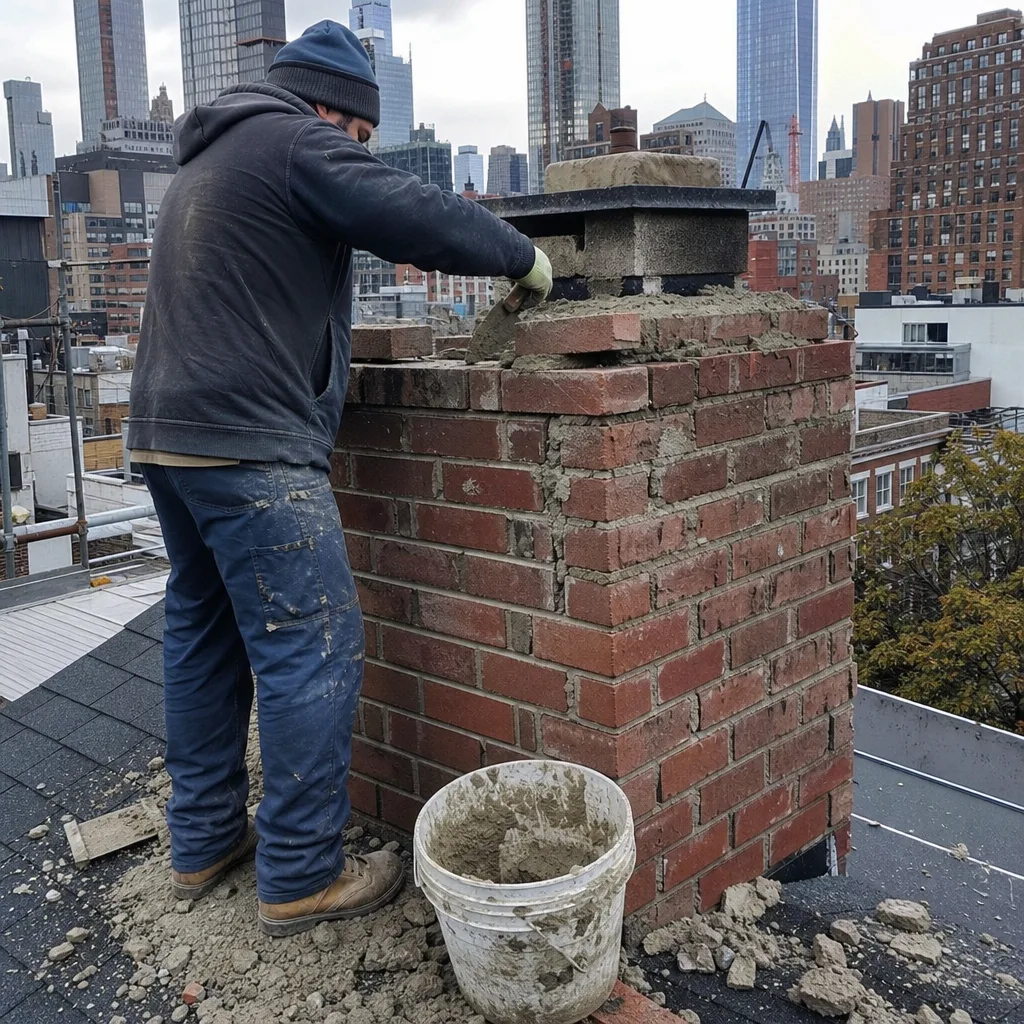
- Scrubbing efflorescence off the wall before diagnosing its source. The stain is the evidence. Removing it makes diagnosis harder and convinces you the problem is gone when the water flow is not. Take photos first, leave the stain, and let the camera scan identify the entry point.
- Assuming a neighbor’s chimney problem cannot affect you. In shared-chase Financial District buildings, your biggest chimney risk may be in the flue behind your neighbor’s wall. A camera scan of your own system is the only way to know.
- Ignoring a creosote smell because it comes and goes. Creosote odor that fluctuates with humidity is still creosote in the flue, and it is still flammable. The smell’s intermittence is a weather feature, not a permission slip.
- Treating every debris type in the firebox as “just creosote.” Black flakes are creosote and need a sweep. Gray grit or clay shards are structural and need an inspection. The cleaning price and the structural repair price are very different, and cleaning cannot fix a structural failure.
- Buying a Financial District home without a chimney camera scan. Standard home inspections do not include one. You could be buying a $6,000 liner replacement, and no one involved in the transaction has looked for it.
- Converting a wood fireplace to gas without verifying liner compatibility. The same flue that vented wood smoke for decades may be completely unsuitable for gas venting. The result can be the condensation and acidic damage described above, and by the time symptoms appear, the liner has already suffered.
- Using the fireplace through a suspected warning sign because it is “probably fine.” Probably fine is not a safety standard. The cost of an inspection is a fraction of the cost of a chimney fire or carbon monoxide event, and it is free to ask: call (551) 213-4778 and describe what you are seeing before you use the fireplace again.
When to Call a Professional
When you need to hire a chimney cleaning contractor in Financial District, call a professional if you see any of the warning signs above and cannot rule out a safety implication. That includes all combustion byproduct smells, yellow pilot flames on gas units, visible liner debris, active efflorescence, and smoke entering the living space during use. It also includes the situation where you have lived in your home for years and have never had a camera scan, because the absence of a documented inspection is itself a risk you have been carrying unknowingly. Level Two Chimney Financial District offers free estimates in Financial District, with a written price before any work starts. Call (551) 213-4778 and describe what you are seeing; someone will answer around the clock.
Frequently Asked Questions
A standard chimney sweep in Financial District typically costs between $200 and $400 depending on flue condition, creosote class, and whether the chimney is wood-burning or gas. Our price includes the camera-scan inspection and photo record, which some companies charge separately. You receive a written price before work starts, not after. Call (551) 213-4778 for an exact quote; estimates are free.
The National Fire Protection Association recommends a sweep when creosote reaches 1/8 inch of accumulation, and for most Financial District fireplaces in regular use, that translates to once per year before burning season. Fireplaces used only occasionally may only need a sweep every two to three years, but a camera inspection is still worth doing annually if the fireplace is used at all.
Creosote continues to accumulate, and at Class II or Class III thickness, it becomes a fuel source inside your flue. A stray spark or high flue temperature can ignite it, producing a chimney fire that can reach 2,000 degrees, crack the liner, and spread into the home’s structure. Skipping a cleaning also means skipping the inspection that finds the structural problems you cannot see, so deferred maintenance compounds as the chimney ages.
You need a new liner if the existing liner is cracked, missing sections, or was never installed for the fireplace’s current use, and a camera scan is the only way to know. We are not in the business of recommending liners that photographs cannot justify. You will see the crack in the photo record before you are asked to make any decision. If a competitor’s quote recommends a liner, we offer a free second opinion on any written estimate.
Yes, and in Financial District’s shared-chase architecture, this is common, not rare. Water entering through a neighbor’s deteriorated crown or liner can migrate through shared masonry and present as efflorescence or dampness in your unit. Cross-unit smoke transfer through shared chambers is also possible in older buildings. The diagnostic path starts with a camera scan of your own flue, which documents what is in your system and what may be coming through shared structure.
If you have no warning signs and the chimney was swept and inspected within the past year, the risk is low. If you have any warning signs described above, or if you have never had a camera inspection since buying the home, do not use the fireplace until a Level 2 inspection is complete. The risk you cannot see is the one most likely to hurt you, and the cost of an inspection is far less than the damage a hidden condition can cause.
The Bottom Line
Chimney warning signs in Financial District homes are rarely as they first appear. Efflorescence is a water story, not a cosmetic one. Creosote smell is a cleaning schedule, not a structural alarm. Sulfur smell and yellow pilot flames are urgent, and no visual check can rule them out. The neighborhood’s shared-chase architecture means your chimney’s worst problem may not be in your flue, and the only tool that resolves that ambiguity is a camera scan. Since 2009, we have documented 38,000+ chimneys with photo records, given every price in writing before work starts, and provided free second opinions on any competitor’s written estimate. For more guides & resources, visit our blog, or call (551) 213-4778 to schedule yours before the burning season makes the decision for you.
Written by Corrine Halstead, Owner at Level Two Chimney Financial District, serving Financial District since 2009.